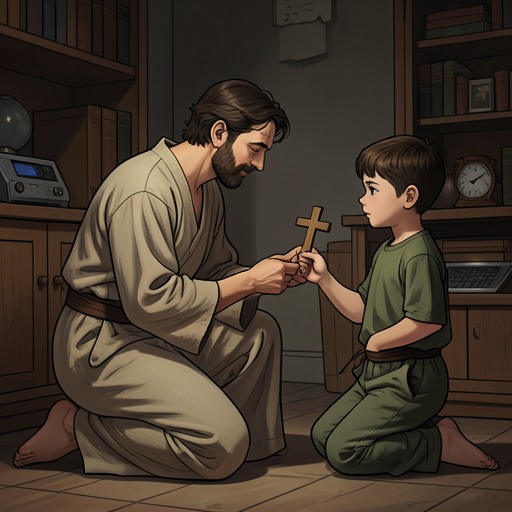
Afanasy Pavlovitch
The Brothers KaramazovAfanasy Pavlovitch, the former orderly of Zossima, is remembered in two sharply contrasting encounters: Zossima’s brutal beating of him and the apology that followed. The episode becomes a turning point in Zossima’s life, while their reunion years later reveals that Afanasy remembers his former master with delight.
Identity and Role
Afanasy served as Zossima’s orderly. The evidence gives little account of his life beyond that service, but makes him central to a formative moral episode in Zossima’s recollections. Afanasy is not merely the recipient of violence: his presence makes possible the act of acknowledgment and apology through which Zossima begins to confront what he has done.
Assault and Apology
Zossima recalls returning home in a savage and brutal humour and striking Afanasy twice in the face with all his might. The blows left Afanasy’s face covered with blood. Zossima adds that he had struck him before, though never with such ferocity; the episode therefore marks an escalation in an existing pattern of abuse, not an isolated first assault.
The following day, Zossima was leaving in a carriage when he told his companion to wait while he went back alone to Afanasy’s little room. There he acknowledged that he had struck Afanasy and asked his forgiveness. The return is a deliberate reversal of the previous day’s violence: instead of letting the orderly’s injury pass unaddressed, Zossima turns back to face him and name his own responsibility.
Reunion and Significance
Eight years after they had parted, Zossima met Afanasy again in the marketplace in Town of K. Afanasy recognized him, ran up to him, and greeted him with evident delight, addressing him warmly as his master. The reunion gives the earlier apology a human aftermath: the available account shows recognition and joy, not a renewed accusation.
Afanasy’s brief but consequential role links a concrete act of cruelty to Zossima’s later understanding of repentance and responsibility. The episode’s force lies in its sequence: violence against a subordinate, a return made expressly to ask forgiveness, and a reunion in which affection has survived their separation.