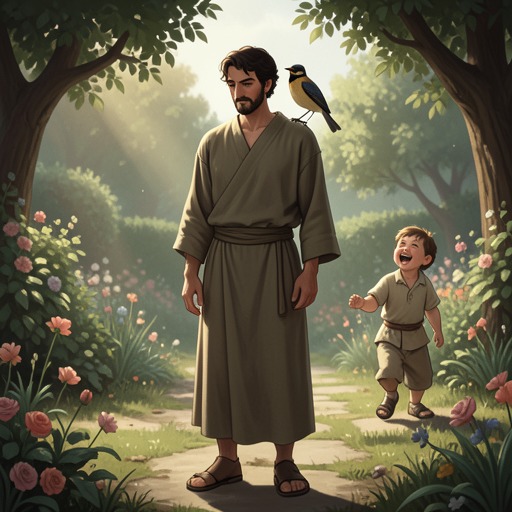
Affirmation of life
The Brothers KaramazovAffirmation of life is the paradoxical conviction that existence remains precious even when it is entangled with shame, violence, and the prospect of suffering. In Dmitri’s words and actions, it is not a calm assurance that life is good. He clings to life with almost feverish intensity while admitting that he is a scoundrel and fears that he may harm others. His affirmation is therefore inseparable from moral danger: love of life does not make him innocent, but it keeps him reaching toward what he loves even as he condemns himself.
A toast to life
Dmitri gives the theme its most direct expression in his insistence that he and Alyosha drink together. He proposes a toast to life and says that he wants especially to drink with his brother, turning an ordinary invitation into a declaration of attachment and intimacy. The emphasis falls not only on life as an abstract value but on sharing it with another person. The toast becomes a brief bond between the brothers, offered in the midst of Dmitri’s tumultuous talk and his awareness of the pistols associated with him.
Dmitri calls his love of life excessive and shameful, yet refuses to retract it. He says he is pleased with himself while also being tortured by the thought that he is a scoundrel. The contradiction is not resolved: self-approval and self-reproach coexist, and his blessing of creation follows rather than cancels his confession of disgrace. The theme thus holds together impulses that might otherwise seem incompatible. Dmitri can condemn himself and still feel gratitude for existence; his affirmation is powerful precisely because it does not depend on a clean moral self-image.
Creation and the threat of harm
The blessing of creation is immediately shadowed by Dmitri’s image of killing a harmful insect before it can crawl out and spoil life for others. He presents the impulse as a danger to be stopped, not as proof that his love of life has made him harmless. The juxtaposition gives his affirmation an unsettling edge: the same speech that blesses creation acknowledges a readiness to destroy something perceived as threatening it. Life is precious, but Dmitri’s relation to that value remains entangled with violence and fear of the damage he may cause.
This tension prevents the toast from becoming a simple moral verdict. Dmitri’s language does not establish that his violent impulse is justified, nor does his blessing erase it. Instead, the passage places gratitude and destructiveness side by side, making his attachment to life morally unstable. His words suggest a man pulled between the desire to protect life and the impulse to strike at what he regards as dangerous, with no settled harmony between the two.
Love under judgment
Later, Dmitri’s affirmation takes the form of prayer. He asks God not to condemn him, but acknowledges that he has already condemned himself. He calls himself a wretch and insists that he loves God; even if sent to hell, he says, he will continue to love God there. The claim carries the theme beyond appetite or exhilaration. Affirming life becomes a commitment to love that Dmitri imagines surviving even the ultimate condition of punishment and exclusion.
The prayer also places his earthly love at the center of his immediate crisis. Dmitri asks to be allowed to love to the end and names the woman he loves as the queen of his soul. His plea joins spiritual devotion to passionate attachment, without making them identical or resolving their conflict. The result is not a serene conversion but an urgent appeal from a self-accusing man who wants to continue loving despite the judgment he expects. His affirmation is an act of persistence: love remains possible, in his imagination, even in the place where hope seems to have been denied.
The theme’s limits and force
Across the toast, the blessing of creation, and the prayer, affirmation of life moves between shared fellowship, dangerous impulse, and love under judgment. Dmitri’s words do not offer a general argument that life’s suffering is justified, and they do not absolve him of responsibility. They show instead how fierce attachment to existence can endure alongside shame and the recognition of one’s capacity for harm.
The theme’s force lies in that unresolved coexistence. Dmitri does not have to become morally innocent before he can bless creation, and his continued love does not erase the possibility that he may damage another life. Affirmation here is neither a polished doctrine nor uncomplicated optimism; it is a lived contradiction, voiced by someone who wants life intensely and knows that his own impulses may endanger it. That contradiction makes the toast and the prayer mutually illuminating: the first declares life precious, while the second asks that love be allowed to continue even under condemnation.