Alyosha Karamazov
The Brothers KaramazovAlyosha Karamazov’s crisis after Elder Zossima’s death is not a test of whether a miracle will confirm his beliefs. It is a grief centered on the loss of the person he loved and revered; out of that loss, his capacity for love opens again toward the world. The turn from personal bereavement to renewed spiritual feeling gives the episode its decisive significance.
Grief Focused on the Elder
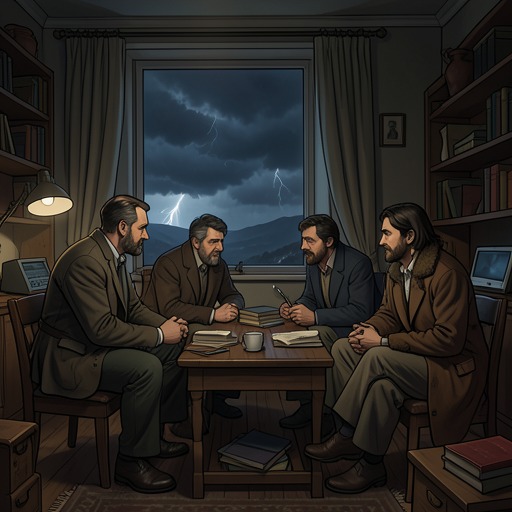
The narration explicitly distinguishes Alyosha’s sorrow from an impatient expectation of miracles. He needs no supernatural sign to prove a preconceived idea: what fills his attention is the figure of his beloved elder, the holy man he had revered with adoration. The distinction makes the crisis intimate rather than argumentative. Alyosha is grieving a person, not demanding that the world settle a dispute about faith.
For the past year, the love concealed in Alyosha’s young heart for everyone and everything had been concentrated, perhaps wrongly, on Elder Zossima. That concentration explains the force of the loss without reducing it to disillusionment. His attachment had narrowed a broad capacity for love around one revered figure; the elder’s death breaks that arrangement and becomes the condition for its enlargement.
A Change in the Face of Grief
When Alyosha looks at Grushenka, wonder gives way to a visible dawning of light in his face. He addresses Rakitin firmly, resisting his taunt that Alyosha has rebelled against God. Alyosha tells him that he has lost a treasure Rakitin never possessed and asks him not to judge what he cannot understand. The reply names bereavement as the immediate truth of the moment, while the change in Alyosha’s expression suggests that grief has not closed him off from other people.
The movement is especially striking because it happens in the presence of Grushenka, rather than through an abstract argument. The episode connects Alyosha’s return to spiritual feeling with a human encounter: the love once gathered around the elder begins to find room for another person. Rakitin’s provocation cannot define the experience as rebellion; Alyosha’s own response joins sorrow to a newly awakened tenderness.
Vision and Renewal
In the vision of the wedding at Cana, Alyosha’s heart glows and fills until it aches. Tears of rapture rise in his soul; he stretches out his hands, cries out, and wakes. The scene gives spiritual renewal a bodily force, expressed through tears, gesture, and awakening rather than through a proof or declaration. Its joy follows grief but does not erase it: the lost elder remains the center of Alyosha’s sorrow even as his love reaches beyond that loss.
The episode therefore marks a reorientation, not a miraculous reward obtained for holding the correct opinion. Alyosha’s attachment to Elder Zossima had gathered his love into a single figure; after the death, grief and encounter help release that love toward others. The vision of Cana culminates this movement in rapture, leaving Alyosha spiritually alive to the world rather than sealed inside mourning.