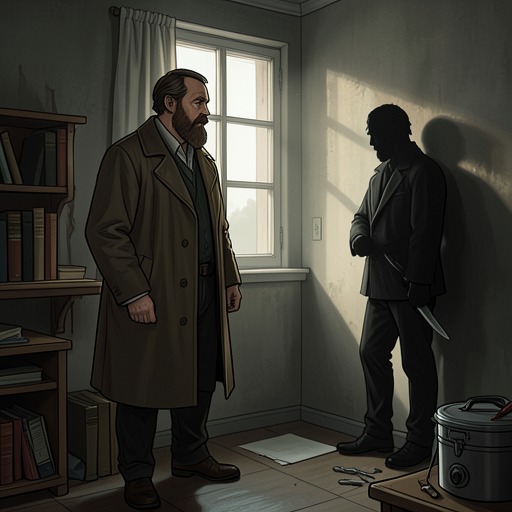
Everything is permitted without immortality
The Brothers KaramazovEverything is permitted without immortality is the moral proposition that, if the soul is not immortal, virtue loses its foundation and all actions become permissible. In the available passage it appears not as an established conclusion but as a contested theory: Mikhail Rakitin attributes it to Ivan Karamazov, mocks its formulation, and counters that humanity can find grounds for virtuous life even without belief in immortality.
The Theory as Rakitin Presents It
Rakitin recalls Ivan’s claim that the absence of the soul’s immortality would mean the absence of virtue and that everything would be lawful. He treats the proposition as an attractive rationale for wrongdoing, while immediately correcting his own insult: the theory, he says, is less the doctrine of scoundrels than the display of pedantic poseurs who parade unresolved doubts. His criticism targets both the moral implication and the manner in which the argument is performed.
Rakitin also connects the abstract argument to Dmitri Fyodorovitch Karamazov, recalling Dmitri’s cry, “I will remember!” That remembered exclamation places the debate in the orbit of an emotionally charged family conflict, though the passage does not explain its original circumstances. The brief reference gives the philosophical claim a personal echo without resolving what Dmitri meant by it.
Rakitin’s Counterargument
Rather than accepting that morality must collapse with belief in immortality, Rakitin insists that humanity can discover within itself the capacity to live virtuously. He names love of freedom, equality, and fraternity as possible grounds for that life. His answer shifts the debate from whether morality depends on a metaphysical guarantee to whether human beings can sustain ethical commitments through their own relations and ideals.
The passage leaves this counterargument in tension with Ivan’s reported proposition rather than settling the question. Rakitin’s outburst is heated and openly hostile, but his final alternative is direct: virtue need not be secured by immortality alone. The principle therefore matters as a point of conflict between a claim about morality’s dependence on the afterlife and a human-centered defense of ethical life without that belief.