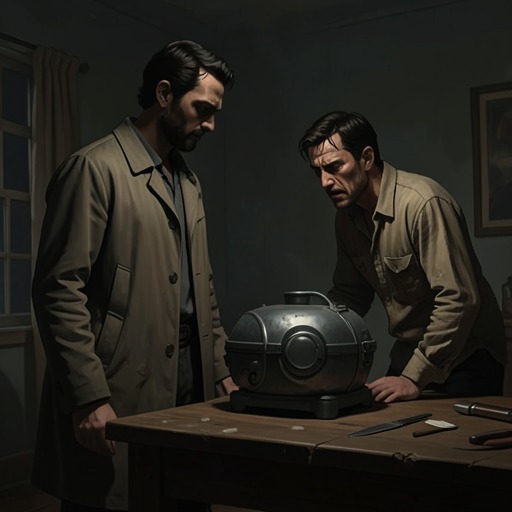
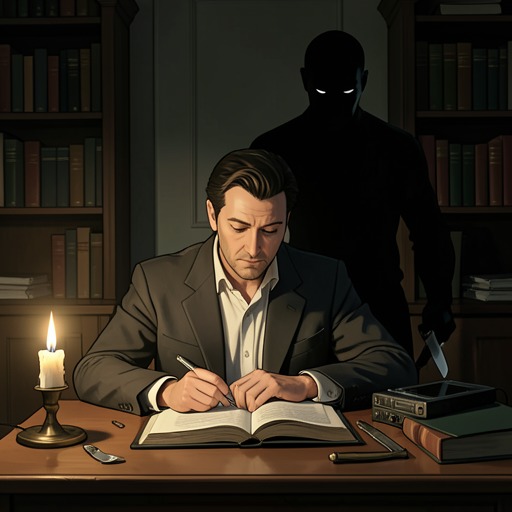
Ivan leaves home for Moscow
The Brothers KaramazovIvan leaves home for Moscow after a last-minute reversal at Volovya station, making his departure more than a change of destination: it exposes his unresolved attachment to the household and the moral unease that follows him away. Though he had not gone to bed intending to leave, he packs his trunk the next morning. His father, rather than dwelling on the impending separation, immediately asks him to perform a favor at Tchermashnya. Ivan sets out to do so, but the words naming that destination return to him with a nervous, involuntary force. At the station he turns back, refuses the detour, and catches the train to Moscow. He tries to declare the past finished, yet reaches the city burdened by anguish and the judgment that he is a scoundrel.
The Departure Takes Shape
Ivan had told Katerina Ivanovna, Alyosha, and Smerdyakov the previous day that he was leaving, but the decision seems to have taken practical shape only after he went to bed: he remembers having had no thought of departure then, and certainly no expectation that he would begin the morning by packing. By about nine o’clock his trunk and bag are ready. The contrast between the unanticipated decision and the orderly luggage gives the departure an abrupt, almost self-propelling quality: outward preparation advances before Ivan has settled what leaving means to him.
His father does not respond with an attempt to keep him at home or with an expression of regret. Instead, Fyodor Pavlovich is startled that Ivan did not tell him sooner, then turns quickly to his own business. He asks Ivan to do him a great service by going to Tchermashnya, describing the route as a short turn from Volovya station and a further twelve versts. The practical request redirects Ivan’s departure into an errand for the very household he is leaving. The journey is therefore not yet a clean severance: the father can still enlist the departing son in his affairs.
The Errand and the Reversal
Ivan goes along with the proposed detour, but his announcement that he is going to Tchermashnya escapes him suddenly, as though the words have dropped from him of their own accord. He laughs in the same peculiar, nervous way as on the previous day, and remembers the episode long afterward. The repeated destination becomes the scene’s hinge: what sounds like a settled plan is accompanied by a reaction Ivan himself cannot comfortably explain.
At Volovya, the thought of what a clever man meant by his words seems to clutch at Ivan’s breathing. The question of why he told him he was going to Tchermashnya presses on him as the carriage reaches the station. Ivan gets out, looks around, glances at the overseer’s wife, and then suddenly returns to the entrance. The physical turn makes the change decisive. He rejects the detour and asks whether he can still reach the railway in time for the seven o’clock train; the answer is that they can just manage it.
Moscow and the Unfinished Past
At seven Ivan boards the train for Moscow. He frames the journey to himself as a severance: away with the past, the old world left behind, and a new life begun in new places without looking back. But the resolve does not produce relief. Instead of delight, he feels gloom, and his heart aches with an anguish he has never known before. The passage sets intention against consequence: the language of beginning again cannot make the past disappear merely because Ivan has put distance between himself and home.
As he approaches Moscow at daybreak, Ivan rouses himself from meditation and whispers to himself, “I am a scoundrel,” the brief admission giving his departure a moral aftertaste rather than a triumphant ending. Meanwhile Fyodor Pavlovich is satisfied that his son has gone and feels almost happy for two hours while drinking brandy, before his mood shifts. The opposed responses sharpen the separation: the father can initially treat the departure as settled, while Ivan carries its distress with him into the new city.
Narrative Significance
The episode is structured around successive acts of departure that fail to yield emotional release. Ivan has packed and left; he has accepted his father’s errand, repeated its destination, and then reversed course at the station. Each outwardly practical step is interrupted by an inward disturbance, culminating in the contrast between his declared break with the old world and the self-accusation with which he reaches Moscow.
The destination change also gives the scene a clear narrative turn. Tchermashnya is the favor his father asks of him, but Ivan’s sudden choice to catch the train redirects his movement toward Moscow. The evidence establishes the decision and the anguish that accompanies it, not a full explanation of every thought behind it. What is clear is that leaving home does not settle Ivan’s relation to the past: the journey carries the unresolved burden forward rather than ending it.