Mikhail Rakitin
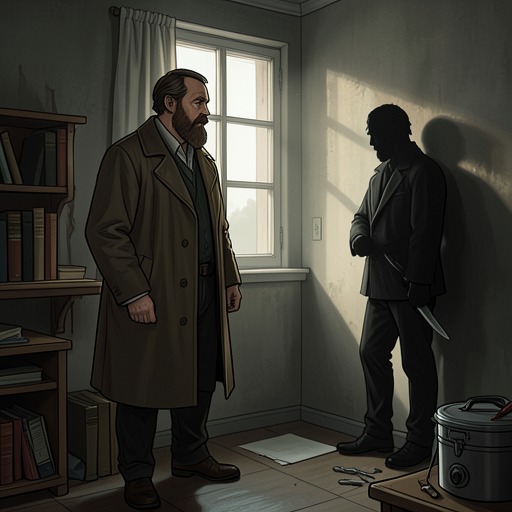
The Brothers KaramazovMikhail Rakitin is an observant, self-conceited acquaintance of Alyosha who gathers information wherever he can and expects to play a prominent part in life. His presence on the path from the hermitage, waiting for Alyosha, introduces him as a man alert to other people’s movements; Alyosha’s distress at his dishonour gives that alertness a moral counterpoint.
Identity and Character
Rakitin is portrayed as having an uneasy and envious temperament. He knows he possesses considerable abilities, but his self-estimation is nervously exaggerated: confidence becomes vanity, and the expectation of future prominence seems to sharpen rather than quiet his restlessness.
His reach extends into ordinary domestic spaces. He has established a footing in the kitchen and, as the narration emphasizes, seems to have one everywhere; from those positions he obtains information about everything. The detail makes his knowledge practical and social, not abstract: he is attentive to the channels through which people and news circulate.
Encounter with Alyosha
As Alyosha leaves the hermitage, burdened by his thoughts, he looks toward the ancient pines beside the path. He has only about five hundred paces to go and expects to meet no one at that hour. At the first turn, however, he finds Rakitin waiting for someone. Alyosha asks whether he is waiting for him, and Rakitin confirms that he is.
The encounter places Rakitin at a threshold between the secluded hermitage and the world beyond it. His presence is not accidental from Alyosha’s perspective: he is waiting for Alyosha and knows where he is hurrying. The brief exchange reveals his watchfulness, while the quiet path and Alyosha’s inward burden set that watchfulness against the younger man’s troubled state.
Ambition and Moral Contrast
Rakitin is convinced that he will play a prominent part of some sort. The uncertainty of that imagined role matters: his ambition is forceful even though its object remains undefined. He expects importance in advance, and his information-gathering gives him a means of keeping close to events without establishing, in these passages, what form his future prominence will take.
Alyosha is attached to Rakitin, yet distressed to see that his friend is dishonourable. Their connection therefore holds affection and judgment together. Alyosha’s concern does not erase his perception of Rakitin’s character; conversely, Rakitin’s dishonour does not cancel the attachment. This tension makes their meeting more than an exchange between an inquisitive observer and the person he has come to intercept: it exposes the moral cost of a friendship Alyosha still values.