Mitya’s acceptance of Siberian punishment
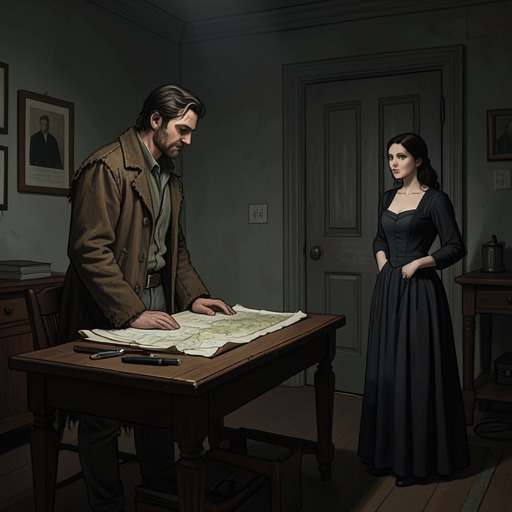
The Brothers KaramazovMitya’s acceptance of Siberian punishment is a moral decision, not a confession to killing his father. In the peeling walls of his place of confinement, he interprets the ordeal as a “blow from heaven” that has brought forth a new self, and he accepts the prospect of years of hard labor because he believes that suffering may bind him to other people and make him responsible for them.
The New Man and the Fear of Losing Him
Mitya tells his brother that over the previous two months a new man has risen within him. This change had remained hidden until the calamity brought it to the surface. His fear is not principally that he may spend twenty years in the mines, breaking ore with a hammer; it is that the new self may leave him. Punishment therefore carries a double meaning: it is an ordeal he expects to endure, but also the condition in which he hopes to preserve the moral change he has discovered.
The contrast between the external sentence and this inward danger defines his acceptance. The mines mean chains and the loss of freedom, yet Mitya does not treat those consequences as the worst possible outcome. To lose the new man would be more frightening than the labor itself. His words present renewal not as a settled achievement but as something fragile, which he must carry into the suffering ahead.
Responsibility for Others
Mitya’s decision extends beyond his own fate. He imagines that underground, beside another convict or murderer, he may find a human heart and make a friend. Even there, he believes, people can live, love, and suffer together; one person may thaw and revive another’s frozen heart, bringing forth a feeling, suffering person. The mine is thus imagined not only as a place of punishment but as a possible setting for human connection and moral recovery.
He links that possibility to the suffering of children. Recalling his dream of the poor “babe,” he takes the image as a sign and says that he is going for the babe because everyone is responsible for everyone. He includes both little children and “big children,” widening the image into a claim about the vulnerable generally. His acceptance is, in this sense, an act of shared responsibility: he does not say that he committed the murder, but that he must go for all who suffer.
Acceptance Without a Confession
The distinction between legal guilt and moral responsibility remains explicit. Mitya says that he did not kill his father, yet he accepts that he must go. His decision does not retract his denial or identify him as the murderer. Instead, he gives the punishment a meaning beyond the court’s accusation: it becomes a burden he accepts on behalf of others, including the suffering people he imagines waiting underground.
That understanding turns the prospect of imprisonment into a test of solidarity. Mitya foresees chains and no freedom, but also hopes that shared sorrow may lead to renewed joy. His acceptance therefore does not make the sentence just or erase the difference between the crime and the person punished. It shows how he answers an imposed fate by taking responsibility wider than the charge against him.
Meaning of the Decision
Mitya’s language joins personal transformation to collective obligation. The new man has appeared within him through suffering, but its purpose is not private self-improvement: he imagines using it to reach other convicts and to answer the suffering of children. The mine becomes an imagined community in which even people marked as criminals may have human hearts, form friendships, and revive one another.
The decision’s decisive tension lies in what Mitya accepts and what he denies. He accepts Siberian punishment, chains, and the loss of freedom; he does not accept that he killed his father. What he does accept is a wider responsibility for suffering, and the possibility that sorrow shared with others may yield joy. His choice marks the emergence of a moral identity grounded less in self-defense than in solidarity, while leaving intact the injustice of his conviction.