Nikolay Ilyitch Snegiryov
The Brothers KaramazovNikolay Ilyitch Snegiryov, a former captain in the Russian infantry, is introduced as a man whose public humiliation has made dignity both precarious and fiercely defended. In his encounter with Alyosha, he identifies himself by the rank he has lost, recounts how Dmitri Fyodorovitch Karamazov dragged him by the beard through a tavern and into the marketplace, and accepts Alyosha’s offer of friendship toward his son. But when money enters the exchange, Snegiryov crushes the two notes Alyosha has offered. The gesture makes his poverty and humiliation visible without allowing either to define the terms on which he will be treated.
Identity and Lost Rank
Snegiryov gives his full name as Nikolay Ilyitch Snegiryov and describes himself as formerly a captain in the Russian infantry. He says his vices brought him to shame, yet insists that he is still a captain, even if his way of speaking might seem to deny it. The contradiction is central to his self-presentation: the rank belongs to his past, while his present speech bears the mark of dependence and social descent.
He explains that he has learned to say “sir” during the latter half of his life, calling it a word used when a person has come down in the world. The habitual courtesy is therefore more than politeness. It signals a change in standing, a recognition that he must address others deferentially, while his insistence on his former captaincy preserves a claim to an identity that humiliation has not erased.
The Public Humiliation
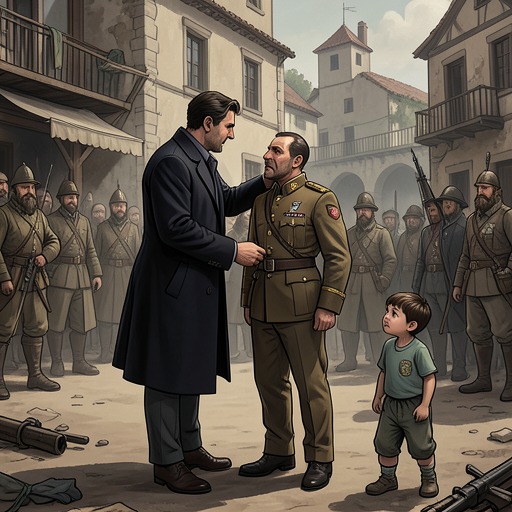
Snegiryov recounts the assault by Dmitri to Alyosha. Dmitri, he says, was in a towering rage and came upon him; Snegiryov insists he had done nothing. Dmitri seized him by the beard and dragged him from a tavern into the marketplace, exposing the former captain to public disgrace.
The beard becomes the concrete mark of that degradation. Snegiryov says it had been thicker the previous week and explains that it is nicknamed his “tow,” especially by the schoolboys. His self-correction from beard to “tow” brings the public mockery into his own account: the insult has become so familiar that he repeats its language even as he describes the violence that made him its target. His story gives Alyosha a reason to approach him, but it also lets Snegiryov frame the encounter in his own words rather than appear only as the object of another man’s assault.
Alyosha’s Offer and Snegiryov’s Son
Alyosha tells Snegiryov that he has come to speak with him and then, moved by what he has heard, says how much he would like to make friends with Snegiryov’s boy. Snegiryov agrees, answering that Alyosha could certainly do so. The response opens a path from the public conflict with Dmitri toward a possible relationship with the child, and it is this prospect of friendship that gives the conversation a future beyond the recounting of the assault.
The exchange also shifts Alyosha’s attention from the humiliation inflicted on the father to the possibility of connection with the son. Snegiryov’s assent is brief, but it makes him a participant in that possibility: he can arrange the meeting rather than merely receive Alyosha’s sympathy. The scene places the offer of human closeness alongside the material gesture that follows, revealing that these are not interchangeable forms of help.
The Crushed Notes and the Defense of Dignity
During the conversation, Snegiryov has been holding two notes by one corner between his thumb and forefinger. When he reveals them to Alyosha, he suddenly crumples them savagely and squeezes them tight. The force of the action turns an offer of money into a decisive refusal; the notes are not quietly put aside but physically destroyed in the moment of confrontation.
That refusal complicates the role of a disgraced, impoverished man in need of assistance. Snegiryov can agree to Alyosha’s wish to befriend his son while rejecting money offered in response to his own humiliation. The contrast is not simply between acceptance and refusal: it distinguishes a relationship he may choose to welcome from aid that risks fixing him in the position of a dependent object of pity. His crushed notes leave the conversation’s material need unresolved, but assert that need does not cancel his right to defend his dignity.