
Courage, Cowardice, and Command
The Caine MutinyThe novel tests whether command under fire is measured by professional status, medical labels, or the choices people make when a ship is at risk.
increasing Bearing strength in each event
 decreasing
Bearing strength in each eventdecreasingThe First Combat Spectacle
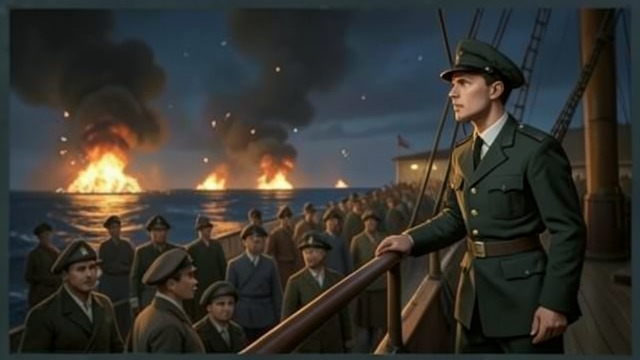
The First Combat Spectacle
Experience
Willie watches bombardment and landing operations as a vivid, almost festive show, not yet understanding the human destruction behind it.
Development
His distance from danger allows him to imagine himself brave before experience tests him.
Roland’s Test
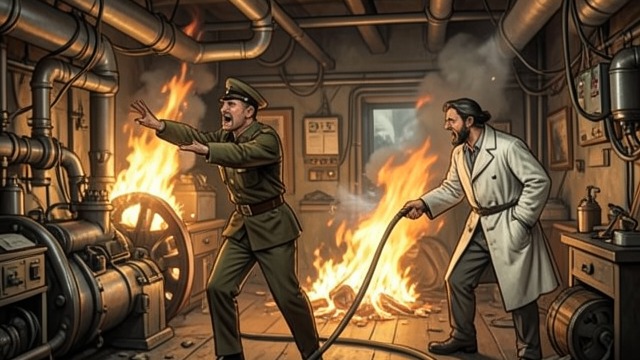
Roland’s Test
Action
Roland directs damage control aboard the Montauk after fires and a Kamikaze strike cripple the ship.
Measure
His competence under pressure challenges Tom’s assumption that intellectual sophistication is the best guide to courage.
Maryk’s Emergency Decision
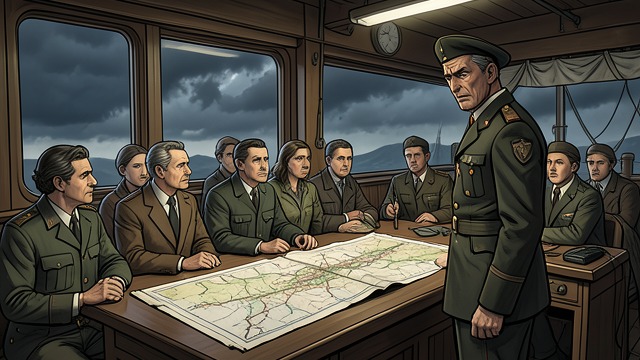
Maryk’s Emergency Decision
Choice
Maryk takes command when the Caine appears unable to maneuver safely under Queeg’s orders. The decision exposes him to punishment even though he believes the ship is near foundering.
Question
His action makes courage inseparable from responsibility for a judgment that may be impossible to prove afterward.
Keefer’s Jump
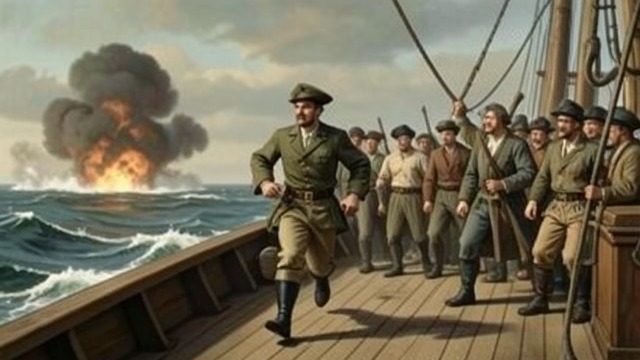
Keefer’s Jump
Reaction
Wounded and frightened by the explosions, Keefer orders abandonment and leaves the Caine while Willie stays to assess the damage.
Consequence
His later shame shows that courage is not a permanent identity; one decision under pressure can become a lifelong measure of the self.
Willie’s Changed Scale
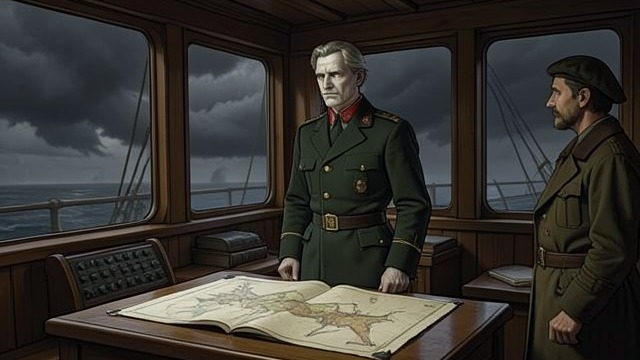
Willie’s Changed Scale
Recognition
Facing possible death, Willie regrets losing May more than losing any prospect of career or status. The experience gives his priorities a new order.
Resolution
His later choices are less about appearing heroic and more about accepting responsibility, love, and the limits of control.
During the Kwajalein invasion
During the Battle of Leyte Gulf
December 18, 1944, at the height of the typhoon
During the Kamikaze attack at Okinawa
After the attack and in the final return home
