
The Lost Target and the Cost of Caution
The Caine MutinyQueeg’s mishandling of a target-towing operation reveals how caution can become avoidance of responsibility.
increasing Bearing strength in each event
 decreasing
Bearing strength in each eventdecreasingThe Turn Begins
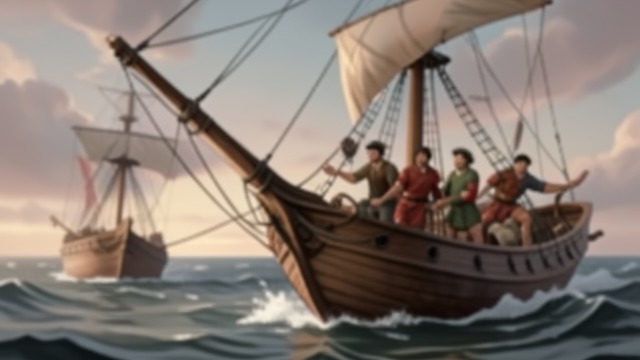
The Turn Begins
Incident
While Queeg is distracted by the shirttail issue, the Caine turns too far and crosses its own towline.
Loss
The towline parts and the target drifts away, exposing a ship-handling failure amid an attempt to enforce minor discipline.
A Decision Deferred
A Decision Deferred
Opportunity
Maryk and the boatswain’s mate say the target can be recovered, but Queeg worries about time, danger, and responsibility.
Choice
He asks higher authority for instructions and then returns to Pearl rather than make a direct decision to retrieve the target.
The Fiasco Report
The Fiasco Report
Reprimand
ComServPac demands a personal report and calls the episode a fiasco. Grace challenges Queeg to admit that he did not know how to recover the target.
Refusal
Queeg insists that his decisions were sound and deflects responsibility onto the ship’s crew and his executive officer.
A Medical Log Entry
A Medical Log Entry
Memory
Maryk records the lost target as part of a growing pattern of indecision, rationalization, and blame shifting.
Evidence
The incident matters less as a single error than as an example of how Queeg responds when a practical judgment must be made under uncertainty.
Reframed at Trial
Reframed at Trial
Defense
Queeg presents the episode as a sensible refusal to risk sailors and violate orders. The history he once minimized becomes a question of credibility.
Significance
The trial forces the court to decide whether safe procedure can itself become a means of evading command responsibility.
During target-towing practice at Pearl Harbor
Immediately after the towline parts
The following day, after the Caine returns to port
Months later, during the investigation of Queeg’s command
During Queeg’s court-martial testimony
