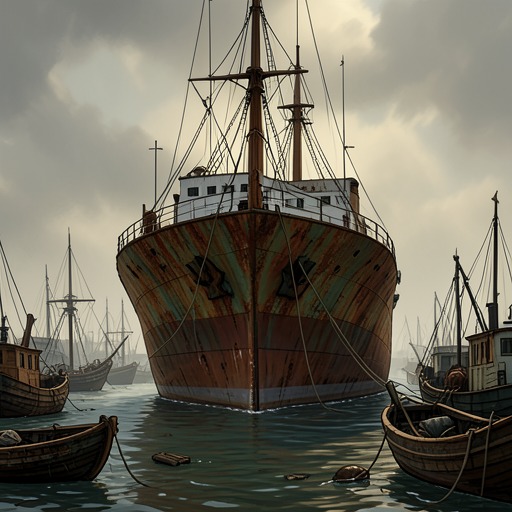
Caine Assigned to Return to the United States for Overhaul
The Caine MutinyThe USS Caine’s assignment to return to the United States for overhaul is both a practical reprieve for a deteriorating ship and a turning point in Philip Francis Queeg’s command. The admiral chooses the vessel for a major repair and radar-installation program, while treating the assignment as a way to move Queeg on rather than formally remove him from command.
Background and the Decision
The opportunity arose when CincPac requested that two destroyer-minesweepers be sent back to the United States for overhaul and new radar installations ahead of the Flintlock push. The USS Caine had already spent twenty-two months in the forward area. Captain Grace advised against recommending Queeg’s relief: although the admiral had concerns about several questionable occurrences, Grace judged that Queeg’s tension in his first command could account for them, and that nothing definite yet warranted relief.
A Coveted Repair Assignment
The admiral therefore proposed the USS Caine for the return voyage and ordered a dispatch recommending it. The choice carried particular weight because a yard overhaul in the United States was described as the war’s most precious assignment. During a year of combat steaming, Captain de Vriess had been unable to secure one for the old, deteriorating ship; Queeg obtained it within his first four weeks in command. The contrast gives the decision an institutional irony: the captain whose performance had prompted concern was now associated with an enviable benefit for his vessel.
The assignment addressed the ship’s need for repair and modernization, but it was not a finding that Queeg’s command had been vindicated. The admiral’s stated intention was to let Queeg take his next command elsewhere. Thus the same dispatch both secured the USS Caine’s overhaul and offered a quiet administrative alternative to an immediate recommendation that Queeg be relieved.
Place in the Wartime Narrative
The assignment begins the homeward-voyage episode, but it does not remove the USS Caine from the war’s larger operational cycle. By early 1944, the major turning points of the war were past and Allied industrial power was growing; the novel sets that broad strategic picture against the limited, anxious outlook of officers serving aboard a minesweeper. The ship later sails with a large fleet formation bound for Kwajalein, and its communications work illustrates the routine labor supporting operations: at Funafuti, Willie uses a destroyer tender’s office to have fleet messages decoded and mimeographed, relieving the burden on destroyer communicators.
The ship’s later service also complicates any sense that an overhaul ends its material troubles. Seventeen days before the war ends, the USS Caine finally sweeps a mine in the China Sea. Near the end of the war, it is excluded from the planned Tokyo harbor minesweeping operation because its condition is judged too poor for the voyage and the typhoon season makes a breakdown especially risky. These later episodes establish the assignment as one interval in a longer, demanding service history, not a guarantee of lasting readiness.
Historical and Narrative Status
The return-for-overhaul episode belongs to a fictional wartime story, not to the record of an actual ship or naval assignment. The novel’s note states that the USS Caine and the events aboard it are imaginary, and that operational details—including times, places, ship missions, and naval procedures—were altered. Within that declared fictional framework, the assignment links the ship’s physical deterioration to the Navy’s scheduling of repairs and equipment upgrades, while showing how a command decision can solve an immediate logistical problem without resolving doubts about the officer in charge.