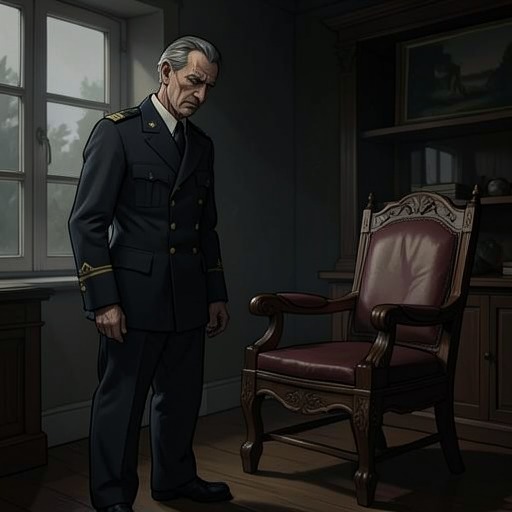
Stilwell's confession
The Caine MutinyStilwell's confession is a typewritten statement at the center of the summary court-martial Philip Francis Queeg intends to bring against John Stilwell. Queeg presents it as conclusive evidence and treats the proceeding as a formality; Willie Keith, after consulting Courts and Boards, sees a possible challenge to its use. The confession’s importance lies not only in what it appears to establish, but in the pressure surrounding its creation and the later written statement that insists no pressure was applied.
The Document and Its Intended Use
Queeg gives Willie a typewritten sheet from his wire basket and identifies it as John Stilwell’s confession. He wants Willie, appointed recorder, to ensure the court record is correctly prepared so that the bad-conduct discharge he expects to impose will stand. Queeg tells Willie that Stilwell is guilty and that the confession proves it; in his view, the court-martial is a formality, not a place where the charge’s evidentiary basis remains genuinely open to dispute. The paper is therefore already functioning, in Queeg’s eyes, as both proof and verdict.
Willie initially reads the confession and believes Stilwell is lost. He then studies the section on confessions in Courts and Boards, underlining several passages before sending for Stilwell. The change in Willie’s assessment comes from examining the rules rather than accepting the captain’s confidence. The confession’s wording is not reproduced in the episode, and its precise account of the alleged offense remains unspecified; what becomes central is whether Stilwell made it freely and whether the prosecution can otherwise connect him to the fraudulent wire.
Pressure and the Possibility of Repudiation
Asked why he confessed, Stilwell says Queeg had him cornered with an American Red Cross letter. According to Stilwell, Queeg offered a choice: make a clean breast of the matter and face a summary court aboard ship, or continue to bluff and risk a general court-martial in the United States, with a possible ten-year sentence. The confession thus enters the story with a disputed history: Queeg presents it as a voluntary admission, while Stilwell describes the circumstances as coercive. The conflict is not resolved by the mere existence of the typed sheet.
After reading the rules aloud, Willie tells Stilwell that repudiating the confession would prevent its use against him in court. He also argues that the Red Cross letter alone does not prove Stilwell instigated the wire: Stilwell’s brother sent it, and, as Willie explains, the court would need to prove Stilwell’s role without compelling him to testify against himself. Willie privately offers to support Stilwell by reference to the book, while warning him not to attribute that advice to him in front of Queeg. The document’s status consequently becomes a matter of contestable procedure rather than an automatic admission of guilt.
Queeg’s Counterstatement
Willie reports that Stilwell intends to repudiate the confession and plead not guilty. Queeg reacts angrily, questions how a man who confessed could deny the charge, and orders Stilwell sent to his cabin. After Stilwell spends an hour there, he emerges carrying Courts and Boards and a new sheet of paper. His face is lead-colored and wet with sweat. He tells Willie to leave him alone, saying that contact with Willie seems to leave him in worse trouble.
The second document is handwritten and explicitly refers to the confession made on 13 February 1944. In it, Stilwell states that the confession was voluntary, that he was glad to make a clean breast of the matter, that he received no inducement or promise of better treatment, and that he will repeat the account under oath if necessary. The statement directly contradicts the pressure-based explanation he had given Willie. It does not erase the earlier account of Queeg’s threat; instead, it places two incompatible descriptions of the confession’s circumstances into the record, one of them in Stilwell’s own handwriting.
Material Marks and Reversal
Willie recognizes the instrument behind the new statement: its bright blue ink and broad-nib handwriting identify it as having been written with Captain Queeg’s fountain pen. That physical detail ties the apparently personal declaration to the captain whose conduct it could have helped rebut. The paper bears Stilwell’s signature, but the pen provides a visible connection to the setting in which the statement was obtained. The scene does not establish who composed its wording; it does make the statement’s claim of unpressured voluntariness newly difficult to separate from the captain’s involvement.
Willie tells Stilwell that the new statement, too, was obtained under pressure and offers to help. Stilwell abruptly rejects that intervention, insists that the statement is the truth he wants to stand by, and throws Courts and Boards over the side. He even disavows having heard of duress. The book that had given him a possible means to challenge his confession is discarded, while his handwritten affirmation remains in his possession as the account he chooses to maintain. The episode leaves the confession’s evidentiary force unsettled: its first version is disputed, its repudiation is followed by a second declaration, and that declaration carries a material trace of Queeg’s presence.