Walter Feather
The Caine MutinyWalter Feather is a saxophonist and bandleader at the Aztec Lounge, where his involvement with May Wynn complicates Willie Keith’s effort to find his way back to her after the war. The novel first presents him through other people’s descriptions and a publicity image, then lets Willie meet him in person. The difference between those views makes Feather more than a romantic obstacle: he becomes a figure whose appearance and manner resist easy judgment, and whose brief final encounter with Willie helps determine how that reunion ends.
Identity and Public Image
Feather’s name appears in an Aztec Lounge advertisement promising the shimmering music of Walter Feather and his saxophone with the orchestra. A photograph shows him beside May at a microphone, establishing their public association as performers as well as their personal connection. At first, Willie studies the image rather than meeting its subject: he notices Feather’s rimless glasses, long nose, and flat, thin stage smile, and dismisses him as unimpressive.
That first impression is sharply revised when Feather appears in person. The earlier photograph, Willie learns, was unfortunate: Feather is described as not bad-looking, with a pleasant, keen expression, plentiful brown hair streaked with gray, and eyes that are wrinkled and shadowed. His firm handshake and strong, good-natured, attractive voice further distinguish the man from the static stage image. The contrast does not prove the photograph false so much as show how little Willie can know about a rival from a picture.
Relationship with May Wynn
Marty Rubin tells Willie that May has been with Feather since about two weeks after Willie left, and says that she is involved with him. Rubin also calls Feather a no-good and reports that Feather has been married and divorced twice. Those claims reach the reader through Rubin, who is protective of May and admits that his efforts to oppose the relationship only make her angry; they establish the surrounding judgment without independently confirming every detail of Feather’s past.
Willie’s question about whether May loves Feather receives a qualified answer. May says that if what she and Feather had counts as love, it is something that will not happen again, and expresses relief at that prospect. Her response sets a limit on the relationship as she understands it, but does not erase its recent history or immediately settle what she wants with Willie. Feather’s importance in this scene therefore lies partly in his absence: Willie must confront the fact that May has been involved with someone else, while May herself describes that attachment as finished.
Encounter with Willie
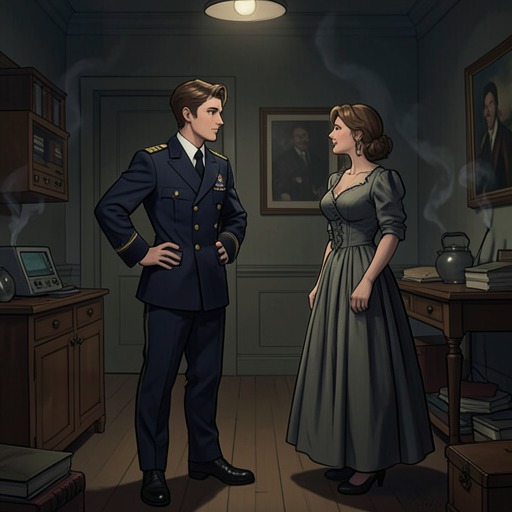
After decommissioning his minesweeper, Willie meets Feather face to face. Feather offers his hand and greets him warmly, saying that May has told him about Willie. The cordial introduction differs from the rivalry Willie has imagined from the photograph and Rubin’s account. Feather then invites Willie and Rubin to join him and May for a meal, an open gesture that makes the meeting social rather than openly confrontational.
The later encounter is more charged. As Willie and May speak, she turns away trembling and returns toward the stage, still needing to work. Feather comes in and tells Willie that the Navy parade is moving down Fifth Avenue and that its drums can be heard in the street. The offer provides Willie with a way to leave the room without turning the moment into a direct contest over May. It is a small, practical intervention, not an explicit declaration about their relationship.
Final Impression and Narrative Role
Willie and Feather face one another briefly. Willie sees something in Feather’s expression that recalls Tom Keefer: perhaps a mocking condescension, perhaps a softness beneath the brightness. The resemblance encourages Willie, who feels that he has matched Keefer. That judgment belongs to Willie’s interpretation of Feather, not to any stated admission by Feather; the encounter gives Willie a comparison through which to measure himself, but does not reveal what Feather thinks of him.
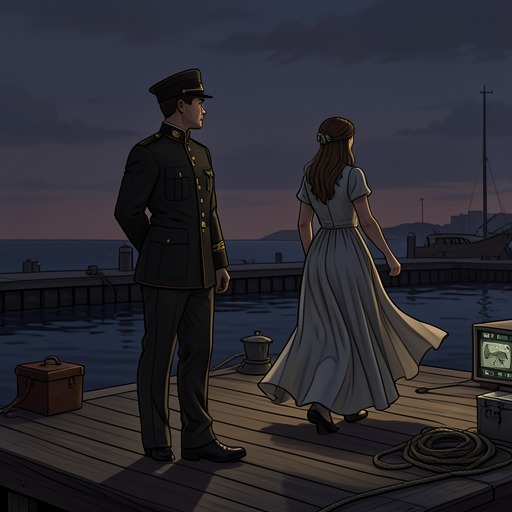
Willie thanks Feather, glances toward May, and leaves for the parade. May watches from the stage, holding a sheet of music, and barely nods as Willie gestures goodbye. Feather’s final appearance thus coincides with neither a clear victory nor a settled reconciliation. His cordiality helps make the departure possible, while his ambiguous expression lets Willie read the meeting as a test he has passed. Feather remains a lightly drawn figure, but the shift from unflattering photograph to personable, difficult-to-read man gives the closing encounter its uncertainty: Willie can leave encouraged without knowing whether he has won May back.