Willie Keith assumes command of USS Caine
The Caine MutinyWillie Keith assumes command of the USS Caine during the Navy’s rapid postwar drawdown, when the ship’s future and its crew’s departures are being decided together. His appointment is not simply the next step in a routine promotion: it depends on a new release policy, Tom Keefer’s intervention, and a judgment that wartime service has prepared a young officer to lead a vessel the Navy has recently deemed unfit for a demanding assignment.
Background: A ship at the end of its wartime service
By the time the transfer becomes possible, the war is nearly over. The novel places the ship’s service within the broad Allied advance of 1944 and 1945, but the USS Caine’s work has often been less dramatic than the campaigns around it. The vessel has spent months in repetitive escort duty, its movements determined by the needs of whichever command it enters. For its crew, war consists not only of battle but also of watches, communications, and recurring administrative work.
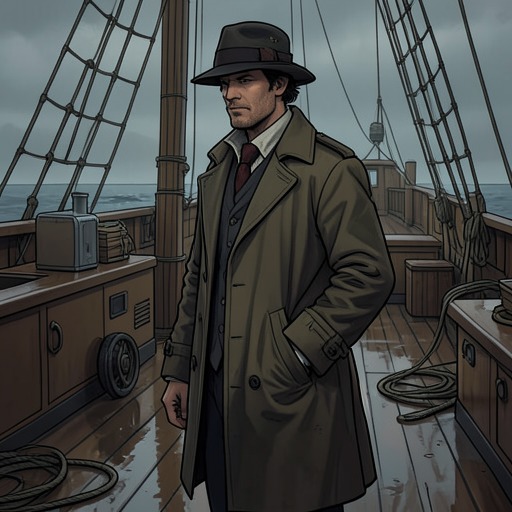
Keith has experienced that routine from the bottom of the ship’s officer hierarchy. When he first reports aboard, he is assigned to sleep in the cramped clipping shack, a small metal compartment crowded with ammunition supplies and fitted with a recently installed bunk. Later, his work includes decoding messages and correcting publications, alongside bridge watches. That experience does not itself establish his command qualifications, but it marks the distance between the new ensign’s first uncomfortable post and the responsibility now offered to him.
The USS Caine’s immediate prospects are poor. After its pumps are repaired, the ship still fails to join the destroyer-minesweepers ordered to prepare for sweeping Tokyo Harbor. Its condition is judged too unreliable for the voyage, particularly during typhoon season. The ship remains in Buckner Bay while other minesweepers depart, and its officers and crew hear the surrender ceremonies by radio. The war’s close therefore brings not a final major assignment for the vessel, but a question of whether it can continue operating and who will command it as the Navy reduces its forces.
Demobilization and the question of command
The Navy’s new point system arrives in early September, close to when Keith expected it. It is described as workable and fair, and its effects aboard the ship are substantial: half the crew, as well as the captain, become eligible for release. Keith’s own scheduled departure date is November 1. The policy thus creates both an approaching exit for Keith and an imminent personnel problem for the USS Caine.
Tom Keefer quickly sees the opportunity. He asks Keith whether he is ready to take command, while Keith doubts that the Navy would entrust a captaincy to an officer with barely two years at sea. Keefer argues that two years of wartime cruising amount to far more than two years of peacetime experience. He also points to his own June roster, in which he had already identified Keith as qualified. Keefer proposes pressing MinePac to send a dispatch to the Bureau of Naval Personnel, rather than waiting for the ordinary process to provide a relief for him.
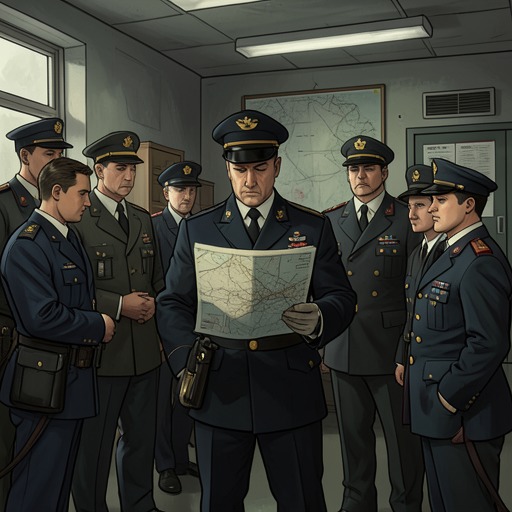
The appointment is not automatic. The officer personnel section is crowded with captains and executive officers seeking decisions under the release order. The responsible operations officer describes the bind: he must recommend officers for relief while avoiding the risk of placing an unqualified young officer in command, and exceptions to mandatory release must be reported in writing. Keefer supports his case by citing Keith’s role in saving the ship during the kamikaze disaster and noting that Keith is being considered for a Navy Cross. The recommendation turns the question from Keith’s short peacetime-style seniority to the record he has made in wartime service.
The transfer
Three days after the personnel discussions, an action message for the USS Caine arrives. Keith has been waiting for it; he carries the sheet to the wardroom and decodes it. The message makes the decision official: he is to be captain. The terse confirmation contrasts with the more complicated process behind it, in which a general release policy, Keefer’s assessment, and the ship’s operational needs have converged.
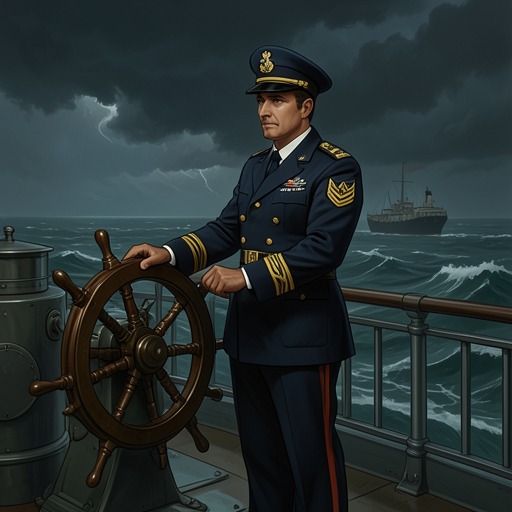
The change of command follows almost at once. Keefer has been packing since the new order arrived. Within ten minutes of the dispatch, the crew assembles for the transfer ceremony; ten minutes after that, the new captain and his predecessor are at the gangway with Keefer’s bags. The speed of the sequence makes the change feel less like a distant administrative decision than an immediate break in the ship’s chain of command. Keith has gained the position, while Keefer is already preparing to leave it behind.
Keith asks whether Keefer might have preferred to remain long enough to take the ship back to the United States and see it through decommissioning. Keefer explains that Keith’s November departure date makes freedom seem less urgent to him than it does to someone facing a longer wait. His response frames the transfer as a double transition: Keith is taking up command just as Keefer’s long service aboard the USS Caine is ending, and both officers understand the difference between holding responsibility and being free of it.
Significance
The appointment gathers the novel’s military and personal timelines into one transfer. A demobilization policy intended to release sailors creates a vacancy; a ship considered too unreliable for the Tokyo operation still requires a captain; and Keefer’s advocacy helps secure Keith’s advancement. The transition is therefore shaped by both formal procedure and judgment based on experience, rather than by seniority alone.
It also completes a visible change in Keith’s position aboard the ship. The officer who began in a cramped sleeping compartment and learned the routine through watches, message work, and the daily demands of the USS Caine now holds command. The evidence for his readiness includes his wartime record, especially the action Keefer cites during the kamikaze disaster, but the appointment does not erase the vessel’s damaged condition or guarantee an easy command. It places Keith at the head of the ship precisely as wartime service is giving way to release, return, and decommissioning.