Canterville Chase
The Canterville GhostCanterville Chase is both the ancestral home of the Canterville family and the setting where its concealed history repeatedly intrudes on the present. When the Otis family buys the estate despite warnings that it is haunted, its library, corridors, and secret chamber become the stages on which inherited legend meets practical modern life—and where the house’s apparent supernatural mystery is finally traced to a human crime and an undisclosed death.
Estate, Purchase, and Arrival
The estate has a reputation that precedes its new owners. Lord Canterville warns Hiram B. Otis that members of his family and the parish rector have seen the ghost, and recalls that his grandaunt was frightened by a supernatural encounter and never fully recovered. No younger servants would remain after that episode, while mysterious sounds from the corridor and library disturbed Lady Canterville’s sleep. Lord Canterville also says the ghost has been known since 1584 and appears before a death in the family. Hiram B. Otis nevertheless completes the purchase, treating the haunting as no obstacle to acquiring the property.
A few weeks after the purchase, the Otis family arrives at the estate at the close of the season. The drive begins in high spirits on a lovely July evening, but the atmosphere changes as they enter the avenue: clouds cover the sky, an unusual stillness settles, rooks pass overhead, and rain begins before they reach the house. Mrs. Umney, the housekeeper retained in her former position at Lady Canterville’s request, welcomes them at the entrance. She leads them through the Tudor hall into the long, low library, where tea has been laid out. The old house is introduced not only as a family residence but as a place whose domestic rooms retain the pressure of its past.
The Library and Its Bloodstain
The library gives the estate’s history a visible focal point. Mrs. Otis notices a dull red stain on the floor beside the fireplace and initially assumes that something has been spilled. Mrs. Umney explains that it is blood: the blood of Lady Eleanore de Canterville, murdered on that spot in 1575 by her husband, Sir Simon de Canterville. She adds that Sir Simon lived nine years longer, then disappeared in mysterious circumstances; his body was never found, and his guilty spirit continued to haunt the estate. The stain had become an attraction for tourists and others, but, Mrs. Umney insists, it cannot be removed.
Washington Otis immediately challenges that belief by scouring the floor with Pinkerton’s Champion Stain Remover and Paragon Detergent. For a moment, the mark disappears, and he takes the result as proof that the practical problem has been solved. The sudden lightning and thunder that follow, and Mrs. Umney’s faint, turn this cleaning attempt into the household’s first direct collision with the house’s legend. The episode establishes a recurring contrast: the Otises approach the estate through ordinary products and practical action, while its old inhabitants and traditions treat the same details as evidence of a history that cannot simply be erased.
The House as a Site of Haunting
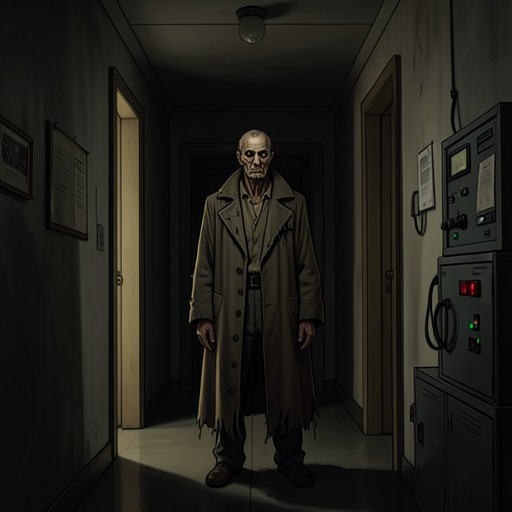
The library stain is only one part of a wider pattern of disturbance associated with Canterville Chase. On the first night, Hiram B. Otis hears metallic clanking and footsteps in the corridor. At one o’clock he opens his door and encounters Sir Simon, whose old-fashioned, ragged clothes and heavy chains mark him as a figure from the estate’s past. Rather than react with fear, Otis offers him a bottle of Tammany Rising Sun Lubricator to quiet the chains. Sir Simon throws the bottle down and flees; when the twins appear with a pillow, he escapes through the wainscoting. The house’s corridors and walls thus serve as a route for the ghost, but they also place his frightening performance within reach of the family’s comic, matter-of-fact responses.
The first encounter makes the estate’s age materially present through the sound of chains, the corridor, and the concealed passageways, while the household’s reactions repeatedly deflate the expected terror. Yet the building’s secrets are not merely theatrical. The same walls that allow Sir Simon to disappear also conceal a narrow passage leading to the chamber that explains what happened to him.
The Secret Chamber and the Estate’s Buried History
After Virginia Otis returns to her family, she tells them that she has been with the ghost, that he is dead, and that he was sorry for his past actions. She also says he gave her a box of jewels before his death. She leads the family through an opening in the wainscoting and down a narrow secret corridor. Washington follows with a candle, and the party reaches a heavy oak door studded with rusty nails. When Virginia touches it, it opens onto a small, low room with a vaulted ceiling and a tiny grated window.
Inside, an iron ring is embedded in the wall, and Sir Simon’s gaunt skeleton remains chained to it, stretched on the stone floor. An old trencher and ewer lie just beyond its reach; the jug is green with mould inside, and the trencher holds only dust. Virginia kneels beside the skeleton and prays silently as the others look on. The chamber discloses the physical secret that the estate’s public legend could not explain: Sir Simon’s body had not vanished from the property but remained hidden in a locked room, where the chain, the empty food vessel, and the dried remains reveal that he had been confined and starved. The house’s secret architecture transforms a tale of an elusive ghost into evidence of a death concealed within the family estate.
Meaning of the House
Canterville Chase binds together family inheritance, public legend, and private violence. Its library makes the murder of Lady Eleanore visible, while its hidden chamber holds the consequence of Sir Simon’s own fate. The contrast between the stain that can be scrubbed away temporarily and the death that the walls have kept hidden gives the estate’s domestic spaces a double function: they are rooms used by a present-day household and repositories of a past that resists easy dismissal.
The arrival of the Otises also changes how that past is encountered. Their purchase brings modern American habits into an old English setting: a haunting is met with a commercial lubricant, and a celebrated stain with a branded cleaner. Those responses supply comedy, but the revelation of the chamber gives the house’s history a graver dimension. Canterville Chase is not simply a backdrop for supernatural appearances; its corridors, library, and concealed room organize the movement from inherited rumor to material disclosure, and the family’s discovery there allows the estate’s long disturbance to reach its end.