Cecil, Duke of Cheshire
The Canterville GhostCecil, Duke of Cheshire, is Virginia Otis’s childhood suitor and, eventually, her husband. His place in the story is established through a comic mismatch between youthful desire and adult authority, then confirmed by his conduct when Virginia disappears: he refuses to remain behind while she is missing and joins the search. Their marriage concludes his courtship, but it does not erase Virginia’s private experience; even as her husband, Cecil does not learn what happened when she was locked up with the ghost.
Identity and Introduction
Cecil first appears in the account of Virginia’s childhood as the young Duke of Cheshire. When Virginia, aged fifteen, raced old Lord Bilton on her pony around the park and won by a length and a half, Cecil was delighted enough to propose to her on the spot. His guardians promptly sent him back to Eton College that night, leaving him in floods of tears. The episode gives his courtship an impulsive, youthful beginning: he is already attached to Virginia, but his title and intentions have no power to overrule the adults responsible for him.
He later comes to Canterville Chase during the final week of his holidays. His aristocratic status is linked to an older ghost story: his grand-uncle, Lord Francis Stilton, had once wagered that he would play dice with the Canterville ghost, and was found the next morning paralyzed and able thereafter to say only “Double Sixes.” The ghost, distantly related to the Dukes of Cheshire, plans to appear to Cecil as the Vampire Monk, hoping to demonstrate that he still has power over the family. At the last moment, however, fear of the twins keeps the ghost in his room, and Cecil sleeps peacefully beneath the feathered canopy in the Royal Bedchamber, dreaming of Virginia. His introduction to the haunting is therefore indirect: he is its intended target, but the ghost’s own fear prevents the encounter.
Devotion in the Search for Virginia
Cecil’s attachment becomes consequential when Virginia goes missing. After Mrs. Otis and the household begin searching, Hiram B. Otis remembers that a group of gypsies has been allowed to camp in the park. He rides toward Blackfell Hollow with his eldest son and two farm-servants, while Cecil, frantic with anxiety, asks to accompany him. Hiram refuses at first because he fears a scuffle. Cecil nevertheless follows on his pony, flushed and bareheaded, and catches up with the Minister on the road.
He apologizes for disobeying, but explains that he cannot eat dinner while Virginia is lost. He also recalls that if he and Virginia had been allowed to become engaged the previous year, he believes the present trouble would never have happened. His plea that Hiram not send him back makes the earlier childhood proposal more than a passing joke: Cecil still regards his bond with Virginia as a serious commitment, even though he is young and the engagement was not permitted.
Hiram is touched by Cecil’s devotion and smiles at the young fugitive. He agrees that Cecil may come along, but says he must get him a hat at Ascot. Cecil dismisses the hat as unimportant, insisting that he wants Virginia. They gallop on to the railway station, where Hiram asks whether anyone matching Virginia’s description has been seen. The station-master has no news, but wires along the line and promises to keep watch. After buying Cecil a hat from a linen-draper who is closing up, Hiram rides on with him to Bexley, then searches the common after rousing the rural policeman. The search yields nothing; they return to the Chase around eleven o’clock, exhausted and heartbroken.
The wider search has also failed. Washington and the twins wait at the gate-house with lanterns, and Virginia is not among the gypsies found on Brockley meadows. The gypsies explain that they left in haste because they had mistaken the date of Chorton Fair; four had stayed behind to help search. The carp-pond has been dragged and the grounds thoroughly searched without finding Virginia. Cecil’s determination cannot solve the disappearance, but it makes him an active participant in the family’s fear and uncertainty rather than a distant, privileged visitor.
The Resolution and Marriage
When Virginia returns, Cecil greets her with wonder and affection. As the family looks out into the moonlight, one of the twins notices that the old withered almond-tree has blossomed. Virginia interprets the sign as evidence that God has forgiven the ghost. Cecil calls her an angel, puts his arm around her neck, and kisses her. The moment joins his personal love for Virginia to the story’s larger resolution: he responds to her compassion, while she understands the flowering tree as a sign of the ghost’s release.
The courtship eventually becomes a marriage. In the spring of 1890, Virginia is presented at the Queen’s first drawing-room as the young Duchess of Cheshire, wearing the jewels the ghost had given her. Lord Canterville has insisted that she keep them, arguing that the family has no legal claim: the jewels were unknown as heirlooms, and the Otis family had bought the furniture and the ghost at a valuation. Virginia and Cecil marry as soon as he comes of age. They are described as charming and deeply in love, and their match pleases everyone except the old Marchioness of Dumbleton, who had hoped to secure the Duke for one of her seven unmarried daughters.
Hiram B. Otis is a notable exception to the general approval. He likes Cecil personally but objects in principle to titles, fearing that the pleasure-loving aristocracy could weaken the principles of republican simplicity. His objections are overruled. When he walks with Virginia up the aisle of St. George’s, Hanover Square, he is nevertheless presented as an exceptionally proud father. The marriage thus completes Cecil’s childhood courtship while preserving the story’s comic contrast between American republican suspicion of rank and the English aristocratic world into which Virginia enters.
A Marriage with a Kept Secret
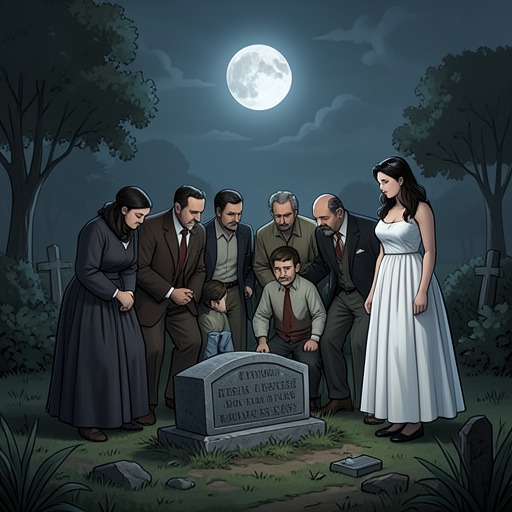
After their honeymoon, the Duke and Duchess return to Canterville Chase. The day after they arrive, they visit the lonely churchyard by the pine-woods, where Sir Simon’s grave bears the initials of his name and the verse from the library window. Virginia has brought roses, which she scatters on the grave. From there the couple stroll to the ruined chancel of the old abbey, where Cecil sits at Virginia’s feet and asks what happened when she was locked up with the ghost.
Cecil frames the question as something a wife should tell her husband, but Virginia answers that she has never told anyone. He knows she has kept the experience secret from everyone and asks her to tell him; she does not disclose it in the passage. The ending therefore gives their marriage a tender intimacy without making it total disclosure. Cecil’s affection and curiosity are plain, yet Virginia retains the privacy of an encounter whose meaning belongs to her. His story closes not with an explanation of that secret, but with its continued presence between two people who love one another.