Ghosts
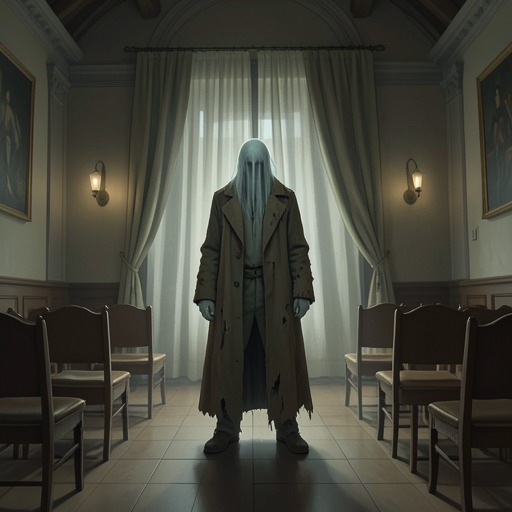
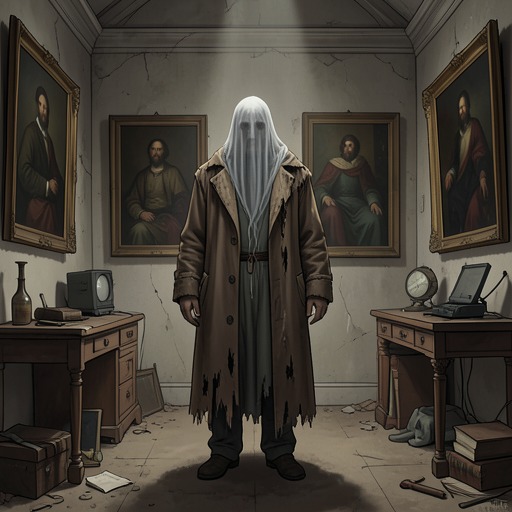
The Canterville GhostGhosts in the story make the past an active presence in the modern home. The haunting of Canterville Chase is treated first as an inherited family warning, then as a test of Hiram B. Otis’s confidence in modern explanations, and finally as the outward sign of a hidden crime and an unresolved death. The ghost’s power to frighten is repeatedly undercut by practical remedies and comic reversals, but the discovery of his remains reveals the suffering beneath the spectacle.
Reputation and Inherited History
Before Hiram B. Otis buys Canterville Chase, the house is already known as haunted. Lord Canterville warns him that the family has not wished to live there, recounting how his grandaunt, the Dowager Duchess of Bolton, was so frightened by the appearance of two skeleton hands on her shoulders that she suffered a fit from which she never recovered. Other living family members and the parish rector have seen the ghost, while mysterious sounds in the corridor and library have disturbed Lady Canterville’s sleep. After the duchess’s experience, younger servants would not remain in the household. The haunting is thus presented not as a single rumor but as a burden carried through the family’s domestic life.
Lord Canterville gives the appearances a further ominous association: the ghost has been known since 1584 and appears before the death of a family member. Hiram dismisses that inherited warning by comparing the ghost to a family doctor and insisting that natural law will not be suspended for British aristocracy. His confidence establishes the cultural contrast that shapes the haunting: the old house understands the apparition through tradition and fear, while its new American owner initially treats it as an implausible claim that could be managed, or even commercialized.
The Bloodstain and the Murder Behind It
The library’s bloodstain gives the haunting a visible, recurring mark. When Mrs. Otis objects to having a stain in a sitting-room, Mrs. Umney identifies it as the blood of Lady Eleanore de Canterville, murdered in that very place by her husband, Sir Simon de Canterville, in 1575. Sir Simon lived nine years longer, then disappeared under mysterious circumstances; his body was never found. Mrs. Umney says that his guilty spirit still haunts the house and that visitors have long admired the stain, which she believes cannot be removed.
Washington rejects the housekeeper’s account as nonsense and scrubs the floor with Pinkerton’s Champion Stain Remover and Paragon Detergent. The mark vanishes at once, provoking his triumphant confidence, but thunder and lightning immediately accompany Mrs. Umney’s fainting. The stain returns the next morning. Washington cleans it again, only for it to reappear on the second morning and once more on the third, even though Hiram has locked the library and carried the key upstairs. The repeated failure changes the family’s response: Hiram begins to suspect that his denial of ghosts may have been too dogmatic, Mrs. Otis considers joining the Psychical Society, and Washington prepares a letter to Myers and Podmore about the permanence of bloodstains associated with crime. The stain’s stubborn return makes the past harder to treat as a removable household nuisance.
The Apparition Meets Modern Practicality
The story’s first direct encounter makes the conflict between ghostly tradition and practical American habits comic rather than purely terrifying. At one o’clock, Hiram wakes to the sound of clanking metal and footsteps in the corridor. He gets up, checks the time, and opens his door with a small bottle taken from his dressing-case. In the moonlight he sees an old figure with red eyes, long grey hair, antique ragged clothes, and heavy manacles and gyves hanging from his wrists and ankles.
Instead of fleeing, Hiram addresses the apparition as a problem of household maintenance. He insists that the ghost oil his chains and leaves him a bottle of Tammany Rising Sun Lubricator, whose wrapper carries testimonials and claims that one application is effective. The ghost throws the bottle onto the floor and retreats down the corridor, groaning and emitting a green light. At the staircase, two white-robed figures appear and a pillow flies past his head; he escapes through the wainscoting. The encounter reverses the expected balance of power: the ghost’s theatrical display does not overcome the family’s unruffled pragmatism, and his attempt at a frightening entrance ends in flight.
The apparition’s vulnerability becomes clearer in a later deception. After mistaking the twins’ imitation for another ghost, Sir Simon returns at dawn expecting to enlist it against them. He discovers that the figure is a constructed prank, made from a bed-curtain and household objects, and reads its placard identifying it as “YE OTIS GHOSTE” and warning against imitations. The revelation turns the twins’ practical mischief into a challenge to the ghost’s own expertise in haunting. Sir Simon swears that he will answer the humiliation with violence, but his oath depends on a cock crowing twice; when it does not crow a second time, he waits in vain until the housemaids arrive. His intended revenge is thwarted by the failed condition, and he retreats to his room and then to a lead coffin until evening.
The Secret Chamber and the Meaning of the Haunting
The family’s understanding changes when Virginia returns after having been missing. She tells them that she has been with the ghost, that he is dead, and that he had been wicked but was sorry for what he had done. She also brings a box of jewels he gave her before his death. Rather than leave her account unexplored, she leads the family through an opening in the wainscoting and down a narrow secret corridor. Washington follows with a candle, and Virginia opens a great oak door studded with rusty nails.
Inside is a low, vaulted room with a small grated window. A large iron ring is embedded in the wall, and a gaunt skeleton lies chained to it on the stone floor, reaching toward an old trencher and ewer just beyond its grasp. The ewer is coated inside with green mould; the trencher holds only dust. The scene discloses why Sir Simon’s body had never been found and gives material form to the secret behind the haunting. The ghost is no longer only the cause of frightening appearances or a comic target for the household: his remains reveal that he himself endured confinement and starvation in the hidden room.
Virginia kneels beside the skeleton and silently prays while the others witness the tragedy disclosed there. The secret chamber links the house’s present disturbances to its concealed history, while her response differs sharply from the family’s earlier attempts to erase, classify, or outwit the supernatural. The story thereby shifts the haunting from a contest over whether ghosts exist to a question of what the ghost’s history demands from the living. The exposed remains and Virginia’s prayer make the ghost’s release, rather than another failed attempt to frighten the family, the decisive end of his presence.
Narrative Significance
Ghosts in the story occupy two registers at once. Their appearances carry the force of inherited Gothic fear: the family’s warnings, the association with death, the repeatedly returning bloodstain, the hidden passage, and the chained skeleton all make the old house a repository of violence that modern purchase and household routines cannot simply erase. At the same time, the Otis family’s confidence in products, practical remedies, and skeptical explanations makes the ghost’s performances comic. The lubricator, stain remover, and imitation apparition each turn an expected supernatural encounter into an awkward failure for Sir Simon.
That comedy does not finally make the buried history trivial. The recurring stain points back to Lady Eleanore’s murder, and the secret room reveals the fate that the absent body had concealed. The ghost’s appearances and the family’s efforts to manage them therefore connect an old family crime to the present household, where the past becomes legible only when Virginia listens, returns with the jewels, and leads the others to the hidden chamber. His story ends not with a more successful haunting but with the disclosure of his remains and the compassion expressed in her prayer.