Hiram B. Otis
The Canterville GhostHiram B. Otis is the American Minister whose purchase of Canterville Chase brings a practical, commercially minded American household into a long-standing English ghost story. He answers warnings of the haunting with confidence in modernity, but the ghost’s presence steadily tests that confidence; his concern for his family and his scruples over the jewels Virginia receives give his comic pragmatism a more serious dimension.
Identity and Background
Introduced as the American Minister, Otis buys Canterville Chase despite everyone’s warning that the house is haunted. Lord Canterville, whom the narrative describes as punctiliously honourable, makes a point of disclosing the danger before the sale. He recounts how his grandaunt was frightened into a lasting fit by the appearance of skeleton hands, how other relatives and the parish rector had seen the ghost, and how the household’s servants and Lady Canterville suffered from the disturbances. Otis is therefore not ignorant of the estate’s reputation: he proceeds with the purchase after receiving a direct account of its consequences.
His answer frames the supernatural dispute as a difference between inherited belief and modern commercial confidence. Otis says he will take the furniture and the ghost at a valuation, and imagines that a European ghost would soon be housed in a public museum or exhibited on the road in America. Lord Canterville counters that the ghost has been known for three centuries, has appeared since 1584, and traditionally precedes the death of a family member. Otis replies that the family doctor also appears before a death, and insists that natural law will not be suspended for British aristocracy. The exchange establishes his characteristic habit of translating an old-world warning into familiar modern terms rather than treating it as a reason to retreat.
Practical Responses to the Haunting
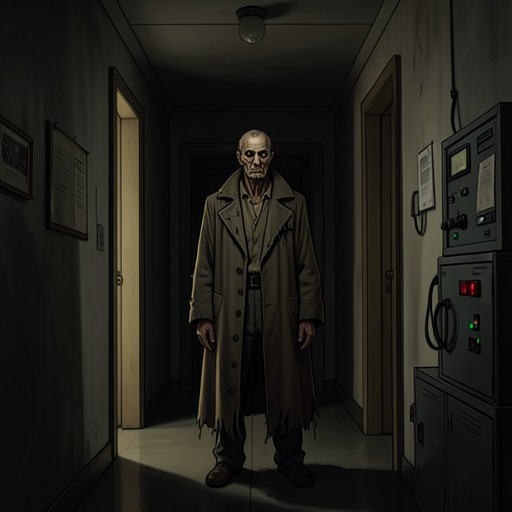
Otis’s first direct encounter with the ghost puts his confidence into action. At one o’clock, awakened by approaching metal clanks and footsteps, he gets up, checks the time and his pulse, and opens his bedroom door. Faced with the ghost in the moonlight, he does not flee or appeal to the housekeeper’s traditions. Instead, he offers a small bottle of Tammany Rising Sun Lubricator and explains that it should quiet the ghost’s chains. He leaves it on a marble table by the bedroom candles and returns to bed. The ghost rejects the offer, but Otis’s response defines his method: a supernatural disturbance is treated as a practical nuisance with a purchasable remedy.
The same outlook shapes his reaction to the storm following Washington’s removal of the bloodstain. While Mrs. Umney has fainted and the family is unsettled by lightning and thunder, Otis calmly lights a cheroot and complains of the English climate, proposing emigration as its remedy. When Mrs. Otis asks what to do about the housekeeper, he suggests charging her for the fainting as though it were breakage. Mrs. Umney soon recovers, although she warns Otis to beware of trouble. His dry, transactional jokes make the scene comic, but they also show how persistently he tries to absorb uncanny events into ordinary household management.
At breakfast the following morning, Otis is annoyed that the ghost has refused his lubricant. He says he does not wish to injure the ghost, but objects that throwing pillows is impolite; he then proposes that the family take away the chains if their noise continues to disturb sleep. The twins’ laughter undercuts the Minister’s complaint, while his response remains consistent with his earlier approach: the haunting is something to negotiate, regulate, or repair. Over the rest of the week, he locks the library door at night and keeps its windows barred, yet the bloodstain continues to reappear in changing colours. Its recurrence persists alongside his efforts to secure and manage the house, demonstrating that the problem does not yield to ordinary precautions.
Family Responsibility and Virginia’s Disappearance
Otis’s practical composure gives way to urgent action when Virginia fails to come down for tea. At first, Mrs. Otis assumes that her daughter has gone into the garden, as she often does to gather flowers for dinner. When Virginia is still missing at six, the family searches the house and sends the boys outside to look for her. At half-past six they have found no trace. Remembering that he had allowed a group of gypsies to camp in the park, Otis goes to Blackfell Hollow with his eldest son and two farm-servants. He discovers that the group has departed, leaving a fire still burning and plates on the grass.
Otis sends Washington and the men to search the district, returns home, and telegraphs county police inspectors with a description of Virginia, fearing she has been kidnapped. He then arranges his horse and rides towards Ascot with a groom, after insisting that Mrs. Otis and the boys sit down to dinner. The instruction reveals his continued reliance on routine even during a family emergency; it does not prevent him from pursuing the search himself. When Cecil, Duke of Cheshire, follows on his pony, flushed and without a hat, Otis initially has to decide whether to let him join the search. Cecil insists that he cannot eat while Virginia is lost and reminds Otis that an earlier engagement would have spared them this trouble. Otis is touched by the boy’s devotion, permits him to come, and says he will buy him a hat at Ascot.
The search carries Otis and Cecil to the railway station, where Otis asks whether anyone matching Virginia’s description has been seen. The station-master has no news, but wires along the line and promises a strict watch. Otis buys Cecil a hat from a linen-draper closing for the evening, then rides with him to Bexley, a village identified as a gypsy haunt. They wake the rural policeman and search the common without finding information. Returning to Canterville Chase around eleven, Otis finds Washington and the twins waiting with lanterns. The gypsies have been caught on Brockley meadows, but Virginia is not with them; they explain that they left hurriedly after mistaking the date of Chorton Fair, and some stayed behind to help. The carp-pond has been dragged and the estate searched, yet the family still has no trace of her. Otis’s search ends that night in exhaustion and deep distress, with Virginia’s whereabouts unresolved.
The Secret, the Jewels, and the Ending
Virginia’s return changes Otis’s role from searcher to witness. She tells the family that she has been with the ghost, that he is dead, and that he gave her a box of jewels before his death. She then leads them through an opening in the wainscoting and down a narrow secret corridor to a low room behind a great oak door. Inside, the family finds a skeleton chained to an iron ring in the wall, with an old trencher and ewer beyond its reach. Virginia kneels beside the remains and prays silently while the others take in the tragedy the hidden room reveals. Otis’s earlier faith in practical explanations cannot account for what the family now sees; the search for a missing child has brought them to the concealed history of the haunting.
The next morning, Otis raises the jewels with Lord Canterville before the latter leaves for town. The magnificent collection includes a ruby necklace in an old Venetian setting, a notable example of sixteenth-century work. Although the ghost has given the jewels to Virginia, Otis has scruples about allowing her to keep them because he believes they should belong to the Canterville family. He invokes mortmain and the possibility that the jewels are heirlooms, asks Lord Canterville to take them to London as property restored under unusual circumstances, and argues that their great monetary value makes accepting them improper. He also distinguishes the jewels from the worn box, which Virginia wants to keep as a memento of her ancestor.
Lord Canterville rejects Otis’s proposed return. He says Virginia rendered Sir Simon an important service, that the jewels are clearly hers, and that the family has no legal claim to objects whose existence was unknown and which were not mentioned in a will or legal document. Otis’s effort to relinquish the valuables thus gives way to recognition of Virginia’s claim and the service she performed. His conduct completes the portrait introduced at the purchase: he is skeptical of inherited supernatural claims and quick to reach for practical remedies, yet he takes warnings seriously enough to protect his household, searches for his daughter without respite, and approaches a valuable gift with scrupulous regard for what is fair.