Mrs. Otis
The Canterville GhostMrs. Otis is the poised and energetic matriarch of the Otis family, whose practical habits repeatedly meet the supernatural on everyday terms. At Canterville Chase, she treats a fainting housekeeper as a problem to manage, offers the ghost medicine when he attempts to frighten the family, and later becomes nearly overwhelmed by fear when Virginia disappears. Her composure is not indifference: the disappearance exposes the depth of her attachment to her daughter.
Identity and Background
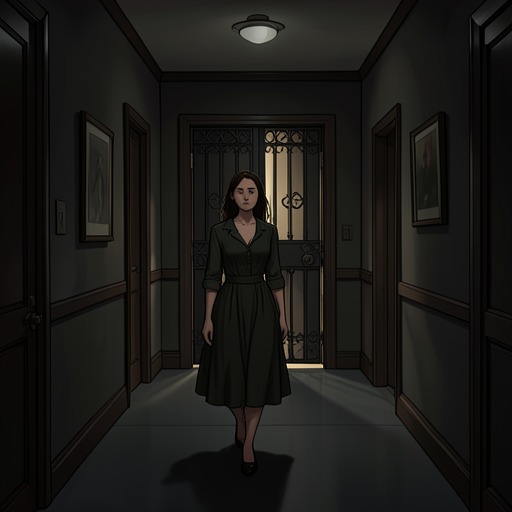
Before her marriage, Mrs. Otis was Miss Lucretia R. Tappan of West 53rd Street, a celebrated New York belle. By the time the family moves to Canterville Chase, she is described as handsome and middle-aged, with fine eyes and a distinguished profile. The narrator emphasizes her strong constitution and abundance of energy, contrasting her with the fashion among some American women abroad of adopting an appearance of chronic ill health as a supposed mark of European refinement. Mrs. Otis, the account insists, has never made that mistake.
Her character also complicates the story’s broad national contrast. Though American, she is said to be English in many respects, and the narrator presents her as evidence of the countries’ common ground, with language as the conspicuous exception. That description suits her role in the household: she participates in the family’s American confidence and practical outlook, but her manners and temperament do not make her a simple emblem of national opposition.
Practical Responses to the Supernatural
When Mrs. Umney faints amid the family’s first unsettling experiences at the house, Mrs. Otis asks what they can do with a woman who faints. Hiram B. Otis suggests charging the incident as though it were a breakage, and Mrs. Umney soon recovers. The exchange turns a moment of alarm into household business. Mrs. Otis’s response is brisk rather than cruel: she treats the fainting as a manageable difficulty, while the shaken housekeeper warns the new residents to beware of trouble and recalls terrifying sights and sleepless nights at the house.
The family’s practical manner does not silence Mrs. Umney’s warning. She insists that she has seen things with her own eyes that would horrify a Christian and invokes Providence’s blessing on her new master and mistress before retiring. Mrs. Otis and her husband warmly assure her that they are not afraid of ghosts. In this early exchange, Mrs. Otis belongs to a household that answers the old house’s fearful reputation with confidence, reassurance, and ordinary arrangements, including an increase in the housekeeper’s salary.
That confidence becomes comic when the ghost confronts the family directly. After the twins fire pea-shooters and Hiram B. Otis covers him with a revolver, the ghost sweeps through the group and extinguishes Washington Otis’s candle. He retreats upstairs and tries his celebrated demoniac laugh, but Mrs. Otis opens her door in a light blue dressing-gown and addresses him as though he were an unwell visitor. She says she fears he is far from well and offers a bottle of Doctor Dobell’s tincture, recommending it if his trouble is indigestion. The ghost is furious; his attempt to inspire dread has been recast as a case for domestic medicine.
The episode sharpens the story’s recurring contrast between supernatural display and American practicality. The ghost’s laugh has supposedly frightened people into lasting distress and driven governesses away, yet it cannot prevent Mrs. Otis from responding to the noise with concern and a remedy. Her intervention is not a victory over the ghost so much as a refusal to accept the terms on which he wants to be feared. The scene makes her composure part of the household’s comic resistance to haunting.
Family Relationships and Vulnerability
Mrs. Otis’s role changes in emphasis when Virginia vanishes. After an unsuccessful search, the family returns to the house around eleven at night. The missing girl has not been found among the gipsies, on the common near Bexley, or in the grounds; the carp-pond has also been dragged. In the library, Mrs. Otis lies on a sofa, almost out of her mind with terror and anxiety, while Mrs. Umney bathes her forehead with eau de cologne. The image reverses the earlier scene of Mrs. Otis briskly managing the housekeeper’s faint: now she is the distressed woman receiving care.
Hiram B. Otis insists that his wife eat and orders supper for the searching party. The meal is melancholy and nearly silent, and even the twins are subdued because they love their sister. Mrs. Otis’s fear is thus placed within a family’s shared uncertainty, not treated as a passing display. When the clock tower strikes midnight and Virginia returns, Mrs. Otis clasps her passionately in her arms. She thanks God that her daughter has been found, calls her darling, and pleads that she never leave her mother’s side again, kissing her and smoothing her tangled golden hair.
The contrast between Mrs. Otis’s earlier confidence and this emotional collapse gives her practical manner greater dimension. She can meet a ghost with a bottle of medicine and a faint with a household joke, but Virginia’s disappearance defeats that steadiness. Her affection becomes legible through physical gestures and direct pleas: she holds her daughter close, kisses her, and tries to keep her near. When Virginia calmly reveals that she has been with the ghost and that he is dead, Mrs. Otis’s relief belongs to the family’s reunion; the daughter’s grave account then redirects the scene from rescue to the secret behind her absence.
Narrative Role
Mrs. Otis helps establish the domestic comedy through which the haunting is first viewed. Her health, energy, and unflustered manner embody the family’s capacity to answer ominous signs with practical explanations or everyday care. Yet the story does not leave her as a mere symbol of American skepticism. The night Virginia is missing, her composure gives way to unmistakable terror, and her reunion with her daughter makes the emotional cost of the search immediate.
Her two encounters with distress also form a telling reversal. At the beginning, she asks what to do with a housekeeper who faints; later, she is the one lying on a sofa while another woman tends to her. At the ghost’s appearance, she offers a remedy; at Virginia’s return, she offers no solution, only embraces and a plea for closeness. The change reveals the limits of the household’s confident practicality and anchors the supernatural plot in a recognizable bond between mother and daughter.