Murder of Lady Eleanore de Canterville
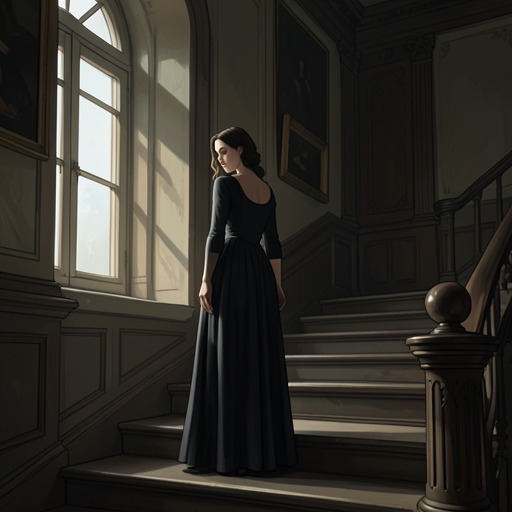
The Canterville GhostThe Murder of Lady Eleanore de Canterville is the foundational crime in the history of Canterville Chase: Sir Simon de Canterville killed his wife in 1575, and the crime became inseparable from the house’s persistent haunting. Its delayed disclosure links a domestic murder to Sir Simon’s later imprisonment and death, and to Virginia Otis’s discovery of the secret chamber where his remains were left.
The Crime and Its Aftermath
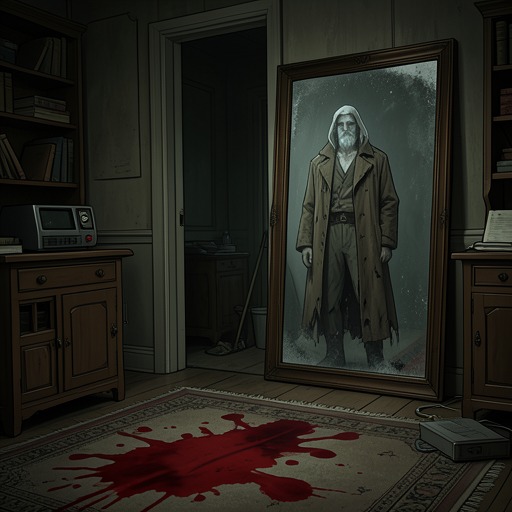
When the Otis family first encounter the bloodstain in the library, Mrs. Umney identifies it as the blood of Lady Eleanore, murdered on that very spot by her husband in 1575. She says Sir Simon survived Lady Eleanore by nine years, then disappeared under mysterious circumstances; his body was never found. The account establishes both the murder and the unresolved history that turns the Chase into a haunted house.
The stain’s continued presence makes the past a recurring feature of the household rather than a story safely confined to family history. Washington Otis scrubs it away with Pinkerton’s Champion Stain Remover and Paragon Detergent, but the stain repeatedly returns. The attempt to remove it with a modern household product sharply contrasts with Mrs. Umney’s warning that it cannot be removed: the material trace resists the family’s practical confidence and keeps the old crime in view.
Sir Simon’s Account
Much later, Virginia Otis confronts the ghost with the report that he killed his wife. Sir Simon admits the deed but dismisses it as a private family matter, as if that could place it beyond moral judgment. Virginia answers that killing anyone is wrong. Their exchange brings the crime out of the household legend and into a direct moral encounter between the perpetrator and a living witness.
Sir Simon explains his grievance by complaining that Lady Eleanore was plain, did not keep his ruffs properly starched, and did not know how to cook. He recalls a buck he had shot in Hogley Woods and objects to the way she had it served. These petty domestic complaints do not excuse the murder; instead, they expose the gulf between Sir Simon’s self-justification and Virginia’s plain condemnation. He also acknowledges that her brothers starved him to death, though he treats that consequence as a further wrong against himself.
The Hidden Death
The murder’s history is entangled with what happened after Sir Simon killed Lady Eleanore. When the Otis family follows Virginia through an opening in the wainscoting and down a narrow secret corridor, they reach a low room with a vaulted ceiling and a tiny grated window. A huge iron ring is embedded in the wall, and a gaunt skeleton lies chained to it. An old trencher and ewer sit just out of reach; the ewer is coated inside with green mould, and the trencher holds only dust. The remains make visible the fate that had been obscured by Sir Simon’s disappearance: he was imprisoned and starved to death in the secret room.
Virginia kneels beside the skeleton and prays silently as the others witness the tragedy. That act accompanies the revelation of the crime’s aftermath but does not erase either violence: Lady Eleanore was murdered, and Sir Simon was later confined and left to die. The story thus makes the haunting carry more than one buried injury, while Virginia’s compassion gives Sir Simon the possibility of repentance and release.
Burial and Legacy
Four days after the family’s discovery, a funeral leaves Canterville Chase at about eleven at night. Lord Canterville comes from Wales as chief mourner; Virginia rides with him, while the Otis family and Mrs. Umney follow in the other carriages. The service is held in the churchyard beneath the old yew-tree, where the family’s old custom has the servants extinguish their torches as the coffin is lowered. Virginia places a cross of white and pink almond blossoms on the coffin, joining the end of the haunting to the discovery of Sir Simon’s fate.
The murder’s consequences therefore extend beyond the original act and beyond Sir Simon’s death. His crime defines the bloodstain and the family’s ghost story; his later imprisonment explains the hidden skeleton; and the eventual funeral gives the concealed history a public, communal ending. Through Virginia’s intervention, the old family crime is no longer merely repeated as a haunting: its victims and consequences are acknowledged, and the Chase can return to peace.