Sir Simon’s jewels
The Canterville GhostSir Simon’s jewels are the costly inheritance that Sir Simon entrusts to Virginia Otis before his death. Virginia’s family discovers their significance alongside the secret of Sir Simon’s remains, and the jewels then become the focus of a dispute between Hiram B. Otis and Lord Canterville over ownership, family history, and Virginia’s right to keep a personal memento. Ultimately, Lord Canterville recognizes them as Virginia’s, and she wears them after her marriage to Cecil, Duke of Cheshire.
Discovery and Gift
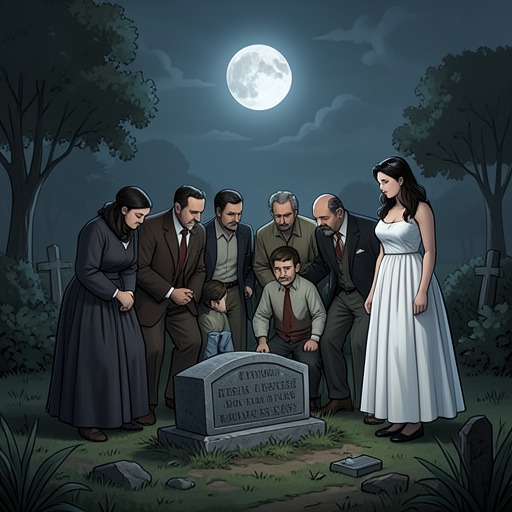
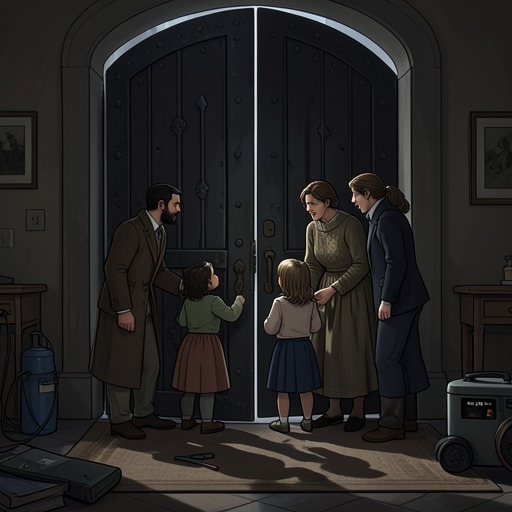
When Virginia returns to her family after being missing, she tells Hiram B. Otis that Sir Simon has died, that he regretted his past actions, and that he gave her a box of beautiful jewels before his death. She leads the family through an opening in the wainscoting and down a narrow secret corridor to a small, vaulted room. There they find Sir Simon’s gaunt skeleton chained to an iron ring in the wall, with an old trencher and ewer just beyond its grasp. The ewer is marked inside with green mould, and the trencher holds only dust. Virginia kneels beside the remains and prays silently as the family understands the tragedy the hidden room has disclosed.
The gift is therefore introduced not as an isolated treasure but at the moment the family learns what happened to Sir Simon. The jewels accompany Virginia’s report of his remorse and death, joining material inheritance to the change in their relationship: the ghost who had tried to haunt the household gives her a valuable possession, and she presents it to her family as evidence of their final encounter.
Value and Ownership Dispute
The next morning, Hiram B. Otis discusses the jewels with Lord Canterville before the latter goes to town. The gems are described as magnificent, and a ruby necklace in an old Venetian setting is singled out as a fine example of sixteenth-century workmanship. Their monetary worth troubles Otis; he considers them property that ought to belong to the Canterville family rather than be retained by his daughter.
Otis argues that English mortmain applies to trinkets as well as land, and that the jewels should be treated as family heirlooms. He asks Lord Canterville to take them to London as property restored to him under unusual circumstances. Otis also insists that Virginia is a child with little interest in luxury, and invokes his wife’s judgment of the gems’ substantial sale value. Against that concern about value and ownership, he makes a narrower request: Virginia wants to keep the old box as a memento of a misguided ancestor. Otis’s appeal reflects his commitment to Republican simplicity and his unease with inherited aristocratic display, even as he tries to respect the Cantervilles’ claim.
Lord Canterville refuses to take the jewels. He credits Virginia with rendering his ancestor an important service and says that her courage has made the Canterville family indebted to her. In his view, the gems are hers; they were not known to exist and were not identified as heirlooms in a will or legal document. He also points out that Hiram B. Otis bought the furniture and the ghost at a valuation, so that, in law, property belonging to Sir Simon passed to the Otis family with the purchase. The argument thus turns on competing grounds—family association, legal status, the original property transaction, and Virginia’s personal service—and ends with Lord Canterville urging Otis to let her keep the gift.
Inheritance and Later Significance
Otis is distressed by Lord Canterville’s refusal to reclaim the gems and asks him to reconsider. The peer remains firm, and Otis eventually permits Virginia to retain them. The jewels consequently pass into her possession not because their value is denied, but because Lord Canterville considers her claim just and the Otis purchase legally relevant. The old, somewhat damaged box remains especially important to Virginia as a memento of Sir Simon.
In the spring of 1890, when Virginia is presented at the Queen’s first drawing-room on the occasion of her marriage, her jewels are widely admired. She has become the young Duchess of Cheshire, having married Cecil once he came of age. Their public display gives the objects a new setting: the gems that emerged from a secret room and a supernatural gift become part of Virginia’s life within the aristocratic world. Their path also preserves the story’s contrast between Otis’s Republican suspicion of titles and luxury and the Canterville family’s recognition of a debt owed to Virginia.
The jewels serve at once as valuables, inheritance, and keepsake. Their worth prompts practical and legal arguments, but their decisive significance rests in the circumstances of their gift: they mark Sir Simon’s remorse, Virginia’s compassionate intervention, and the reconciliation that makes an inherited object something she may keep rather than a possession automatically reclaimed by the family whose history it carries.