The Otis twins
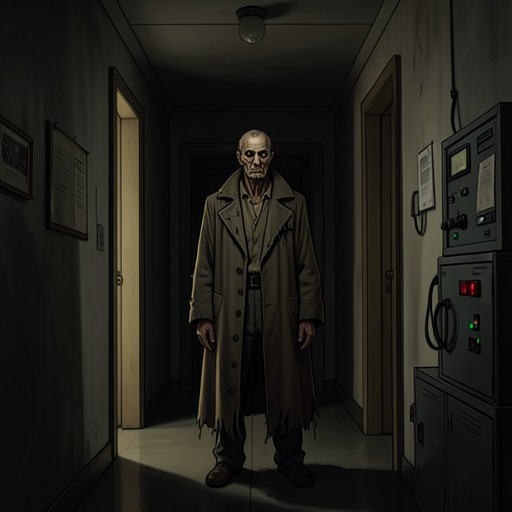
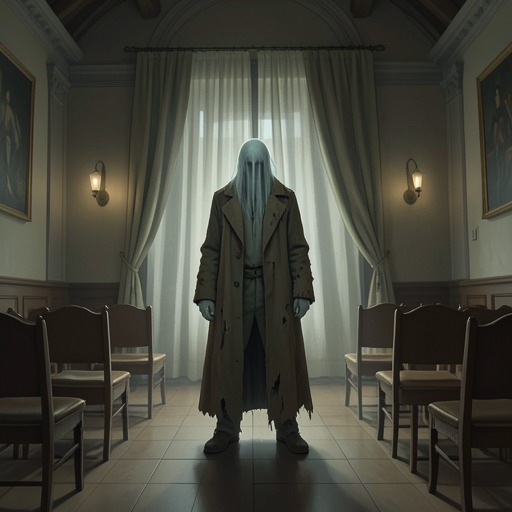
The Canterville GhostThe Otis twins are the mischievous young sons of Hiram B. Otis and Mrs. Otis, and the most persistent agents of the family’s comic resistance to Sir Simon de Canterville. Nicknamed “The Star and Stripes,” they answer the ghost’s inherited repertoire of supernatural intimidation with practical jokes, turning his efforts to terrify Canterville Chase into a succession of humiliating retreats. Their confidence and ingenuity help make the haunting a contest over who controls the house’s atmosphere: Sir Simon arrives expecting fear, but the twins repeatedly supply ridicule instead.
Identity and Family
The twins are the youngest children in the Otis family, following their elder brother Washington Otis and their fifteen-year-old sister Virginia Otis. They are described as delightful boys, usually called “The Star and Stripes” because they are always getting swished. The joke captures both their rowdy energy and their distinctly American family setting; the narrator calls them, apart from their father, the family’s only true republicans.
Their mischief is not merely a label attached to them before the haunting begins. It becomes their way of responding to the old house and its ghost. Where Sir Simon treats the rituals and effects of haunting as a solemn profession, the boys approach them as opportunities for play. The resulting clash gives the twins a sharply recognizable character function: they do not need to disprove the supernatural, only to refuse the fear on which the ghost’s authority depends.
First Encounters with the Ghost
When Sir Simon first confronts the Otis family, Hiram B. Otis offers him a bottle of chain lubricant rather than responding with terror. The ghost, indignant at this practical treatment, throws the bottle down and flees along the corridor. At the top of the oak staircase, two small white-robed figures appear, and a large pillow whizzes past his head. The twins’ ambush helps turn his retreat into a comic rout: having already been affronted by the family’s matter-of-fact response, he now faces a physical attack and escapes through the wainscoting.
The second appearance brings the family down to the hall after the crash of a suit of armour falling from its stand. They find Sir Simon seated in a chair and rubbing his knees. The twins immediately fire two pellets from their pea-shooters, with the accuracy the narrator associates with long practice on a writing-master. Their father covers the ghost with his revolver and orders him to hold up his hands, treating the encounter like a confrontation with an ordinary intruder. Sir Simon sweeps through the group like mist, extinguishes Washington’s candle, and escapes into the darkness; his attempt to restore his reputation with a terrifying laugh is then interrupted by Mrs. Otis, who offers him medicine. The family’s responses repeatedly transform his frightening entrances into scenes of mundane, almost domestic treatment.
Traps and the Ghost’s Retreat
The twins’ pranks continue beyond direct confrontation. As Sir Simon tries to resume his customary nocturnal appearances, strings stretched across the corridor make him trip in the dark. A more elaborate trap is laid from the entrance of the Tapestry Chamber to the top of the oak staircase: a butter-slide sends him crashing to the floor while he is dressed as Black Isaac, the Huntsman of Hogley Woods. The fall enrages him and prompts a final attempt to assert his dignity by appearing as Reckless Rupert, the Headless Earl.
That costume requires three hours of preparation. At a quarter past one, Sir Simon creeps to the twins’ room, the Blue Bed Chamber, intending to make an effective entrance. The door is ajar; he flings it wide, and a heavy jug of water falls on him, wetting him to the skin and missing his left shoulder by only a couple of inches. Stifled laughter comes from the four-poster bed. The shock sends him running back to his room, and the next day he is laid up with a severe cold. His one consolation is that he had not brought his head with him, since otherwise the consequences might have been worse. The episode reverses the elaborate horror he has carefully prepared: the headless figure meant to frighten the boys is defeated by a jug and their laughter.
Virginia’s Return and the Ending
When Virginia returns after her absence, the twins are among the first to respond. They caper about and cry, “Except on the Ghost! except on the Ghost!” in answer to their father’s warning that she must not play practical jokes on the family again. Their outburst shows that, even in the relief and alarm surrounding her return, they understand the household’s troubles through the comic rivalry they have had with Sir Simon.
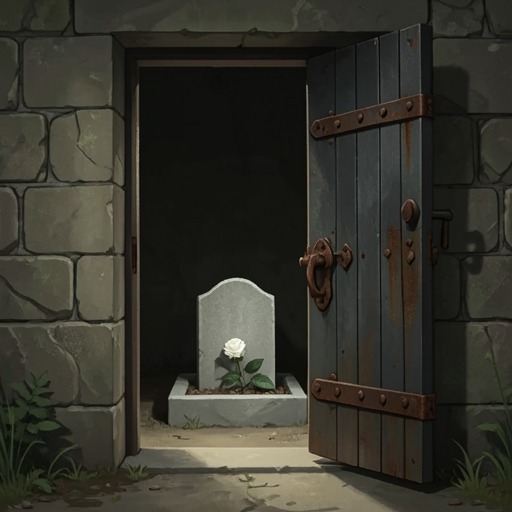
Virginia, however, brings news that changes the meaning of the haunting. She tells her family that the ghost is dead, that he regretted his wickedness, and that he gave her a box of jewels before he died. When the family sees the chained skeleton, Virginia kneels beside it and prays. One of the twins then looks out of the window and announces that the old withered almond-tree has blossomed, its flowers visible in the moonlight. Virginia interprets the sign as forgiveness. The twins’ discovery connects their practical, observant role in the household to the story’s final release, even as Virginia’s prayer and compassion provide what their pranks could not: a path from ridicule and fear to rest for Sir Simon.
Narrative Role
The twins’ episodes form a recurring comic counterpoint to Sir Simon’s increasingly elaborate attempts to recover his standing. His costumes, chains, disguises, and practiced effects meet not with the reverence he expects but with pellets, obstacles, water, and laughter. The repeated reversals make his loss of power visible through concrete action, rather than through a simple declaration that the family is unafraid.
They remain chiefly defined by their exuberant mischief; the story does not give them the inward change or moral insight it gives Virginia. Their role is nevertheless consequential. By making the ghost’s intimidation fail as entertainment, they expose the gap between his grand sense of supernatural authority and the family’s modern, practical irreverence. Their delight at Virginia’s return supplies the story’s final note of sibling affection, while the blossoming almond tree marks a resolution that lies beyond the twins’ comic contest with the ghost.