Virginia's intervention to free Sir Simon
The Canterville GhostVirginia’s intervention to free Sir Simon is the turning point that transforms a haunting into an act of compassion and release. When Sir Simon confesses that he has not slept for three hundred years, Virginia learns that the frightening ghost is also a lonely, exhausted figure seeking peace. She agrees to help him, follows him beyond the familiar rooms of Canterville Chase, and returns carrying the truth of his death and the jewels he gave her. Her intervention fulfills the prophecy associated with the house and leads from the hidden discovery of Sir Simon’s remains to his funeral and burial.
The Plea for Rest
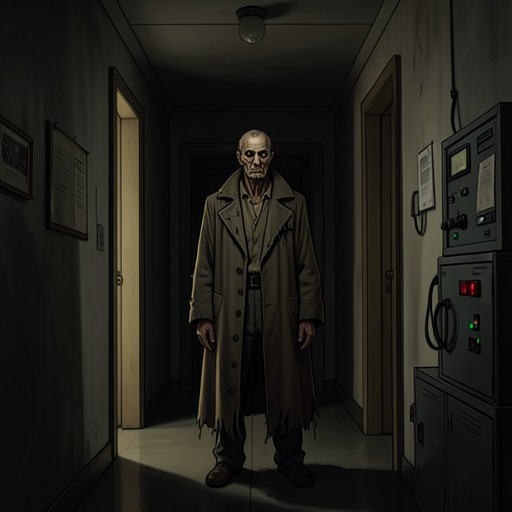
The encounter begins with a sharp difference in what sleep means to the two characters. Virginia treats sleep as an ordinary matter, even remarking that it is easy to go to bed and blow out a candle. Sir Simon replies that he has not slept for three hundred years and is tired. His confession recasts the haunting: the ghost’s continued existence is not presented simply as a source of fear, but as a condition of loneliness and weariness from which he longs to be released.
Sir Simon describes a garden beyond the pine woods as the place where he might finally rest. His vision joins long grass and hemlock flowers with the nightingale, the moon, and the sheltering yew. Virginia recognizes this as the Garden of Death. Sir Simon then names death as peace: release from time, memory, and life’s burdens. He asks Virginia to open the way for him, arguing that love is with her and is stronger than death. The request makes her compassion the means by which a supernatural predicament can be resolved.
The Prophecy and Virginia’s Decision
Sir Simon asks whether Virginia has read the old prophecy painted on the library window. She knows its six lines, which connect the peace of the house to a golden girl’s prayer, a barren almond tree bearing blossoms, and a child’s tears. Though she can recite the words, she does not understand their meaning until Sir Simon explains her part in them: she must grieve for his sins because he cannot weep, and pray for his soul because he has no faith. He tells her that, if she has been sweet, good, and gentle, the angel of death may show mercy. He also warns that she will encounter frightening shapes and voices, but says that they cannot overcome the purity of a child.
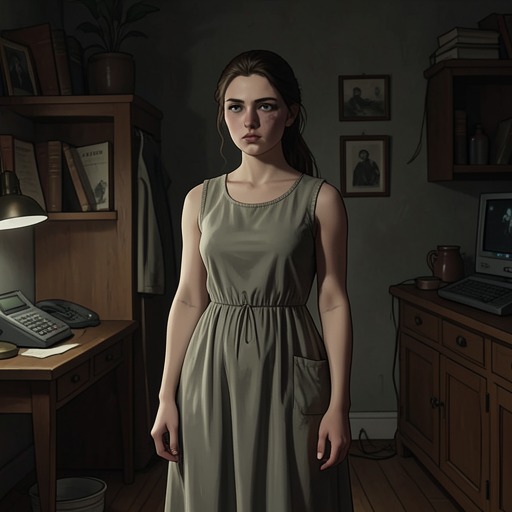
Virginia makes no immediate reply. Sir Simon wrings his hands in despair as she bows her head; then she stands, pale but resolved, and promises that she is not afraid and will ask the angel to have mercy on him. The change is not a victory over the ghost but a willingness to accompany him. Sir Simon responds with joy, takes her hand, and kisses it with old-fashioned courtesy. Though his touch is cold and his lips burn, Virginia does not falter. The scene makes her courage inseparable from her decision to recognize and answer his need.
Through the Hidden Passage
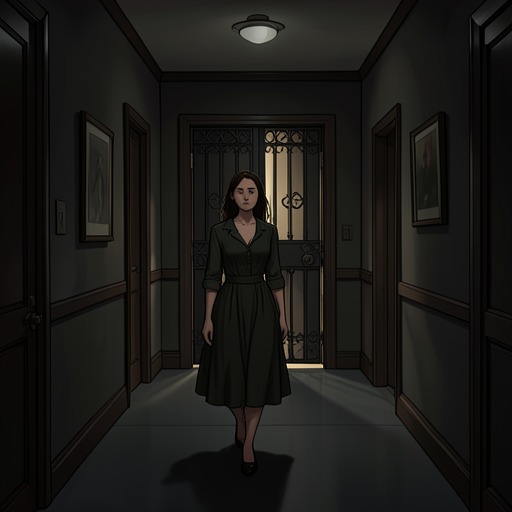
Holding Virginia’s hand, Sir Simon leads her across the Tapestry Chamber. The embroidered huntsmen seem to wave her back, and the grotesque figures carved on the chimneypiece warn that she may never return. Sir Simon tightens his hold and moves onward; Virginia shuts her eyes against the warnings rather than turning back. These figures make the passage a trial at the threshold of the hidden place, while her continued trust carries her through it.
At the end of the room, Sir Simon mutters words Virginia cannot understand. The wall fades, revealing a great black cavern. A cold wind and a pull at her dress accompany his urgent warning to hurry. The wainscoting closes behind them, leaving the Tapestry Chamber empty. Virginia’s absence becomes a mystery to the household, but the passage also leads her to the evidence that the ghost’s plea has been bound to a concealed history.
Return and Revelation
At midnight, after the family has searched for Virginia without success, a crash, a cry, thunder, and unearthly music accompany the opening of a panel at the top of the staircase. Virginia steps onto the landing with a small casket in her hand. Her family rushes to her; her mother embraces her, while her father initially rebukes what he assumes was a practical joke. Virginia instead explains that she has been with the Ghost, that he is dead, and that he had been wicked but was sorry for what he had done. She says that he gave her a box of jewels before he died.
Virginia leads the family through the opening in the wainscoting and down a narrow secret corridor. At its end, a heavy oak door opens onto a low, vaulted room with a tiny grated window. There the family finds Sir Simon’s gaunt skeleton chained to an iron ring in the wall. A trencher and ewer have been left just beyond its reach; the ewer is green with mould, and the trencher holds only dust. Virginia kneels beside the remains and prays silently while the others witness the tragedy disclosed by the hidden room. The discovery turns Sir Simon’s account of suffering into physical evidence and clarifies why his haunting could not end through the family’s earlier attempts to dismiss or outwit him.
Release, Burial, and Legacy
A twin looking through the window notices that the old withered almond tree has blossomed in the moonlight. Virginia rises and says that God has forgiven Sir Simon. The blossom answers the prophecy’s sign of renewal, while Virginia’s prayer supplies the act of mercy that Sir Simon had asked her to undertake. His freedom is therefore marked not only by his death but also by the changed state of the house and the family’s discovery of what had been concealed.
Four days later, a funeral leaves Canterville Chase at about eleven at night. Lord Canterville attends as chief mourner, and Virginia rides in the first carriage with him; the United States Minister and his wife, Washington, the boys, and Mrs. Umney follow in the procession. Sir Simon is buried beneath the old yew tree in the churchyard. When the coffin is lowered, Virginia places a cross of white and pink almond blossoms upon it. The moonlight and a nightingale’s song recall the Garden of Death she had heard described, bringing the ghost’s imagined resting place into the funeral’s setting.
The intervention also determines what happens to the jewels. Lord Canterville acknowledges that Virginia rendered his ancestor an important service and agrees that the jewels are hers, while Hiram B. Otis had urged him to reconsider retaining them. In the spring of 1890, when Virginia is presented at the Queen’s first drawing-room on the occasion of her marriage to Cecil, Duke of Cheshire, her jewels attract widespread admiration. The conclusion carries her act of mercy into her adult life: she returns to Canterville Chase with her husband after their honeymoon and brings roses to Sir Simon’s grave. The sequence links the ghost’s release, his formal burial, and Virginia’s later marriage without diminishing the central exchange: Sir Simon gives her the jewels, and she gives him the prayer and compassion through which he can find rest.