Giant Sword
The Castle of OtrantoThe giant sabre is both a colossal physical weapon and a vehicle of prophecy: unearthed by Frederic in a forest, it is brought to Otranto and paired by supernatural signs with the giant helmet already at the castle. Its inscription warns that the daughter associated with a matching helmet is surrounded by peril and that only Alfonso’s blood can save her, making the weapon a tangible challenge to Manfred’s rule and a threat directed toward his household.
Discovery and Provenance
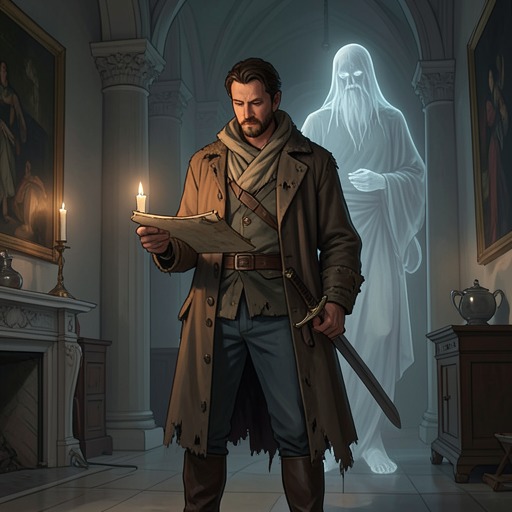
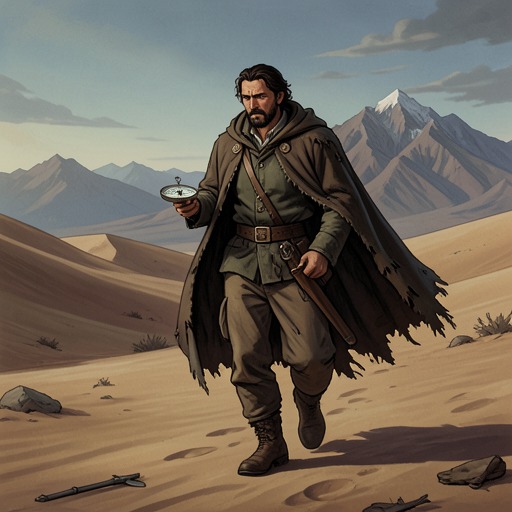
Frederic recounts that he and his attendants had wandered for three days in a forest without encountering anyone. On the third evening, they found a dying hermit in a cell. The hermit explained that more than fifty years earlier, after witnessing his country fall to unbelievers, Saint Nicholas had revealed a secret and instructed him to disclose it only on his deathbed. He directed the visitors to bury him and then dig beneath the seventh tree to the left of the cave.
After burying the hermit at daybreak, Frederic’s party followed those directions. At a depth of about six feet they uncovered an enormous sabre, which Frederic identified as the same weapon later lying in the castle court. The blade was partly out of its scabbard when found; it was closed during the party’s efforts to remove it. The sword’s buried origin thus links its arrival to the hermit’s revelation, rather than to an ordinary claim or military expedition.
The Inscription and Its Warning
The blade bears four lines that connect the sword to the helmet and to the fate of a daughter. They state that wherever a helmet suited to the sword is found, the daughter is surrounded by danger; Alfonso’s blood alone can save her and quiet a long-restless prince’s shade. Frederic initially hesitates to recite the inscription in the presence of Hippolita, saying that he does not wish to offend her sex and rank with words injurious to what she holds dear. Hippolita asks him to continue, meeting the message as a divine decree that mortals must either seek to avert or submit to.
The prophecy makes the weapon more than a portent of generalized disturbance. It supplies a specific condition—the discovery of a helmet that suits the sword—and names both a threatened daughter and Alfonso’s blood as the means of her rescue. Its final reference to a restless prince’s shade connects the daughter’s peril to unsettled dynastic history. Theodore objects that the words seem insufficient grounds for the Princesses’ alarm, but the warning’s material witness, the immense sword itself, gives the claim a force that dismissive explanation cannot remove.
Arrival at Otranto
The sabre’s arrival is announced before its identity is explained. A herald comes on behalf of the Knight of the Gigantic Sabre and declares that he must speak with the usurper of Otranto. Jerome repeats the message to Manfred. The word usurper first intensifies Manfred’s anger, though he then chooses to meet the visitor himself and makes Jerome’s son a hostage for the priest’s obedience. The sword’s name therefore enters the political conflict through a direct accusation against Manfred’s title.
When the knight reaches the castle, Manfred welcomes him and challenges him to prove his valor in an open contest the next day, rejecting the use of sorcery as a legitimate way to prevail. The knight gives no reply. He pauses before the miraculous helmet, kneels as if in silent prayer, and then follows Manfred into the hall without removing his armor. Manfred offers hospitality and his ring as a pledge that the visitors will be safe beneath his roof. As the knight’s retinue crosses the court toward the gate, the giant sabre breaks free from its supports and falls opposite the helmet, where it remains immovable. The sword’s movement makes the connection between the two colossal objects a public supernatural event, witnessed within the castle Manfred claims to command.
Prophecy Made Material
The sword is repeatedly treated as evidence rather than as an isolated marvel. When Bianca describes a giant hand in armor on the castle stairs and reports that the household expects a strange revolution, Manfred dismisses her account as trivial. Frederic counters that the enormous sabre to which he was directed in the forest, the helmet in the court, and its fellow cannot simply be dismissed as a servant’s imaginings. The weapon thereby helps turn scattered reports of apparitions into a pattern that even Manfred’s political opponent can invoke.
The sabre’s significance rests on the contrast between the human claims made around it and its resistance to human control. Manfred contests the title of usurper, offers hospitality, and tries to treat the visitor as a knight whose dispute can be settled through customary chivalry. Yet the sword responds to no command: it falls from its supports, stays fixed beside the helmet, and carries a prophecy whose terms place a daughter’s safety and the peace of a dead prince beyond Manfred’s authority. As object, heraldic sign, and inscribed warning, it gives the supernatural succession crisis a visible and portable form.