Ricardo
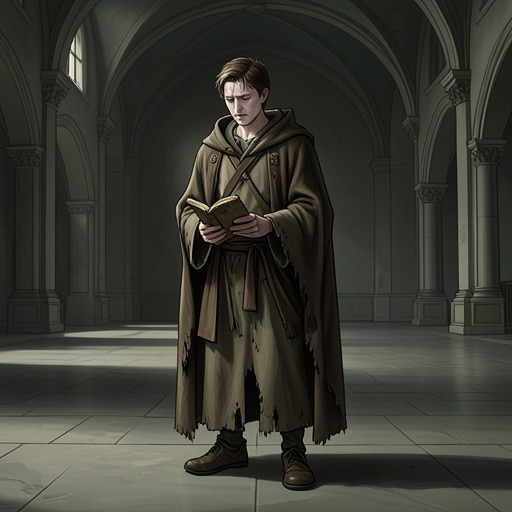
The Castle of OtrantoRicardo is Manfred’s grandfather, the ancestor whose seizure of Otranto establishes the ruling family’s apparent succession and whose concealed crime ultimately helps explain its fall. Manfred’s confession identifies Ricardo’s claim as fraudulent: Alfonso the Good died after being poisoned, and a fictitious will named Ricardo as heir. The novel contrasts this imposed inheritance with Alfonso’s secret marriage and surviving descendants, making Ricardo’s rule the source of the dynastic injustice that the ending sets right.
Identity and Accession
In Manfred’s account, Ricardo served Alfonso as chamberlain. When Alfonso set sail for the Holy Land, a storm drove him to Sicily, while the vessel carrying Ricardo and his retinue was separated from him. Manfred says Alfonso later died in the Holy Land, but ultimately confesses that he was poisoned. Ricardo then relied on a fictitious will to claim Alfonso’s estates and principality.
The narrative presents Ricardo’s accession through competing accounts of legitimacy. Earlier, Manfred tells Frederic’s representatives that Alfonso died childless and bequeathed his estates to Ricardo in recognition of faithful service. He maintains that his family inherited Otranto from Ricardo through his father, Don Manuel. The representatives dispute that account, asserting that Frederic is nearest in blood to Alfonso and that Ricardo’s descendants usurped the principality. Manfred acknowledges Frederic’s stronger blood claim even as he defends his own family’s long possession of the territory.
The Prophecy and Ricardo’s Line
Manfred’s confession connects Ricardo’s crime to a supernatural prophecy about the duration of his descendants’ rule. After Ricardo’s seizure of power, a storm overtook him. Haunted by guilt, he vowed to Saint Nicholas that he would found a church and two convents if he survived the journey to Otranto. Manfred says Ricardo reached Otranto, fulfilled the vow, and received a vision in which Saint Nicholas promised that Ricardo’s posterity would rule until the rightful owner grew too large to inhabit the castle, provided male descendants of Ricardo remained to inherit it.
The prophecy thus makes Ricardo’s continued succession conditional rather than an unqualified validation of his title. Its terms bind rule both to the eventual return of the rightful owner and to the survival of Ricardo’s male line. By the end, Manfred declares that no male or female member of Ricardo’s family remains except himself, while Theodore is recognized as the true Prince of Otranto. The prophecy’s conditions converge with the exposure of the original fraud: the reigning line has failed, and the rightful inheritance passes away from it.
Family, Marriage, and the Hidden Heir
Ricardo’s seizure of power affects the next generation because Alfonso’s line was not, in fact, extinguished. Jerome explains that Alfonso was separated from Ricardo’s ship and remained wind-bound in Sicily for three months. There he married Victoria, then left her pregnant when he resumed his journey. After Alfonso’s reported death and Ricardo’s succession, Victoria gave birth to a daughter; that daughter later married Jerome and became Theodore’s mother. The secret marriage therefore preserves Alfonso’s lawful line outside the public account of succession.
The conflict over Isabella also shows how Ricardo’s legacy shapes later political choices. Manfred first arranged her marriage to Conrad, hoping the alliance would unite the claims of his house and Frederic’s. After Conrad’s death, Manfred sought to marry Isabella himself. These plans treat marriage as a means of consolidating a contested inheritance, in contrast to the concealed marriage of Alfonso and Victoria, which establishes Theodore’s actual descent from the rightful line. Hippolita, convinced that heaven intends the principality to pass from Manfred to Frederic, proposes a marriage between Matilda and Frederic as another attempt to avert the destruction of the rival houses.
Exposure and Consequences
Ricardo does not appear in the cited account as a present actor; his history emerges through the claims made by Manfred and Frederic’s representatives, and finally through Manfred’s confession. At first, Manfred defends his grandfather as valiant, upright, pious, and favored by Saint Nicholas, arguing that Ricardo held the estate by his sword and the saint’s favor. The later admission that Alfonso was poisoned and the will fabricated overturns that public defense. Manfred interprets the disasters that have overtaken his family as the price of Ricardo’s usurpation, though he also accepts responsibility for his own crimes, including Matilda’s death.
Once Jerome’s account confirms Alfonso’s secret marriage and Theodore’s descent, Manfred resigns the principality. He and Hippolita enter religious houses, while Frederic offers Isabella to Theodore. Theodore is initially unable to contemplate another love because of his grief for Matilda, but later accepts Isabella’s company. Ricardo’s seizure of Otranto therefore shapes the whole succession dispute, yet the ending resolves it not through the continuation of his line but through the reappearance of Alfonso’s heir and the relinquishment of power by Ricardo’s descendant.