The Giant's Apparitions in the Castle
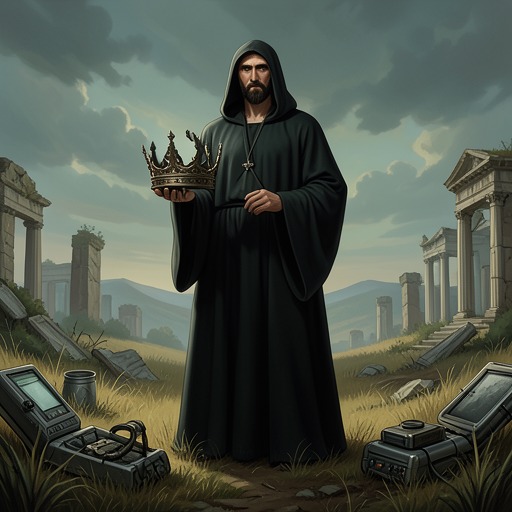
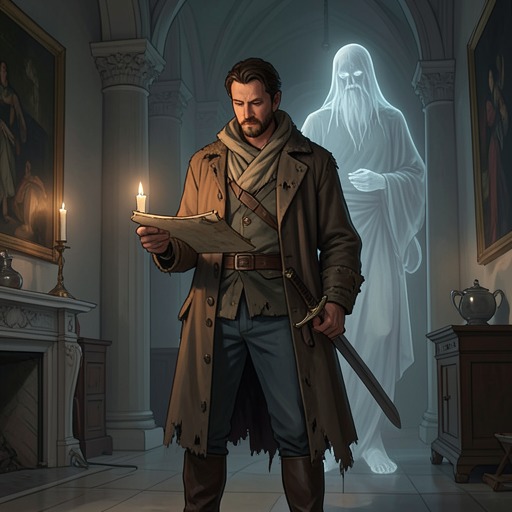
The Castle of OtrantoThe Giant’s Apparitions in the Castle are a series of fragmentary sightings and reports that turn the castle’s architecture into a setting of supernatural threat. The first account describes an enormous armored foot and leg in a chamber; later Bianca reports a clattering on the staircase and a hand so large that she flees. Because the accounts remain partial and pass from witness to witness, the manifestations create both fear and uncertainty, while strengthening Frederic’s belief that the disturbances signify a judgment on Manfred’s family.
The first report: an armored figure
Manfred initially treats his servants’ fear as idle panic. Their search of the gallery finds no one: they look under benches and stools, and the pictures remain in their places. But they have not looked behind the pictures, and the closed door to the great chamber offers another possible boundary between what can be seen and what remains concealed.
Jaquez recounts that Diego opened the chamber door while Jaquez stood behind him. Diego cried out and ran back. He first wondered whether the figure was a ghost, then described something larger: an armored giant, of which he had seen only a foot and part of a leg. The visible parts were as large as the helmet below in the court. Jaquez did not see the apparition himself; he reports Diego’s sighting and says he heard a violent movement and the rattling of armor. Diego later believed the giant had been lying at full length on the floor and had begun to rise.
The witnesses never confirm that the figure pursued them. They heard the chamber door clap shut as they ran back along the gallery, but Jaquez acknowledges that they did not turn around to check. His account therefore combines a concrete report of the huge armored limbs with a conspicuous gap: the servants flee before establishing what the figure does next. Jaquez urges Manfred to summon the chaplain and have the castle exorcised, and the other servants join him in threatening to leave the household unless the disturbance is addressed.
The hand on the staircase
The apparition returns as a report from Bianca, who bursts into the room where Manfred and Frederic are discussing urgent matters. She announces that the hand and giant have appeared again and says she will not sleep in the castle that night. Manfred dismisses her as subject to fits and attempts to restore the conversation, but her fear disrupts the private negotiation.
Bianca explains that she was going by Manfred’s order to Isabella’s chamber, in the watchet-coloured room on the right, one flight of stairs up. As she rubbed a ring Manfred had given her, she heard armor clattering after climbing fewer than three steps. She compares the sound to the noise Diego had described in the gallery chamber. Looking up, she says she saw an immense armored hand on the uppermost banister of the great staircase and ran to Manfred. Her account echoes the earlier report in its armor and scale, but shifts the visible fragment from a foot and leg in a room to a hand positioned on a stair rail.
Bianca interprets the sighting as a warning to Manfred. She invokes Father Jerome’s earlier statements about a prophecy and says that Matilda had told her the previous morning that Hippolita knew something. These references do not explain the prophecy in Bianca’s account, but they connect the recurring apparition to information already circulating within the household. Manfred calls her story foolishness and orders her away; his response suppresses neither her report nor its effect on the people listening.
Frederic’s interpretation and the disturbance’s effect
Frederic asks what Bianca’s story has to do with the enormous sabre to which he had been directed in the wood and the helmet he has seen at the castle. He treats these objects and the servant’s testimony as possible parts of the same supernatural pattern, rather than accepting Manfred’s attempt to classify the account as an invented affront. Bianca adds that Jaquez expects a strange revolution before the current moon ends, and that she would not be surprised if it happened the next day. Her prediction supplies a time of anticipated change, not a confirmed date for any later event.
Manfred accuses Frederic of using a servant to insult him and proposes either that Frederic pursue his claim openly or that their families settle their dispute through marriage. Frederic rejects the accusation, says he has never seen Bianca and denies giving her a jewel. He then argues that Manfred’s guilt is making him suspect others, and that the judgments already fallen on Manfred’s house forbid Frederic from marrying into it. Thus the apparitions affect more than the servants’ willingness to remain in the castle: they enter a dispute about political claims, marriage, and the meaning of the supernatural signs.
Manfred nevertheless manages to calm Frederic temporarily by dismissing Bianca and praising Matilda. Frederic remains hesitant rather than withdrawing his commitments outright. He has heard enough, however, to believe that heaven has declared itself against Manfred, and he recognizes that the proposed marriages could delay his claim to Otranto. He asks whether Hippolita has consented to divorce, testing another condition of the negotiations. The apparitions do not by themselves settle the dispute, but their reports make the castle’s disturbances evidence Frederic can use when judging Manfred’s position.
Form and significance
The giant is never presented here as a complete, directly examined figure. Instead, the narrative assembles it from testimony: Diego sees the foot and leg, Jaquez hears the movement and armor, and Bianca sees the hand. Each account supplies a fragment and a witness’s reaction, while leaving the whole apparition and its movements uncertain. The resulting pattern makes the castle’s rooms, gallery, chamber door, and staircase part of the threat: ordinary routes through the household become places where a presence may be glimpsed but not understood.
The repeated scale of the fragments binds the apparitions to the helmet and sabre, while their recurrence allows fear to move from the servants into the negotiations between Manfred and Frederic. Manfred tries to control the meaning of what is reported by calling it panic or conspiracy; Frederic instead reads the same reports as signs of divine judgment. The sightings thus remain incomplete as physical evidence but become consequential as political and interpretive evidence, deepening the conflict over Manfred’s rule and the future of Otranto.