Theodore's escape from beneath the helmet
The Castle of OtrantoTheodore’s escape from beneath the helmet is a reversal in which Manfred’s attempt to punish him with the giant armor creates the opening that frees him. Trapped below the courtyard and condemned to starve, Theodore survives when the helmet breaks through into a vault; there he encounters Isabella and, under questioning by Manfred, uses a feigned demonstration to give her time to escape. The episode exposes both the prince’s arbitrary use of authority and Theodore’s composure under threat.
Causes and Background
After the crowd blamed Theodore for Conrad’s death, Manfred called him a necromancer and ordered that he be held beneath the helmet until the Church could investigate. The punishment depended on the crowd’s mistaken conviction that Theodore had stolen the helmet from Alfonso’s tomb and killed the young prince with it. They did not reckon with the difference between the marble helmet in the church and the enormous steel armor before them, or with the implausibility of a youth wielding such a weight. Manfred nevertheless turned their confused accusation into a sentence: Theodore was to be kept beneath the helmet without food, on the assumption that a magician could provide for himself by supernatural means.
Manfred’s companions tried to dissuade him, but the crowd considered the punishment just because it used the supposed instrument of Theodore’s offense. They showed no concern that he might starve, accepting Manfred’s claim that his alleged magic would supply him with food. Manfred then ordered a guard to prevent anyone from carrying food to the prisoner, locked the castle gates, and retired to his chamber. The confinement was thus not merely a threat delivered in anger; it was a guarded sentence imposed with the cooperation of those who mistook its appearance of justice for proof of its fairness.
The Breach Beneath the Courtyard
Theodore escaped the confinement through an accident caused by the helmet itself. After the attendants let the armor fall over him, one cheek of the enchanted casque forced its way through the courtyard pavement and broke into the vault below. The breach left an opening through which Theodore pressed himself before Isabella found him. His apparent escape from the place where Manfred had ordered him held was therefore not magic, as the crowd had alleged, but a passage made by the very object used to punish him.
When Manfred pursued Isabella through the castle, he heard a trap-door fall and hurried toward the vault with servants bearing torches. He expected to find Isabella in the subterranean passage; instead, the light revealed Theodore, whom he believed to be confined above in the courtyard. The contrast turns the scene into a sudden reversal: Manfred’s pursuit of one fugitive brings him face to face with the prisoner whose escape he had thought impossible.
Confrontation and Escape
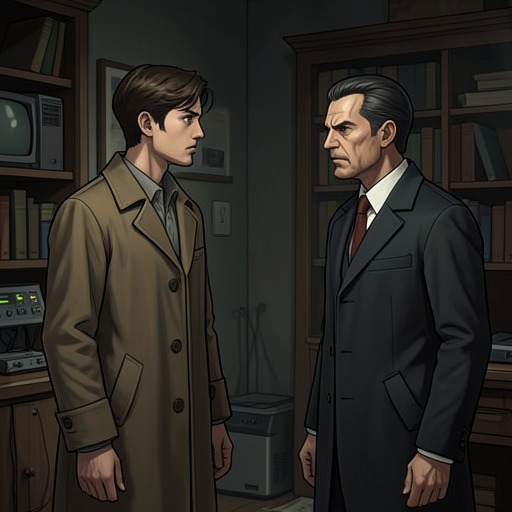
Manfred demanded to know how Theodore had reached the vault and threatened torture to make him identify accomplices. Theodore denied being a traitor and pointed upward, indicating the helmet as his accomplice. When Manfred ordered the torches raised, he saw the armor’s cheek protruding through the pavement and understood how Theodore had descended. Theodore confirmed the explanation directly, without claiming any supernatural power.
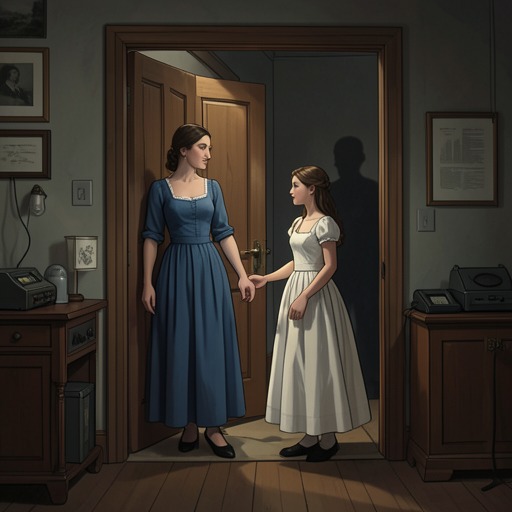
The trap-door then gave Theodore a second opportunity to help Isabella. Manfred pressed him to explain how he had opened its lock. Theodore answered that he would show him, picked up a fragment of stone that had fallen from above, lay on the trap-door, and began striking the brass covering it. The apparent demonstration was a deliberate delay: he meant to gain time for Isabella’s escape. She had already hurried down the steps when she recognized Manfred’s approaching voice, warning that they would be ruined if they remained and urging the stranger to shut the trap-door behind him. In the confusion, the door fell and its spring closed; the stranger could not reopen it because he had not noticed how Isabella worked the mechanism.
Consequences and Significance
Manfred’s response to Theodore’s stratagem is more complicated than his sentence against him. The youth’s presence of mind, together with his frankness, unsettles the prince. Manfred considers pardoning someone who, as he recognizes, has committed no crime, and the narration distinguishes his naturally humane disposition from the asperity produced by his circumstances and the passions that cloud his reason. The hesitation does not undo the injustice of Theodore’s confinement, but it makes the prince’s violence a conflict within his character as well as an exercise of power.
The escape also exposes the weakness of Manfred’s control over the castle. The prisoner he had ordered guarded beneath the helmet reaches a hidden vault; Isabella uses the underground route to elude him; and the prince discovers Theodore only because the trap-door’s fall gives away the passage. Theodore’s escape is not a clean departure from danger: when Manfred finds him, he remains within the prince’s reach and must rely on wit rather than force. Yet the episode reverses the original accusation. Manfred had treated an impossible story of supernatural wrongdoing as fact, while Theodore’s actual escape has a material explanation—and his most consequential act in the vault is to protect Isabella by misleading the man who holds power over him.