
The People Behind the Labels
The Caves of SteelThe novel complicates labels such as robot, Medievalist, Spacer, and policeman by revealing the individual fears and obligations hidden within them.
increasing Bearing strength in each event
 decreasing
Bearing strength in each eventdecreasingBaley the Policeman
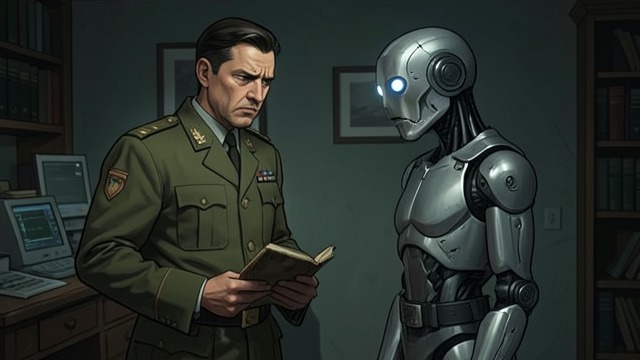
Baley the Policeman
Duty as identity
Baley accepts the assignment despite his dislike of robots and the strain it places on his household. He believes a police officer cannot abandon a case simply because it becomes uncomfortable.
Loyalty has a cost
Jessie calls his sense of duty excessive, while Enderby relies on it. Baley’s professional identity protects public order but can also make him easy to exploit.
The label policeman contains both integrity and vulnerability.
Clousarr the Worker

Clousarr the Worker
More than a suspect
Francis Clousarr takes pride in maintaining yeast cultures that feed millions. His work complicates any portrayal of him as simply an antirobot agitator.
Fear behind opposition
He worries about his children’s future and distrusts the institutions offering solutions. Baley sees that political hostility can arise from genuine care as well as prejudice.
The suspect remains a person with skill, pride, and family concern.
Jessie the Member
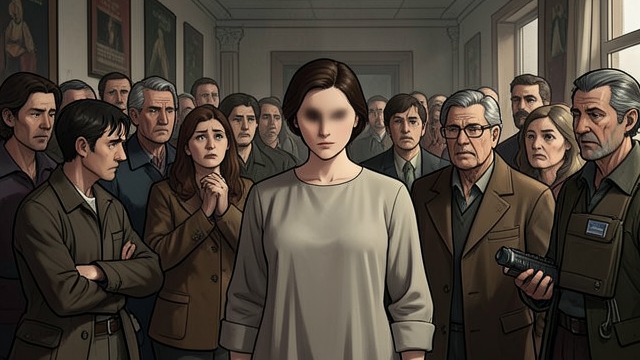
Jessie the Member
A political identity disclosed
Jessie admits that she joined a Medievalist group but did not understand its full political direction. She was drawn to belonging, old stories, and the chance to feel different.
Fear and responsibility
When the group speaks of action, she fears that her participation could endanger Baley and Bentley. Her confession rejects the easy division between innocent family member and dangerous conspirator.
She is both accountable for secrecy and deserving of understanding.
Enderby the Coward
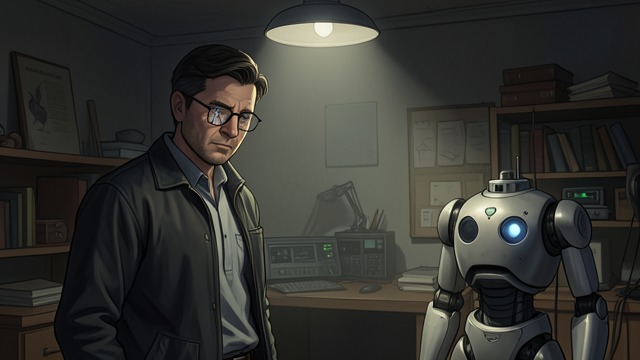
Enderby the Coward
A motive mixed with fear
Enderby tries to destroy Daneel because he fears the Spacer project will change Earth. He is not capable of deliberate murder of a human, but he is capable of reckless sabotage.
Harm beyond intention
His broken glasses lead him to kill Sarton by mistake, and fear then leads him to frame Baley. The distinction between a coward, a criminal, and a friend cannot be collapsed into one word.
The culprit remains morally complex without being excused.
Daneel the Companion
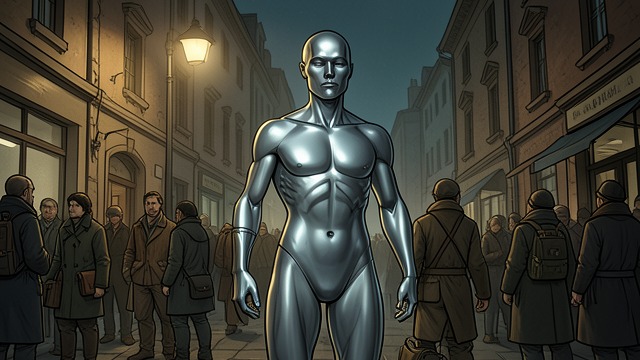
Daneel the Companion
A machine recognized
Baley continues to know that Daneel is a robot, but no longer treats that fact as a sufficient reason for distance. He admires the robot’s steadiness, intelligence, and loyalty.
A relationship imagined forward
The possibility of Daneel helping Bentley’s generation turns companionship into a bridge between human and machine futures. Daneel’s response remains measured, preserving his difference while accepting the conversation.
The labels remain true, but no longer determine the relationship.
At the opening of the investigation
During the Yeast-town interrogation
During her confession
During Baley’s reconstruction of the killing
At the final exchange
