
Robots and Employment
The Caves of SteelFear that robots will displace human workers links ordinary grievances, Baley’s private insecurity, and the political struggle over Earth’s future.
increasing Bearing strength in each event
 decreasing
Bearing strength in each eventdecreasingReplacement at Work
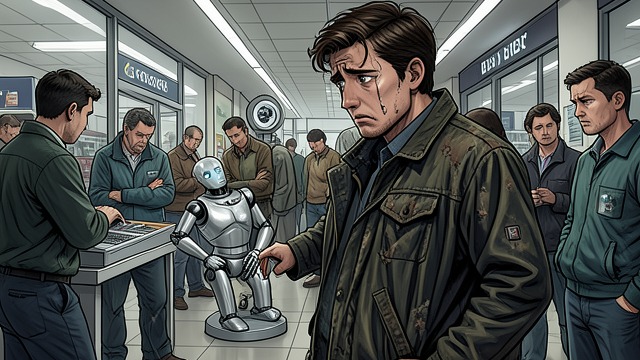
Replacement at Work
A job taken
R. Sammy has replaced Vince Barrett in a Department errand role. Baley hears coworkers lament the young man’s desperation, while recognizing that the robot is performing its assigned work.
A larger pattern
Robot labor is spreading into the Cities after being used mainly in mines and farms. Each new role makes efficiency look like a direct threat to a human livelihood.
The conflict begins with small, visible losses.
Baley’s Inherited Fear
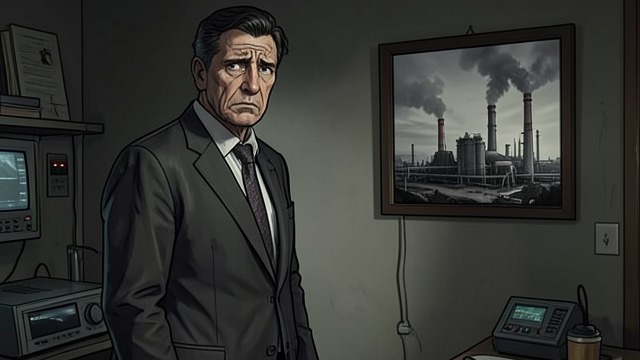
Baley’s Inherited Fear
A childhood shaped by loss
Baley remembers his father’s declassification after a power-plant accident and the hardship that followed. His own career has been a route away from the fate of a manual labor pool.
A personal threat
Seeing Daneel command the crowd makes replacement feel possible at every level, including detective work. Baley’s hostility is tied not only to prejudice but to family history and survival.
Economic change enters the investigation through memory.
Public Anger at the Counter
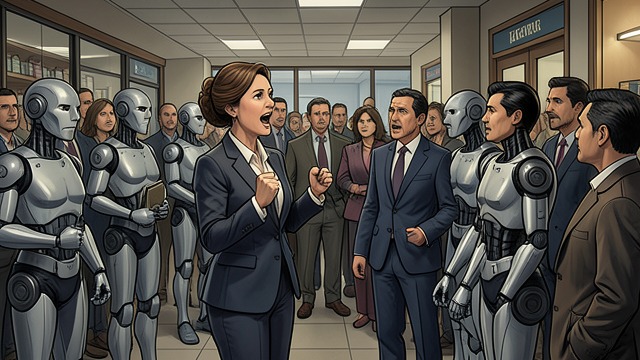
Public Anger at the Counter
A customer’s grievance
A woman refuses service from robot clerks and describes families displaced by cheap mechanical labor. Her speech turns a private shopping dispute into a public argument over who deserves work.
Crowd momentum
Baley sees why people blame individual robots for economic policy. Daneel disperses the crowd, but the underlying fear remains untouched.
Order is restored without resolving the social conflict.
Clousarr’s Children
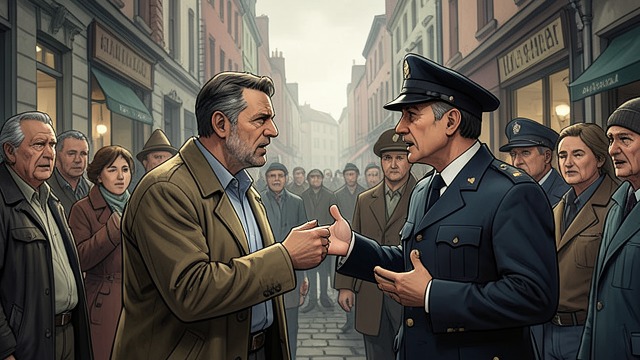
Clousarr’s Children
A worker’s objection
Francis Clousarr identifies robots as a threat not only to his own job but to his children’s prospects. Baley answers that emigration could create secure work and new opportunities.
An unresolved refusal
Clousarr rejects the offer because he will not accept help from robots, Spacers, or government officials. His fear is rational in origin but hardened into political rejection.
The argument tests whether a future can be made persuasive to those most at risk.
From Displacement to Expansion
From Displacement to Expansion
A different destination
Baley and Fastolfe’s ideas recast displaced workers as potential settlers rather than permanent casualties of automation. Robots could assist humans in establishing new worlds.
A political opening
Baley asks Enderby to turn the Medievalist movement toward emigration. Employment conflict becomes part of a larger plan for social change, although the promised benefits remain uncertain.
The thread moves from fear of replacement toward a possible new role for human labor.
Before the Sarton case, recalled at the opening
During the shoe-store incident
The first evening after Daneel arrives
During the interrogation in Yeast-town
In Baley’s final proposal to Enderby
