“Back to the soil”
The Caves of Steel“Back to the soil” is the defining phrase of the Medievalists’ answer to life in the Cities: a call to leave enclosed urban existence, reject reliance on robots, and recover space, air, and land. The phrase sounds like a simple return, but the book gives it sharply different political meanings—and tests it against the material limits of an Earth already crowded with eight billion people.
A slogan with a political history
In Jessie Baley’s account, Elizabeth, her unmarried aunt, repeatedly imagined a day when people would unite, break up the Cities, and return to the soil. She blamed the Spacers for keeping Earth weak and dependent on the Cities by forcing robots upon it, and predicted that the movement would eventually settle accounts with them. Elizabeth’s vocabulary made the conflict vivid: she called Earth decadent, and referred to robots as “soulless monster-machines.” Her slogan was therefore not merely pastoral nostalgia. It linked a desired change in daily life to opposition against Spacer influence and the technological order represented by robots.
Elizabeth’s private manner complicates the political force of her speech. Jessie recalls that her aunt could be sarcastic and seemed, at times, to use dramatic opinions to shock people or make herself appear mysterious and glamorous. Yet the ideas Jessie attributes to her are specific: dismantle the Cities, return to the soil, and confront the Spacers. The slogan carries both a personal voice from outside the conventions of City life and a collective program that Jessie remembers as an appeal for people to get together.
What return means to Clousarr
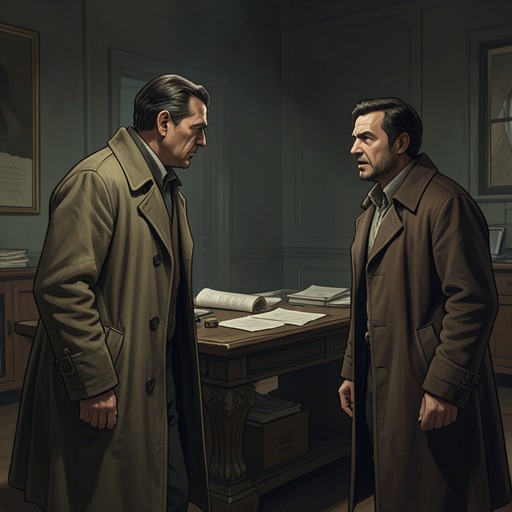
When Elijah Baley asks Francis Clousarr what the Medievalists want, Clousarr answers, “Back to the soil.” Baley immediately raises the practical obstacle: how could soil feed eight billion people? Clousarr does not claim that the transition can happen overnight, within a year, or even within a hundred years. He describes it instead as a gradual process, step by step, beginning with getting people out of the “caves” of city life and into fresh air.
Clousarr’s appeal is especially directed toward children. Asked whether he has ever experienced the fresh air he advocates, he squirms and admits that he is ruined too, but argues that babies are still being born and have not yet been ruined. The aim, in his telling, is to give them space, open air, and sun; if necessary, the population could be reduced little by little. His answer makes the slogan less a claim that an agrarian past can be restored at once than a demand to begin changing the conditions inherited by the next generation.
Dispute over Earth’s future
The slogan’s meaning shifts again when Phil Norris, watching a youngster walk away with Baley, says the Medievalists seem to be right. He clarifies that he means their position on robots and the claim that Earth has an unlimited future without them. Baley rejects that confidence with a pointed inventory: eight billion people and uranium running out. The contrast exposes the difference between declaring independence from robots and accounting for the resources and population that shape whether such independence is possible.
In his argument with Clousarr, Baley turns the words back against a purely Earthbound return. He recasts the slogan as a movement backward—from soil to seed, egg, and womb—and asks why humanity should not move forward instead. His alternative is to use Earth’s population for export and return to the soil on other planets: colonize. Clousarr answers with a harsh laugh and rejects the prospect of making more Outer Worlds and more Spacers. The exchange leaves the phrase at the center of a disagreement not simply about landscape, but about population, technology, political power, and who should shape humanity’s future.
Significance
“Back to the soil” gathers a real grievance into an attractive, compressed image: escape from city enclosures and give children room to live. Its speakers make that image do different work. Elizabeth’s remembered program joins it to anti-Spacer resistance; Clousarr grounds it in the needs of children and gradual change; Norris turns it into a claim that Earth can flourish without robots. Baley’s objections insist that the image cannot by itself resolve the pressures of population and resources, while his proposal of colonization reveals a competing meaning of return: not abandoning the soil, but seeking it beyond Earth. The phrase thus marks the fault line between withdrawal from the technological order and an outward expansion that risks reproducing the very political arrangement Clousarr opposes.