Dr. Sarton’s dome
The Caves of SteelDr. Sarton’s dome is both the scene of the murder at the heart of the investigation and the place whose overlooked physical traces expose how it happened. In the final reconstruction, its sliding entrance, Enderby’s broken glasses, and the close resemblance between Dr. Sarton and R. Daneel turn the dome from a setting into evidence: the intended victim was Daneel, but the person killed was Dr. Sarton.
Setting and the Murder
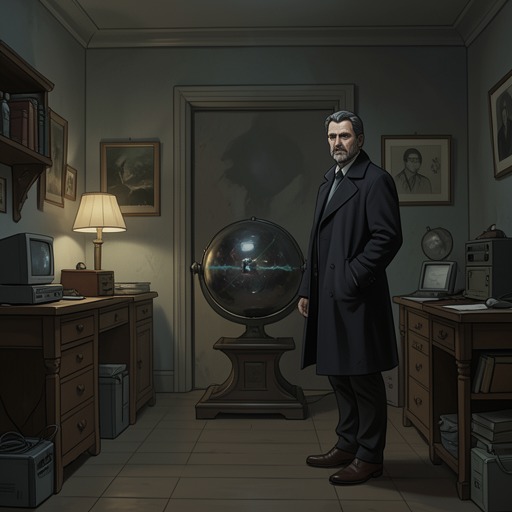
The dome’s central importance emerges when an image of it fills the room, showing the scene in a light unlike the artificial illumination of the City. Its center is occupied by Dr. Sarton’s body. The image brings the crime back before Enderby as a visible place rather than an abstract case, and his bulging eyes register his response as Baley presses the investigation toward its conclusion.
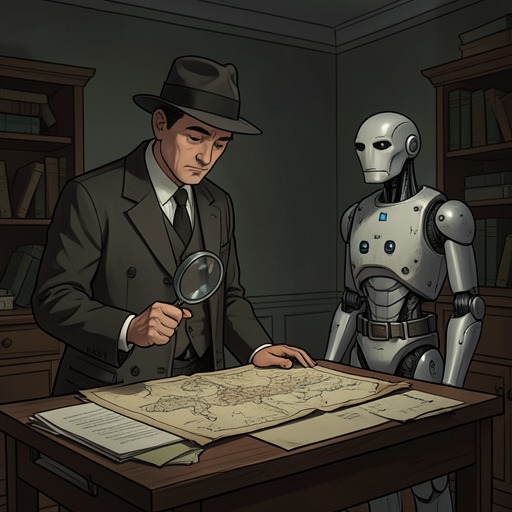
Baley reconstructs the intended sequence from the dome’s early-morning circumstances. Enderby had arranged to meet Dr. Sarton but, Baley argues, deliberately arrived at dawn. Dr. Sarton would likely have been asleep, while Daneel, who lived with him, would have been awake. Baley’s explanation is that Enderby expected Daneel to answer the door and intended to shoot him there, then leave and return later, allowing the discovery of the body to appear unrelated to his earlier visit. Daneel confirms that he lived with Dr. Sarton, supporting a key part of this reconstruction.
Misidentification and the Doorway
The plan failed because the person who appeared at the dome’s entrance was not Daneel but Dr. Sarton. Sarton had designed Daneel in his own image, making the two difficult to distinguish in the circumstances Baley describes. Enderby’s glasses had broken, and without them he could not tell the robot from the man. He shot the figure he took to be Daneel, then gathered the remains of his glasses and fled; the person killed was Sarton, who had risen early.
The doorway’s construction provides the crucial detail. The dome’s main door had been slid into a recess in the wall along metal grooves. When the scene is examined through the image, Baley spots a glitter in those grooves: two small slivers of glass. Daneel had previously regarded them as insignificant, but identifies them as glass when Baley asks. Baley recognizes their evidentiary value because they are portions of concave lenses, which can be measured and compared with the glasses Enderby is wearing.
Evidence and Narrative Significance
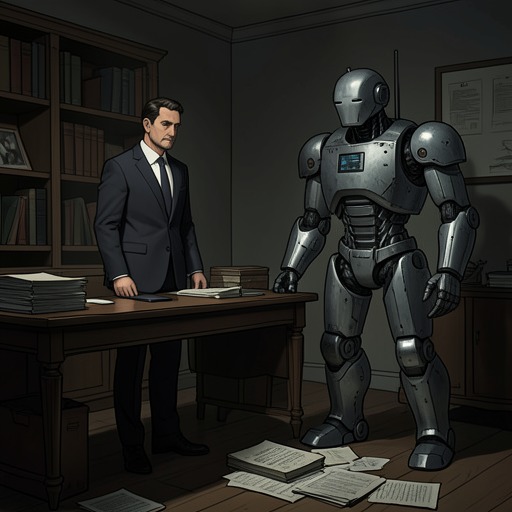
The slivers connect a damaged personal object to a specific place and time. Enderby’s glasses, ordinarily a means of seeing clearly, become conspicuous evidence once broken: fragments left in the door’s runner grooves place him at the dome earlier than he was believed to have arrived. Baley takes Enderby’s spectacles from him and presents them to Daneel for comparison, insisting that they not be smashed. The physical match is the tangible support for Baley’s reconstruction, rather than an explanation resting only on inference.
The dome also concentrates the reversal on which the case depends. Enderby’s intention, as Baley lays it out, was to kill the robot and use the attack to advance his political purpose; the resemblance between Daneel and Sarton instead made the planned act a killing of the scientist. The same resemblance that made the mistake possible also helps explain why Enderby’s account could initially obscure what had happened. At the dome’s door, the broken glasses preserve the difference between the intended crime and its actual consequence—and allow Baley to make that difference legible.