Frankenstein complex
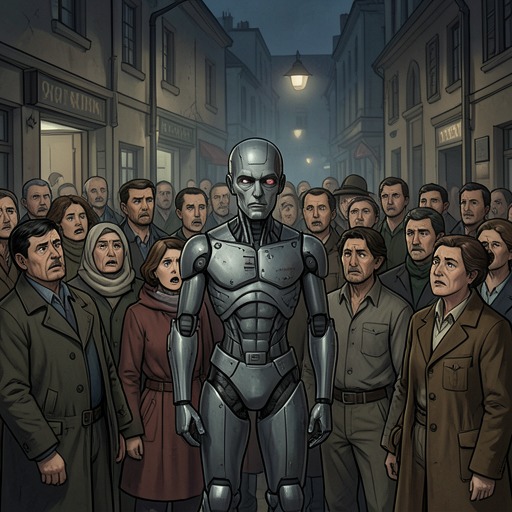
The Caves of SteelThe Frankenstein complex is the popular name for the fear that a created being may turn against its creator. In the discussion of robot design, it explains why humanity has avoided building robots without the First Law, even though robot-making has continued for several thousand years.
Meaning and Origin
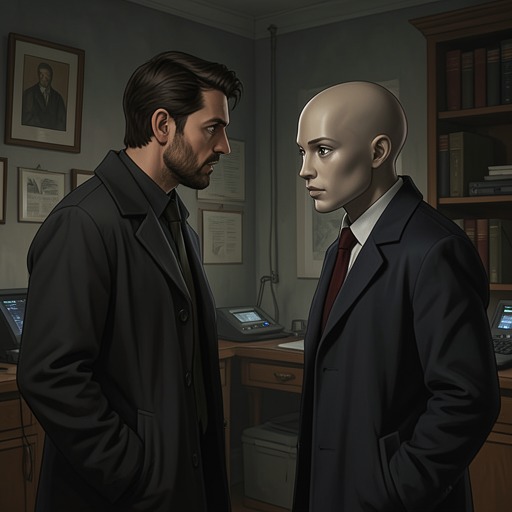
A roboticist explains that the name comes from a medieval novel about a robot that turns on its creator. He says he has never read the novel himself, distinguishing the familiar label from firsthand knowledge of its source. When asked what the term means, he supplies the fear at its center: the imagined reversal in which a creation becomes a danger to its maker.
Connection to Robot Design
The term arises during a discussion of whether anyone has ever attempted to build a non-Asenion robot. The roboticist acknowledges that people have had time to undertake such work, but says it is not the kind of project anyone would care to pursue. He identifies the Frankenstein complex as a broad human resistance to the idea and states that robots without the First Law are simply not built. Asked whether a theory for such robots exists, he answers that, to his knowledge, none does, adding with a self-conscious smile that his knowledge is extensive.
Cultural Significance
The exchange frames the absence of robots without the First Law as more than a technical gap: it is also a cultural boundary shaped by fear of creations turning on their creators. The complex names the anxiety behind that boundary, while the roboticist's account stops short of claiming that fear is the only reason no such robot is built or that a workable design is possible. In this way, the expression connects a familiar story of rebellion to the limits humanity places on its own technological experiments.