
Art, Text, and Authority
The Crying of Lot 49Competing editions and performances show that meaning is created through interpretation rather than secured by a single authoritative text.
increasing Bearing strength in each event
 decreasing
Bearing strength in each eventdecreasingThe Borrowed Paperback
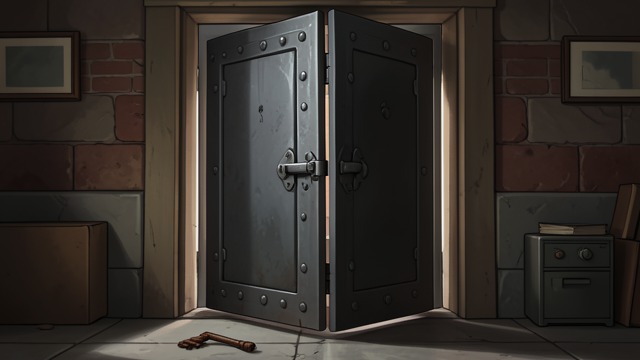
A Text with a Variant
The search for a source
Oedipa buys the paperback edition Driblette used and finds the disputed Trystero line. A marginal note points toward another version, making the book seem both useful and unstable.
Authority questioned
The printed page offers evidence only by depending on editorial choices and textual history. Oedipa cannot assume that a published line is original or trustworthy.
Bortz’s Edition
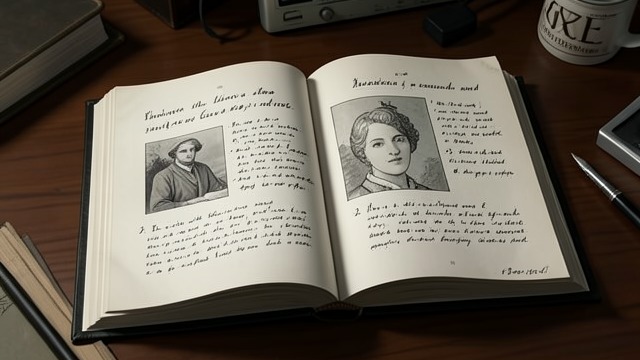
The Missing Line
A contradictory reading
The hardcover edition edited by Emory Bortz contains a different ending, while its notes describe the line naming Trystero as doubtful. The apparent clue changes according to which text Oedipa consults.
Scholarship without closure
Bortz’s editorial authority clarifies the dispute but cannot settle the play’s history. The more sources Oedipa examines, the less securely the meaning attaches to any one version.
The Actor’s Microcosm

Performance Makes Meaning
A world inside the performer
Driblette says the play exists in his mind and emerges through his body onstage. For him, words are tools that carry an enacted world rather than the final authority.
An answer that opens a problem
His view makes interpretation inseparable from performance. Oedipa cannot decide whether his version reveals something hidden or simply creates meaning that was not present in the source.
The Puritan Revision

Rewriting as Judgment
A moral intervention
Bortz describes the pornographic version as a deliberate effort to place the play in a moral framework. A changed text can condemn, transform, or distort the work it claims to preserve.
Trystero as the Other
He proposes that the name may represent a force outside purposeful divine order. This reading makes the textual variant philosophically significant but remains an interpretation rather than proof of the organization’s existence.
The Director’s Absence

No Final Interpretation
The witness is lost
Driblette’s death removes the person whose choices shaped the performance. Oedipa can no longer ask why he included the disputed line or what he believed it meant.
Meaning survives as uncertainty
The play continues to exist in competing versions and in Oedipa’s memory of the stage. Its authority cannot be returned to a single author, editor, or performer.
After the Tank production
During Oedipa’s Berkeley research
During Oedipa’s dressing-room conversation with Driblette
During Bortz’s explanation of the Vatican text
After Driblette’s death
