
Tristero’s Changing History
The Crying of Lot 49The novel assembles a contested history of Tristero, from a claim to postal legitimacy through defeat, migration, and clandestine survival.
increasing Bearing strength in each event
 decreasing
Bearing strength in each eventdecreasingThe Claimant Appears
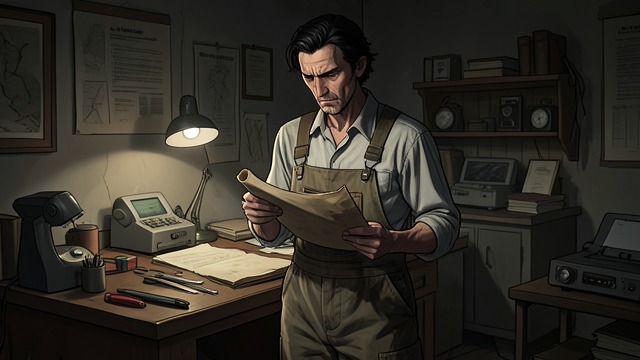
A Rival Heir
A claim to office
Hernando Joaquín de Tristero y Calavera presents himself as the rightful heir to Jan Hinckart’s position as postmaster. His claim joins family legitimacy to control of a communications system.
A movement takes shape
Tristero’s personal grievance becomes a basis for followers and conflict. The origin story frames the organization as both political resistance and a struggle over inherited power.
A War on the Routes

Guerrilla Postal War
Attacks on the monopoly
Tristero wages a campaign against Hinckart and the Thurn and Taxis routes, trying repeatedly to assassinate the rival postmaster. The conflict uses communications infrastructure as both target and prize.
Defeat without disappearance
The political balance shifts and the old monopoly is restored, but the story presents Tristero as capable of moving into obstruction and secrecy. Its defeat does not clearly settle whether it survives.
A Rivalry in Print
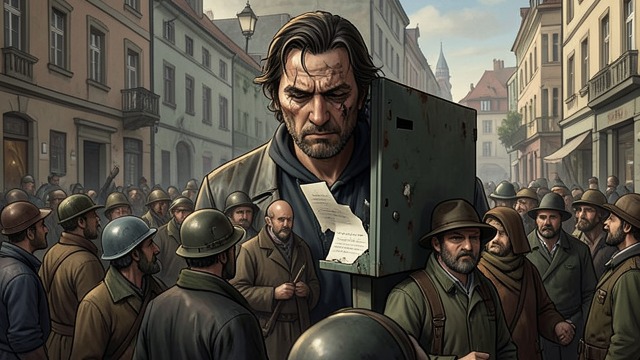
A Name That Cannot Be Spoken
Textual traces
The name Trystero appears in contested versions of The Courier’s Tragedy, surrounded by omissions, alterations, and scholarly disagreement. A fictional play becomes a possible record of a real postal enemy.
Secrecy as a theme
The narrative associates Tristero with silence and resistance to official mail. Yet the very uncertainty of the textual evidence makes the group’s history impossible to confirm from the play alone.
The American Transition
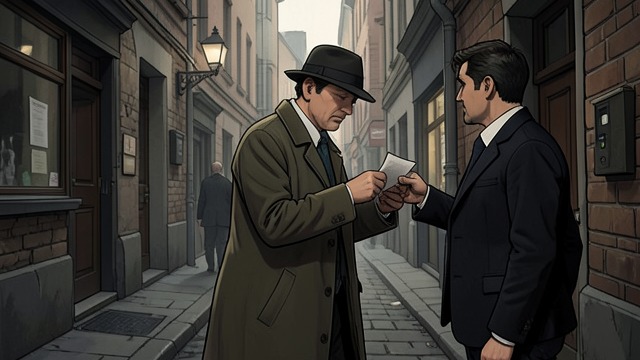
A New Postal Landscape
Private carriers displaced
American postal reform and later enforcement weaken independent delivery routes. Bortz imagines that Tristero’s members adapt by changing their methods rather than openly challenging the postal state.
Opposition by disguise
The group’s supposed American practice centers on concealment, impersonation, and survival inside a dominant system. This history remains an interpretive reconstruction assembled from incomplete sources.
The Exile’s Uncertain Empire
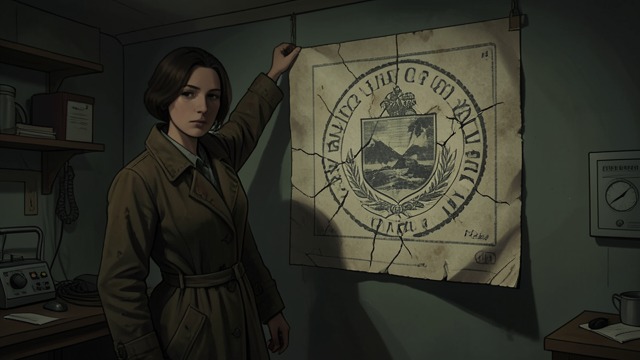
Waiting in the Shadows
A motto without resolution
A stamp bears the declaration “We Await Silent Tristero’s Empire,” suggesting a movement that expects a future restoration. Its appearance hints at persistence without revealing who issued it.
An inheritance of opposition
Oedipa imagines an organization whose members may have forgotten what they were meant to inherit. The group’s history becomes less a settled chronology than a continuing condition of exile and expectation.
During the 1570s, in the historical account Oedipa assembles
From 1578 to 1585 in the account
By the seventeenth century in the disputed play tradition
From the mid-nineteenth century onward in Bortz’s account
At the end of Oedipa’s investigation
