
Official Mail and Its Rivals
The Crying of Lot 49The history of postal monopolies and unofficial carriers frames the conflict between centralized authority and communication beyond its control.
increasing Bearing strength in each event
 decreasing
Bearing strength in each eventdecreasingThe Imperial Monopoly
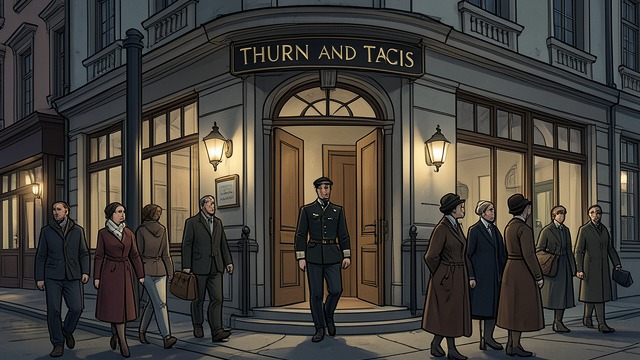
Control of the Routes
A system of authority
Thurn and Taxis administers a far-reaching European postal service. Its position makes control over couriers a form of political and economic power.
A vulnerable institution
Changes in rulers and local competition weaken the monopoly at different moments. That instability creates openings for rivals who imagine that controlling communication could reorder authority.
A Challenger’s Claim
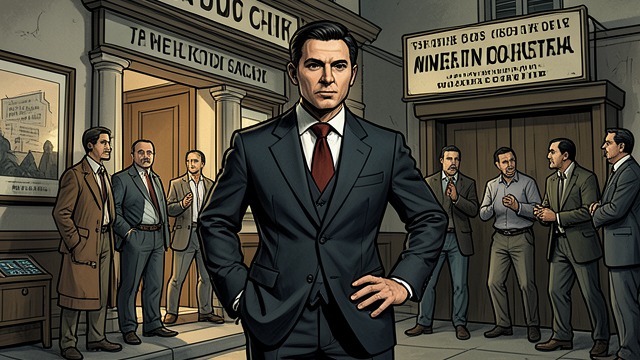
Tristero Challenges the Routes
A rival legitimacy
Hernando Joaquín de Tristero y Calavera claims the postmaster’s office by right of blood. His challenge turns a contested appointment into a prolonged struggle.
The stakes widen
The dispute is not only personal: whoever controls the postal routes could influence communication across political territories. Tristero’s claim therefore threatens the monopoly’s practical authority as well as its legitimacy.
Routes Under Attack
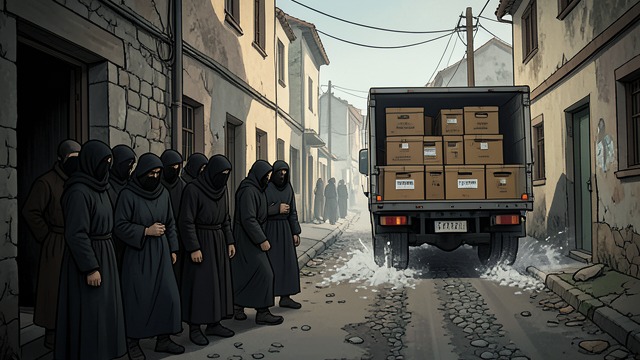
Guerrilla Against Delivery
Repeated attacks
Tristero’s followers obstruct and raid Thurn and Taxis routes while attempting to remove the rival postmaster. The conflict turns everyday correspondence into contested territory.
Resistance adapts
Open political victory does not come to Tristero. Its campaign nevertheless suggests a move from claims to office toward clandestine disruption, where survival matters more than formal recognition.
The American Monopoly
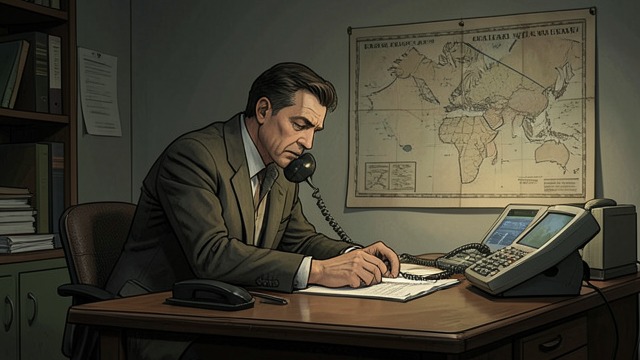
Competition Suppressed
A shrinking space for carriers
American postal reform reduces rates and weakens independent routes. Later suppression makes it increasingly difficult for private carriers to compete openly.
A new form of opposition
The imagined Tristero does not simply recreate its European system. It learns to operate in the shadow of the official service, turning concealment into a means of survival.
A Modern Counterchannel
Mail Beyond the State
Alternative delivery observed
Oedipa sees W.A.S.T.E. operate through its own mailbox and couriers. Its existence suggests that some people continue to communicate outside the official system.
The conflict remains unresolved
The service may be a contemporary form of Tristero, a separate network, or only one use of a shared symbol. Official monopoly and private resistance remain in tension without a conclusive identification.
Before Tristero’s rise in the historical account
During the late sixteenth-century conflict
From 1578 to 1585
From the postal reforms of the nineteenth century
During Oedipa’s San Francisco investigation
