Oedipa and Metzger Watch Cashiered and Make a Bet
The Crying of Lot 49Oedipa and Metzger Watch Cashiered and Make a Bet turns a private evening of film, flirtation, and competition into a hinge in Oedipa’s investigation of the Tristero System. Oedipa wagers that the characters in Cashiered will survive; the film’s bleak ending proves her wrong, and she claims victory. In retrospect, however, the night’s more consequential outcome is less certain: Oedipa sees the infidelity as the possible beginning of a chain of revelations, while the link between that evening and what follows remains part of the novel’s larger uncertainty.
An Unexpected Visit and a Film Within the Film
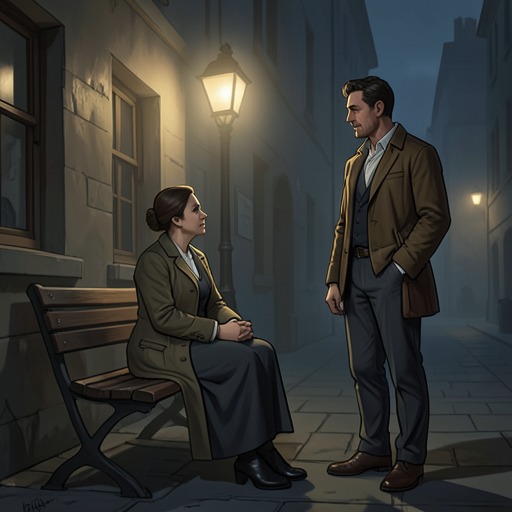
Metzger arrives at Oedipa’s door with a bottle of wine after spending the day searching motels for her. His striking appearance initially makes her suspect that the encounter is staged, as though an actor had appeared in a production. She lets him in, though she has planned only a quiet evening watching television. The scene’s mixture of performance and ordinary domestic circumstance foreshadows the way the film they watch will become entangled with the reality of their meeting.
During the broadcast, the young Metzger appears in an old commercial alongside an older version of himself. Oedipa suddenly wonders whether he arranged the broadcast or bribed the local station’s engineer as part of an elaborate seduction. Metzger notices that she has not sung along; she replies that she did not know the song. The commercial gives way to an advertisement for Fangoso Lagoons, briefly joining the staged past on the screen to the landscape of the present investigation.
The Wager
The film, Cashiered, presents a father and his companions in danger. Metzger tells Oedipa that Pierce Inverarity owned 51 percent of the filter process associated with the production, then presses her to bet on whether the characters will escape. Oedipa feels drunk and notices that her watch has stopped. Though she has no clear basis for certainty, she predicts that the trio will get out; Metzger asks how she knows.
When Metzger declines to make the bet she initially expects, Oedipa accepts the challenge. She stakes the outcome on the father, his child, and the dog being lost, while Metzger takes the opposite side. The wager changes the viewing from passive entertainment into a contest whose result will determine what each has won. Their exchange is also an intimate one: Metzger treats the handshake meant to seal the bet as a personal advance, and Oedipa wonders whether the moment resembles her earlier sexual experience with Pierce. The film resumes before she can settle what the encounter means.
The Film’s Ending and Oedipa’s Victory
The screen offers no rescue. The father is trapped at the Anzac beachhead; the child and dog are absent for part of the scene, then appear caught with him in the film’s darkening interior as water rises. The dog drowns, and the child is electrocuted. The father survives long enough to deliver a farewell, but the scene ends with his suffering face, rising water, and the title card. The family Oedipa predicted would escape does not make it.
At the film’s conclusion, Oedipa leaps up and announces that Metzger has lost. He answers that she has won him. Her victory in the wager therefore carries a second, more personal meaning: the contest has become part of their flirtation, rather than remaining a simple prediction about the movie. Oedipa then asks what Pierce told Metzger about her, redirecting the encounter toward the relationship and estate that brought Metzger to her.
Retrospective Significance
Later, Oedipa considers the night’s infidelity with Metzger a logically plausible starting point for the events that lead her toward what she calls the Tristero System. She cannot establish that the encounter caused her discovery; instead, she is haunted by how neatly it seems to fit into a pattern of revelation already appearing around her. The episode thus gains significance after the fact, as both a personal turning point and a possible first link in a chain whose meaning remains unsettled.
That retrospective framing also connects the evening to Pierce’s stamp collection. Oedipa had regarded the collection as a headache to inventory and appraise, and as a substitute that had often displaced her in Pierce’s attention. Only after the seduction and the other seemingly incidental events does she wonder whether the stamps might tell her something. The night with Metzger does not solve the mystery; it sensitizes Oedipa to the possibility that apparently separate encounters and objects belong to a single design, without proving that they do.