Oedipa’s tower
The Crying of Lot 49Oedipa’s tower is the metaphor through which she confronts a more unsettling possibility than personal captivity: that the world beyond her enclosure may be continuous with it, and that no rescuer can guarantee escape. First imagined through a Rapunzel-like romance with Pierce, the tower becomes, through Remedios Varo’s painting, an image of a reality woven from inside confinement and governed by an external, incomprehensible force.
The Tower and the Romance with Pierce
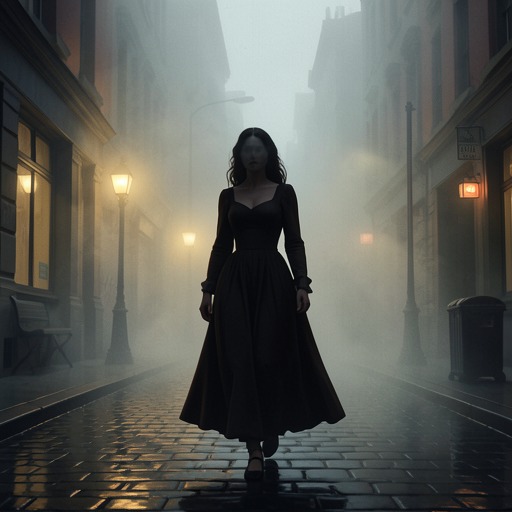
Oedipa recalls having cast herself as a pensive girl imprisoned among the pines and salt fogs of Kinneret, waiting for someone to call up to her and ask her to let down her hair. When Pierce became that imagined rescuer, she let her hair fall; but the fairy-tale rescue turns comic and unstable. As Pierce climbs, her hair becomes an unanchored wig, and he falls. He eventually gets through the tower door with a credit card used as a shim and climbs the conchlike stairs. Yet the decisive limitation is not the lock: what happened between them never escaped the tower’s confines. Their intimacy changes the immediate scene without proving that she has been delivered from the condition it represents.
Varo’s Painting and the World as Tapestry
In Mexico City, Oedipa and Pierce encounter an exhibition by the Spanish exile Remedios Varo. The central painting of a triptych, titled “Bordando el Manto Terrestre,” depicts fragile, wide-eyed girls with spun-gold hair confined in the upper room of a circular tower. They embroider a tapestry that spills through the narrow windows into a void, trying to fill it; the earth’s buildings and creatures, waves, ships, and forests are all contained in the work. The image makes the tower more than a setting for a rescue story: the prisoners produce the world around them, while remaining enclosed within the place where they make it.
Oedipa cries before the painting, unnoticed behind dark green bubble shades. She wonders whether tears could fill the space inside their lenses and preserve the moment, allowing her to see the world refracted through those particular tears. Looking down, she understands that the ground beneath her has been woven in her own tower, only a couple of thousand miles away, and that its accidental name, Mexico, does not make it an elsewhere. Pierce, therefore, had not taken her away from anything; the journey had not amounted to escape.
The Enclosure’s Uncertain Cause
The painting’s recognition shifts the question from where the tower stands to what keeps its captive there. Its height and architecture, Oedipa thinks, are incidental, like the ego: the more fundamental confinement is a magic that is anonymous, malignant, imposed from outside, and without apparent reason. Because the force has no clear form, Oedipa has no apparatus to examine it—only gut fear and female cunning with which to try to understand how it works or measure its field. The metaphor thus refuses a simple answer about whether confinement is psychological, social, or something larger; it gives the force a shape in thought while withholding a means of testing it.
The Rescuer and the Unresolved Question
The Rapunzel story offers familiar ways for a captive to respond: superstition, embroidery, madness, or marriage to a disk jockey. But none establishes that the tower can be escaped. If it is everywhere, and even the knight of deliverance cannot overcome its magic, the image turns rescue itself into an uncertain proposition. The tower’s significance lies in that reversal: what begins as an enclosure from which Pierce might carry Oedipa away becomes a model of a world whose boundaries cannot be located outside the self, and whose apparent exits may lead only to another part of the same woven reality.