Scurvhamite sect
The Crying of Lot 49The Scurvhamite sect is a Puritan movement founded during the reign of Charles I, defined by a doctrine of predestination that divides creation between God’s purposeful will and a blind, soulless mechanism. Its history ends in a paradox: the sect’s chosen members are drawn toward the doomed world they regard with horror, until not even its founder remains. In Emory Bortz’s interpretation of an altered edition of Richard Wharfinger’s play, Trystero names that frightening “Other” beyond divine order.
Foundation and Doctrine
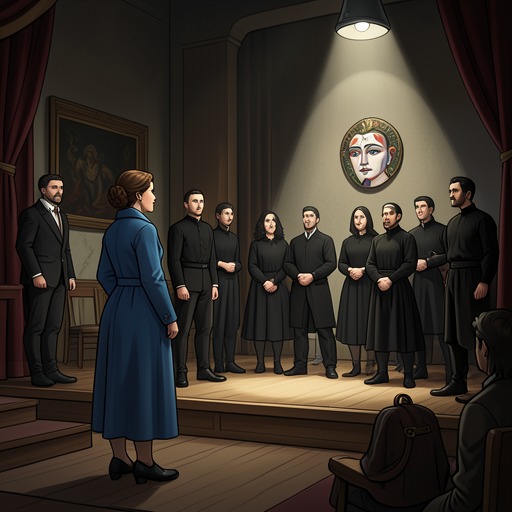
Bortz describes the sect as founded by Robert Scurvham during the reign of Charles I. Its central concern was predestination: nothing happened by accident, because Creation was an intricate machine. Yet that machine contained two opposed orders. The Scurvhamite portion ran according to the will of God, its prime mover; everything beyond it followed an opposite principle, blind and soulless, whose automatism led to eternal death.
The doctrine offered a sharp distinction between the Godly and the doomed. The sect sought converts into its purposeful religious community, presenting membership as a place within the divinely governed part of creation. But the distinction also exposed believers to the prospect they most feared: they could look outward at the doomed order, and its spectacle exerted a disturbing pull.
A Sect’s Reversal and End
Bortz recounts that the few saved Scurvhamites watched the condemned universe with sick fascination. In his telling, that fascination proved fatal. The prospect of annihilation gradually coaxed the members across the boundary separating their community from the doomed, until no one was left in the sect.
Scurvham himself was the last to go, compared by Bortz to a ship’s master. The image makes the sect’s ending a reversal of its founding promise: a community organized around salvation and purposeful divine order disappears into the very prospect its doctrine set apart as destruction.
Wharfinger’s Play and Trystero
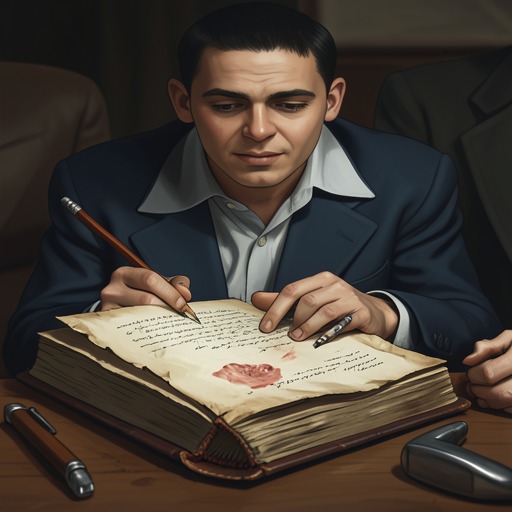
The sect enters Oedipa Maas’s investigation through Bortz’s theory about a lurid, anonymously produced version of Wharfinger’s play. He says the artist and the poet who rewrote the text are both anonymous, and that the edition’s imagery and moral violence suggest a Scurvhamite project. Bortz explains that the sect was hostile to theater and may have altered the play to condemn it, changing its words so that it could be placed entirely beyond the sect’s moral boundaries.
In this account, the insertion of Trystero is meaningful rather than incidental. Bortz reads the play’s “hallowed skein of stars” as God’s will, but argues that this protection cannot guard someone who has an appointment with Trystero. Unlike an ordinary human adversary, the figure stands for the brute Other that keeps the non-Scurvhamite universe running like clockwork. The sectarian interpretation thus gives Trystero a theological shape: it represents the impersonal, fatal order outside the Godly community.
Bortz presents this connection as an explanation, not a resolution of Oedipa’s larger mystery. Elsewhere, Trystero remains suspended between a real clandestine network and a pattern Oedipa may be imagining; the sect’s interpretation supplies one historical and symbolic account of the name, but does not settle which possibility is true.