Tristero
The Crying of Lot 49Tristero is a secretive postal organization, or the name Oedipa gives to a network she gradually believes she has uncovered, whose history reaches from conflict with the Thurn and Taxis postal system in Europe to clandestine communication in California. Its emblem, a muted post horn, recurs across historical accounts, stamps, and present-day encounters. Yet the clues do not settle whether Tristero is a continuous organization or a pattern Oedipa constructs from coincidences and her involvement with Pierce Inverarity’s estate.
Origins and European Opposition
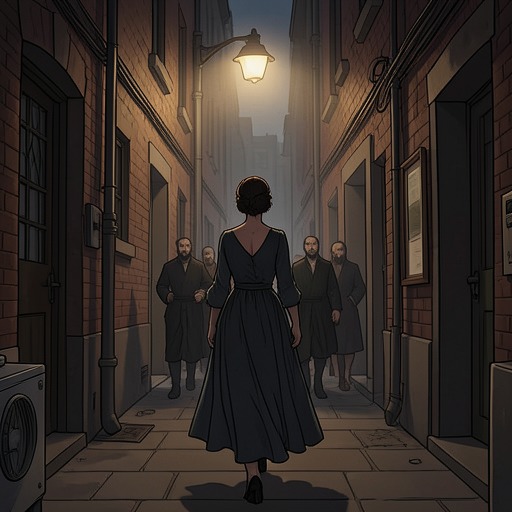
The account assembled from historical fragments presents Tristero as an organization founded by Hernando Joaquín de Tristero y Calavera, a claimant to the postal monopoly held by the House of Thurn and Taxis. Tristero regarded the monopoly as an inheritance lost through political seizure: its founder styled himself El Desheredado, or the Disinherited, and claimed that the postal right belonged to his family by blood. His followers wore black, associated with the night of their exile, and adopted a muted post horn as an emblem. A dead badger also entered their iconography; one suggested explanation linked the name Taxis to the Italian word for badger and to the fur hats worn by early Bergamascan couriers.
Tristero’s opposition took the form of a clandestine campaign of obstruction, terror, and depredation along Thurn and Taxis routes. In an episode recounted in Diocletian Blobb’s travel narrative, black-cloaked riders attack a coach belonging to the “Torre and Tassis” system beside the Lake of Piety. After collecting its mail, the leader identifies the group as Tristero and charges the coach’s survivor with reporting that the organization prevails against those he calls illegitimate usurpers. The episode gives the network a declared grievance as well as a method: disrupting an established carrier while insisting on its own claim to the postal inheritance.
The organization’s conflict is set against the weakening legitimacy of the European postal order. With the end of the Holy Roman Empire, the historical basis for Thurn and Taxis authority fades, and the power that had appeared centralized becomes vulnerable to uncertainty about its opponents. The fragments Oedipa collects do not provide a complete institutional record; they suggest a secret adversary whose obscurity itself could make its influence seem wider than anyone could establish.
The American Network
In Oedipa’s working account, Tristero reached America before 1853 and opposed both the Pony Express and Wells, Fargo. A historical marker at Fangoso Lagoons describes a 1853 encounter in which a dozen Wells, Fargo men fought masked marauders in black uniforms. The sole surviving witness died shortly afterward, and the only other reported clue was a cross traced in the dust by one of the victims. The marker leaves the raiders’ identities unresolved, but its details resemble the black-clad, secretive organization Oedipa is trying to identify.
The organization’s American survival is connected to the history of private mail routes and government efforts to suppress them. Mike Fallopian studies private mail delivery in the United States and links the American Civil War to postal reform that began around 1845. He sees the federal suppression of surviving independent routes in 1861, following a series of earlier acts, as more than an administrative change: it represents the systematic growth and abuse of power. The novel places this historical debate beside the possibility that a private network could persist outside official channels.
A later account describes Tristero adapting rather than assimilating. By 1861 its couriers are said to have learned Siouan and Athapascan dialects, crossed west disguised as Indigenous messengers, and reached the Pacific coast without reported losses. The account emphasizes silence, impersonation, and opposition disguised as allegiance. In this version, the network survives not by openly defeating the official carriers but by passing through their territory under identities that conceal its purpose.
Symbols and Delivery Methods
The muted post horn is the strongest material link between Tristero’s supposed European history and its present-day traces. Genghis Cohen shows Oedipa a cancelled 1940 Pony Express commemorative stamp, valued at three cents, on which she recognizes the W.A.S.T.E. symbol. Cohen points out the post horns in the stamp’s corners as the emblem of Thurn and Taxis. Oedipa reads the recurring sign as evidence of an effort to silence or negate that older postal authority: the horn is present, but muted.
The name W.A.S.T.E. first appears to Oedipa in a latrine-wall notice inviting contact through a box in Los Angeles. Beneath it is a faint, unfamiliar symbol. When she later tests the address with a contact, she pronounces WASTE as an ordinary word and meets immediate distrust. The man insists that it is an acronym, not “waste,” and refuses to discuss it further. This correction makes the name itself a small test of access: the channel may be recognizable from its signs, but a stranger cannot assume that recognition entitles her to an explanation.
Oedipa later finds a green refuse can, nearly four feet high, marked with the initials W.A.S.T.E. She watches a young person deposit letters, adds a sailor’s letter addressed to Fresno, and waits for the carrier. A courier retrieves the mail through a side panel, then exchanges sacks with another carrier near the Civic Center. Oedipa follows the first man across Market Street and onward toward the transbay bus terminal. The scene turns the abstract possibility of a parallel postal system into a visible sequence of collection, transfer, and pursuit, without revealing the network’s full organization.
Scope and Uncertainty
The evidence Oedipa gathers expands Tristero beyond a single historical rebellion. Her provisional account includes its opposition to Thurn and Taxis, its reported presence in America by 1853, its conflict with the Pony Express and Wells, Fargo, and its possible continuation in California as a communication channel for people outside conventional sexual and technical communities. She also wonders whether inventors interested in Maxwell’s Demon, and perhaps her husband Mucho Maas, are connected. The possibility concerning Mucho remains unverified: Oedipa has discarded his letter, leaving Cohen unable to inspect its stamp, and she would have to ask Mucho directly.
The network’s contemporary reach appears to exceed any one community. Oedipa comes to imagine many citizens deliberately choosing not to communicate through the United States mail. Such withdrawal need not amount to treason or even explicit defiance; it can be a private refusal of participation in the Republic’s machinery. The secret delivery system therefore suggests both a practical alternative channel and a social choice to step away from official communication.
Tristero’s growing coherence is inseparable from the uncertainty that surrounds it. Oedipa first sees the clues as coincidences, then finds the word Trystero becoming the sound that holds them together. She recognizes that every route leading to the organization can also lead back to the Inverarity estate, so the estate may be directing her attention as much as it is supplying evidence. Even the novel’s elaborate history is pieced together from Blobb’s account, obscure philatelic journals, a footnote, an anarchism pamphlet, and sermons. Tristero may exist in its own right, or Oedipa may be imagining an organization in order to connect otherwise dispersed signs.
That uncertainty persists at the edge of the ending. Oedipa considers the possibility that Tristero is real and that its entrances could be found anywhere in the Republic, not only in San Narciso or among the dead man’s assets. The railway tracks she encounters evoke a network of lines that continue into others, making the possibility of connection feel extensive without proving where it leads. Tristero’s decisive significance lies in that unresolved double force: it is at once a clandestine alternative to official communication and a test of how far a pattern can be trusted when every apparent confirmation remains entangled with suspicion.