Conspiracy to prevent the course of justice
The Cuckoo's CallingConspiracy to prevent the course of justice is the legal characterization Cormoran Strike applies to Freddie and Tansy Bestigui’s concealment of information about Lula Landry’s death. It connects the Bestiguis’ shifting statements to the practical question of whether Tansy will ultimately testify, turning an apparent dispute over an unreliable witness into a potential obstruction of justice.
The case and its disputed evidence
When John Bristow asks Strike to investigate, he presents Tansy’s account as hard evidence: she said she heard a man arguing with Lula shortly before Lula fell from her balcony. Bristow says the police dismissed her testimony because she had taken cocaine, but insists that this did not establish that she had not heard the argument. He also points to footage of a man walking towards Kentigern Gardens and later running away, whose identity the police had not established.
The building’s access arrangements make the question of opportunity more complicated than a simple account of a secured entrance suggests. Strike notes a keypad and camera at the front door, neither mentioned by Bristow, and observes that a security guard’s temporary absence left the lobby accessible. Robin adds that an entrant would need the code; Strike replies that it might be widely known if it was not regularly changed. Staff normally buzzed visitors in from the desk, while the keypad was used when nobody was there. The building also had individual flat keys and alarm systems, an underground car park with entrances into the houses, and cameras pointed along its shadowed walls. These details provide a set of possible routes and safeguards to test, not proof that any particular person used them.
Tansy’s account and the police response
The police tried to discredit Tansy’s claim by testing whether voices from Lula’s balcony could be heard inside the Bestiguis’ flat. After the Bestiguis moved to a friend’s house to escape press attention, officers staged a shouting test with a man on the balcony; people in a first-floor flat could not hear him, despite being sober and listening deliberately. This supported the police view that Tansy could not have heard the words she reported, but did not settle where she and Freddie had been when Lula fell.
The account also changed under pressure. After publicity had made Tansy a prominent supposed witness, she said that she had opened the windows for fresh air, offering an explanation for how she might have heard what she claimed to hear. Strike later studies her inconsistent statements and remains unsure of the Bestiguis’ positions at the crucial moment. He is especially troubled by her repeated insistence that Freddie was asleep in bed, and recalls her shielding her face when he pressed her on that point. The police’s test challenged the audibility of Tansy’s testimony; Strike’s review identifies a separate unresolved issue in the couple’s account of their whereabouts.
The allegation and its leverage
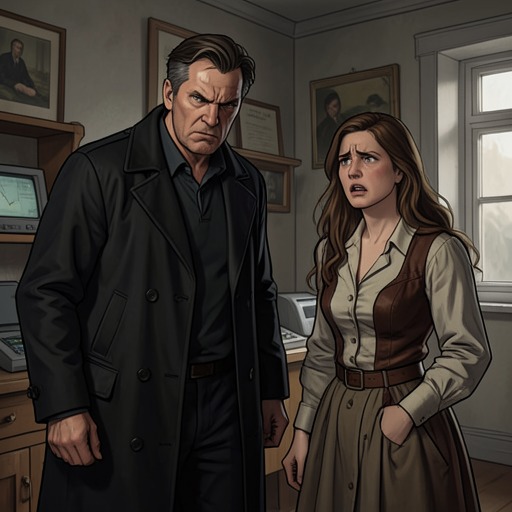
When Strike confronts Freddie, Freddie says the curtains were drawn and that there had not been enough light to see a woman hiding on the balcony; he expects Tansy not to change her story. Strike counters that he would not rely on her silence. He names their conduct as “conspiring to prevent the course of justice” and argues that Tansy could have reasons to cooperate: a belated confession might keep her out of prison, public sympathy could attach to her as a victim of domestic abuse, and she might be offered money for an exclusive account. Most importantly, testimony could give her a chance to be heard in court and help convict the man she had heard murdering her neighbour.
The exchange presents the legal label as a strategy grounded in the couple’s exposure and in Tansy’s possible incentives, not as a court finding. Freddie’s response is silence and visible hesitation: he turns a packet of cigarillos in his hands without taking one. The passage establishes Strike’s pressure on him and the possibility of Tansy’s cooperation, while leaving the outcome of that confrontation unresolved here.