Cormoran Strike’s financial difficulties
The Cuckoo's CallingCormoran Strike’s financial difficulties are a continuing material pressure on his work and personal life: debt threatens his agency, compromises his freedom to reject a client, and makes John Bristow’s investigation the barrier between solvency and homelessness. The case offers a way out, but its importance to Strike is inseparable from the precarious circumstances in which he takes it on.
Debt and the Agency
When Robin Ellacott tells Strike that the temporary assignment is for a week to begin with, he calculates what the agency’s high rate will do to his overdraft. The expense might push it beyond repair, or become the final straw for the creditor who has been implying that he is waiting for precisely that. The calculation transforms an ordinary staffing decision into an immediate financial risk.
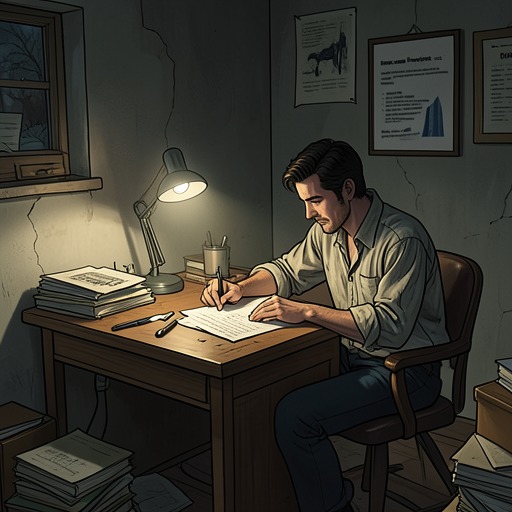
The pressure has accumulated over eighteen months. Strike is pursuing two clients for full payment; a third has refused to pay because the findings were not to his taste. He is sinking further into debt, while a rent review threatens his tenancy of the central London office he had been pleased to secure. He cannot afford to involve a lawyer against the non-paying client, and his fantasies of collecting debts by rougher means register the frustration of someone whose professional remedies are constrained by the same lack of money that makes the unpaid bills urgent.
Bristow’s Offer and the Choice to Continue
At first, Strike is uncertain whether the visitor introduced as John Bristow is a genuine client and whether he will pay. His experience has taught him not to take either for granted. The uncertainty sits alongside his immediate need: he has no dependable income from several existing cases and is already in a position where even another week of agency costs matters.
Bristow offers double the going rate. Strike’s conscience, weakened by repeated blows of fate, gives way to the practical attraction of the fee: a month’s work could cover the temporary worker and rent arrears; two months could address more pressing debts; further work could reduce his overdraft. This private reckoning reveals the material stakes beneath his apparent professional choice. The offer is not simply generous payment for detective work; it promises a staged recovery from several overlapping liabilities.
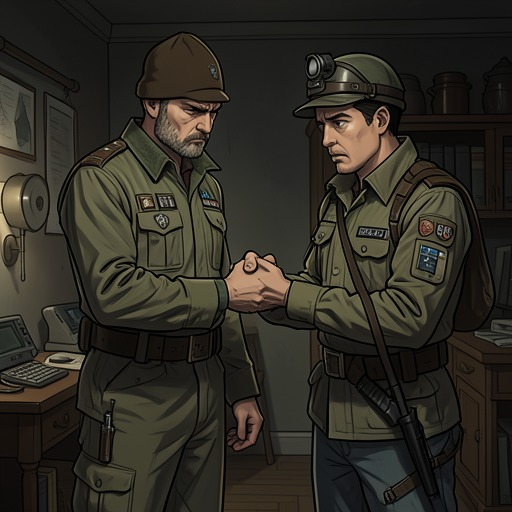
Bristow initially leaves after Strike refuses the envelope containing the offer. As he goes, he invokes Strike’s military-police background and decoration, complains about the office, and concludes that he can find someone else. The confrontation makes the fee’s power particularly visible: Bristow can afford to double it, while Strike’s ability to refuse is weakened by the condition of his business. The case begins not with financial security, but with the possibility that a lucrative assignment might rescue an agency already close to failure.
The Cost of the Breakup
After walking out on Charlotte, Strike finds himself at the brink of genuine destitution. John Bristow is described as the only thing standing between him and a sleeping bag in a doorway. The statement makes the financial dependence stark: the case is no longer merely an opportunity to improve the agency’s accounts but the immediate difference between having shelter and sleeping rough.
The danger is intensified by the loan from Gillespie, which formed the down payment on Strike’s office. If Gillespie calls it in, Strike has no alternative to sleeping rough. The office that had represented a hard-won foothold in central London is thus also connected to a debt capable of removing that foothold altogether.
His financial condition has physical consequences as well. Strike has gained a stone and a half, and the added weight strains his prosthetic lower leg enough to cause chafing and a developing limp. After walking across London in the small hours with his kitbag, he buys a third pint and calls a friend in the Metropolitan Police. His effort to travel as cheaply as possible is one more practical consequence of impending penury; the burden of debt is registered not only in balances and rent but in how he moves through the city and manages an injured body.
A Precarious Resource
The investigation makes Strike’s professional independence unstable. He needs the money Bristow offers, yet he has already encountered clients who delay payment or withhold it when they dislike his conclusions. His circumstances therefore give financial pressure two distinct forms: the immediate need to accept enough work to stay afloat, and the risk that even completed work may not produce the payment on which survival depends.
That pressure does not resolve at the moment Bristow offers the fee. Strike’s debts, the threatened tenancy, and the loan remain part of the conditions under which he works. The case’s importance to his livelihood explains why its success matters so much, while also sharpening the tension between detective work as an exercise of judgment and detective work as the means by which he may avoid destitution. The financial difficulties are not a separate subplot: they define the narrow margin within which Strike can make professional choices.