Death of Charlie Bristow (0f22a7d8)
The Cuckoo's CallingCharlie Bristow’s death, initially treated as a childhood accident, is exposed as a murder committed by his brother John, who pushed him into a quarry. The revelation explains the old suspicions surrounding the family, the silence that protected John, and why the death of Lula Landry was not his first killing.
Background and concealed crime
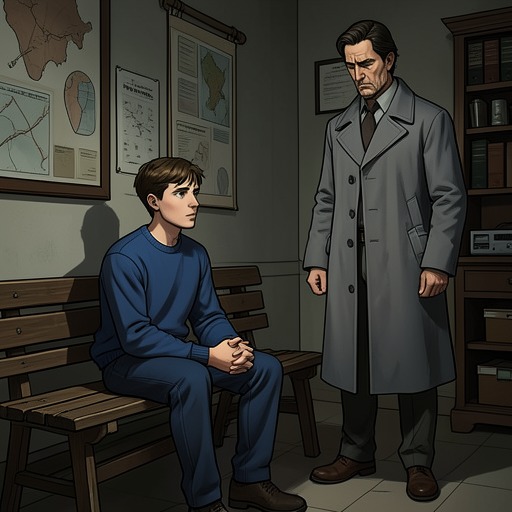
As Strike confronts John over Lula’s murder, he asks whether killing Lula was easier the second time than killing Charlie. He reconstructs the earlier death as a deliberate act: John had been cycling with Charlie near the quarry and, Strike suggests, dared him to ride close to the edge, knowing Charlie would not resist a dare. John then pushed him over. The account transforms what had been understood as an accident into the first murder in a pattern that continued into adulthood.
The evidence in this confrontation is presented as a retrospective reconstruction rather than a scene witnessed directly by Strike. He connects the childhood event to the later family history: Tony Landry saw John cycling away from the place where Charlie had fallen and saw Charlie’s body at the bottom of the quarry. Tony suspected John, but did not openly expose him.
Family suspicion and silence
Strike argues that Tony’s account of the aftermath has been distorted. The story that Tony was expelled because he said that John and Charlie’s mother had raised delinquents concealed a more serious accusation: Tony had told the family that he believed John was a psychopath. Strike links this accusation to the family’s reactions—John’s father struck Tony, John’s mother fainted, and Tony was thrown out of the house. In this reading, the family’s response did not settle the question of Charlie’s death; it helped bury it.
Tony’s silence was not presented as proof that he believed John innocent. Strike says Tony could not face a family scandal and kept quiet despite his suspicions. When the Bristows later planned to adopt a girl, Tony became alarmed and tried to stop the adoption, suggesting that he feared what John might do within the family. Yet his silence ultimately left him vulnerable to John: years later, he supplied an alibi for Lula’s murder because he needed to conceal his own whereabouts with Cyprian May’s wife.
The past returns in the investigation
Charlie’s death becomes decisive in Strike’s case against John because it gives meaning to evidence and relationships that otherwise appear separate. John’s account of an older family grievance, Tony’s troubled history with the Bristows, and Tony’s eventual alibi for John all lead back to the quarry. Strike’s confrontation makes the connection explicit: the man who had once killed Charlie was capable of killing Lula, and the family’s earlier failure to act helped preserve his freedom.
The story also returns to Charlie through a concrete clue discovered much later. John had reset the code to his mother’s safe to 030483, the date of Easter Sunday in 1983—the day Strike identifies as the day John killed his friend Charlie. The date links John’s concealed past to a present investigation, while the phone found in the safe connected him to Rochelle’s murder. Charlie’s death is therefore not merely background to John’s character; it is part of the evidentiary chain that exposes the wider sequence of crimes.
Significance
The revelation recasts Charlie’s death from an isolated childhood tragedy into the beginning of a history of violence protected by family shame and compromised silence. Tony’s suspicion did not stop John, and his later attempt to prevent the adoption did not bring the truth into the open. Instead, the secret endured long enough for John to exploit Tony’s fear of scandal and obtain an alibi for another murder. In the investigation’s final logic, the old quarry death explains both the recurrence of John’s violence and the fragile loyalties that delayed its discovery.