Eric Wardle
The Cuckoo's CallingEric Wardle is a Detective Sergeant who worked on the initial investigation into Lula Landry’s death and later serves as a recurring contact for Cormoran Strike. Initially encountered through the bleak circumstances of the death scene, he develops into a pragmatic intermediary between the detective and the police: he grants access to the case file, shares investigative developments, and helps bring John Bristow in, while resisting Strike’s attempts to turn a compelling theory into immediate legal action.
Identity and Introduction
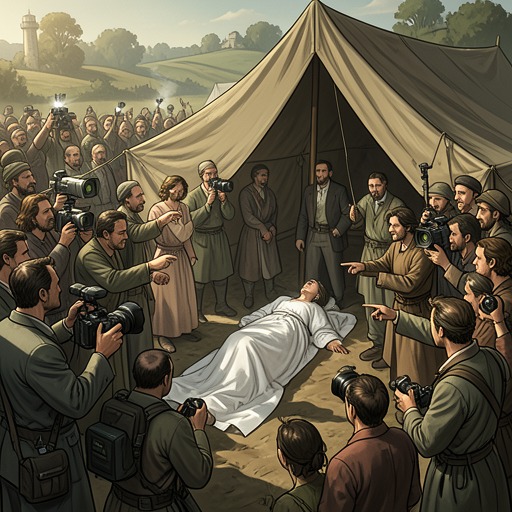
Wardle first appears at the scene of Lula Landry’s death, where he tells Detective Inspector Roy Carver that an ambulance is two minutes away and explains that he has been arranging space for it. Carver, cold, hungry, and impatient after hours at the scene, suspects that Wardle is lingering because of the photographers. The brief exchange establishes Wardle’s place within the police response and introduces the friction between his superior’s temper and his own attention to the people watching the case unfold.
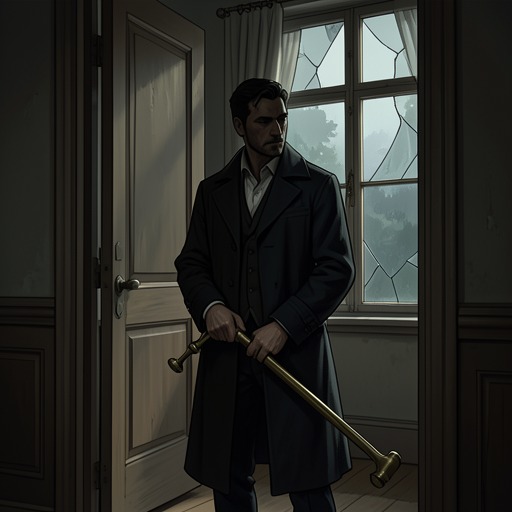
The officers’ contrasting impressions of Wardle recur. Carver views him as insufficiently focused during their trips outside the tent, while Strike later sees a handsome, boyish man with thick, wavy brown hair. At their first meeting in the Feathers, Wardle recognizes Strike as the large man Anstis had described. These observations place Wardle in a public-facing investigation already shadowed by photographers and appearances, though they do not settle how seriously he takes the work.
Working Relationship with Strike
Strike reaches Wardle through Anstis, who offers to put in a word and contrasts Wardle favorably with Carver as a person to approach. After a long conversation with Anstis, Strike calls Wardle, gives his name, and proposes an exchange: he has information that Wardle may find useful and wants something in return. Wardle’s initial skepticism gives way to an in-person meeting rather than a discussion over the phone.
Strike tells his client, John Bristow, that he plans to meet one of the CID officers who covered the case and hopes to obtain the police file. The meeting with Wardle at the Feathers provides the route to that file. Wardle agrees that Strike can have it if they get Fearney, making police access conditional rather than an unqualified favor. Later, after Strike’s tip-off has paid dividends, Wardle calls him with a triumphant report. Their contact is thus transactional and professional, but it becomes a continuing channel through which information passes between the private investigator and the police.
The Initial Investigation and New Evidence
Wardle recounts that he and Carver reached the scene about twenty to twenty-five minutes after Lula hit the ground. Tansy Bestigui was still extremely distressed and insisting that there was a murderer in the building. Her account was that she had got up around two in the morning, heard shouting from flats above, and seen Lula’s body fall past a window. Wardle emphasizes a practical difficulty with that testimony: the flats’ triple-glazed windows were designed to keep outside noise from entering, and the noisy activity in the street was barely audible from within.
This recollection gives Strike details of the police response and of the physical setting in which Tansy’s account was made. It also shows Wardle as a witness to the original investigation, able to supply context that is not apparent from the bare fact of her claim. His later willingness to discuss the case does not mean that he accepts every conclusion Strike draws from it; the distinction between a witness’s account, the conditions surrounding it, and proof that can be used in court remains central to their exchanges.
Cooperation, Resistance, and the Case’s Resolution
When a body is recovered from the Thames with Strike’s card on it, Wardle contacts him to ask what he can tell the police. At their subsequent discussion, Strike advances the theory that Rochelle Onifade had been blackmailing Lula’s killer. Carver dismisses the theory, while Wardle invites Strike to explain it. The exchange captures Wardle’s intermediate position: he is willing to hear Strike out, but the conversation takes place amid disagreement within the police response and does not itself establish that the theory is proven.
The clearest conflict between the two men comes when Strike brings Wardle Lula’s will and urges him to act before further murders occur. Wardle acknowledges that the will may show motive but demands evidence that will hold up in court. Strike argues that the document and the information he has supplied justify a warrant, presses Wardle to act, and warns that he will go to the press if people close to Lula continue to die. He also passes over a paper listing several six-figure numbers and urges Wardle to try them. Wardle’s caution frustrates Strike, but it defines an essential boundary in their partnership: a persuasive account and a potential motive are not, by themselves, sufficient grounds for a prosecution.
The next day, Wardle calls Strike after phoning Deeby. Later public coverage describes Wardle as having helped Strike bring Bristow in. The novel thus connects Wardle’s police work to the case’s decisive outcome without presenting him as the investigator who independently uncovers the solution. His contribution is collaborative: he listens, supplies access and information, follows leads, and ultimately participates in the police action that brings the suspect into custody.
Public Role and Narrative Significance
After Bristow is brought in, the case again becomes a media spectacle. Reports criticize police incompetence, and Carver is photographed hurrying down the street; Wardle, by contrast, receives comparatively indulgent treatment, particularly from female journalists. The coverage’s attention to Wardle’s appearance echoes the early distinction between his looks and Carver’s irritation at the photographers. Yet the story’s larger media focus returns to Lula, whose face and body are repeatedly reproduced in accounts of her death.
Wardle’s role is therefore both practical and structural. He links Strike’s unofficial investigation with formal police procedure, while his demand for admissible evidence checks the urgency and certainty of Strike’s accusations. He remains neither a simple obstacle nor a substitute detective: his cooperation advances the investigation, and his caution makes clear that solving a mystery and proving a case are different tasks. The favorable press treatment he receives, set against renewed exposure of Lula’s corpse, also places him within the novel’s contrast between a living investigator’s public image and the relentless circulation of a dead woman’s image.