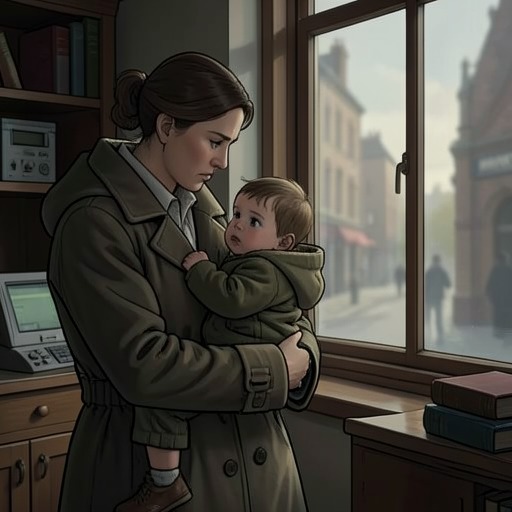
Lula Landry and Yvette Bristow’s mother–daughter relationship
The Cuckoo's CallingLula Landry and Yvette Bristow’s mother–daughter relationship was adoptive, formed after the death of Yvette’s son Charlie, and marked by both apparent closeness and unresolved strain. Yvette described Lula as happy and attentive during her final visit, while other accounts and the circumstances of that visit complicate her version. The relationship also became entangled with Lula’s search for her birth family, a pursuit that John Bristow said distressed Yvette and widened the distance between mother and daughter.
Formation of the Family
Yvette and her husband, Sir Alec Bristow, adopted Lula after Charlie died. The timing made the adoption inseparable from family grief: Tony Landry, Yvette’s brother-in-law, called it a mistake, arguing that Yvette had already been a disastrous mother and was grieving when she took Lula in. His account presents the adoption as an attempt by Sir Alec to comfort his wife, who had long wanted a daughter, rather than as a decision free of the family’s loss. Landry also described Sir Alec as devoted to Yvette and inclined to give her what she wanted. His judgment is hostile, however, and belongs to a witness whose own dealings with the family are not neutral.
The adoption made Lula Yvette’s daughter in the Bristow household, but it did not erase the importance of Lula’s birth family to her sense of self. As an adult, Lula sought out her biological mother, Marlene Higson, and, according to John, hoped above all to find her biological father and understand her Black roots. This search placed the two kinds of family—adoptive and biological—into direct tension, even though the available accounts do not establish that Lula intended her search as a rejection of Yvette.
The Final Visit
On the morning before Lula died, she visited Yvette, who was recovering from an operation and taking painkillers. In her statement, Yvette said she had been drowsy and unwell, but remembered Lula as “perfectly happy,” concerned only with her mother’s condition and prospects of recovery. The account casts their meeting as one of attentive daughterly care: Lula came to see an ill parent and showed concern for her recovery.
Tony Landry supplied a less reassuring context for the visit. He said he had also called on Yvette that day, had sat with her while she was groggy from painkillers, and left her with Lula because he knew there was “nobody Yvette would prefer to Lula.” He also said he had seen John working in the home study and did not want to disturb him. Yet Lula’s phone records showed that, after leaving Yvette’s flat, she repeatedly called Tony’s mobile. When Strike raised those calls, Landry flushed. The evidence establishes the calls and the visit, but does not explain what Lula wanted from her uncle or why she called him so persistently.
Conflicting Accounts and Family Strain
Yvette’s description of a cheerful, concerned daughter sits uneasily beside the account of Ciara Porter, who said Lula had seemed low and anxious that afternoon and had refused to discuss what was upsetting her. Porter also reported that Lula had spoken of leaving everything to her brother. The contrast does not prove that Yvette’s recollection was false: she had been drowsy after surgery, and the statement was mediated through an officer’s written account. But Strike read it as a determined denial, particularly because Yvette alone suggested that Lula’s fall might have been an accident, perhaps a slip on an icy night.
The difference between these accounts makes the final visit difficult to read as a simple confirmation of an untroubled bond. Yvette remembered solicitude and happiness; Porter remembered anxiety and withheld distress; the phone records show a sequence of urgent calls after Lula left. None of these details, on its own, settles what passed between mother and daughter in the flat. Together, they expose how little the family could confidently claim to know about Lula’s state of mind.
John said that his mother’s uterine cancer had just been diagnosed when Lula began tracing her roots. He described himself and Lula as loving each other, but said they had argued bitterly because he considered her timing insensitive to their mother. In his account, Yvette was devastated by Lula’s contact with Marlene, whom John regarded as mercenary for selling her story to the press. He believed Yvette’s distress was intensified by the public exposure of the family’s private history. These are John’s characterizations, not independent findings about Marlene or Yvette’s feelings, but they show how the search for identity became a conflict inside the adoptive family.
What the Relationship Reveals
The relationship is shown through competing testimony rather than through a sustained scene between Lula and Yvette. Its warmth is conveyed indirectly—in Yvette’s memory of Lula’s concern, and in Tony’s assertion that Yvette would have preferred Lula’s company to anyone else’s. Its pressure emerges through the adoption’s origins in bereavement, Yvette’s illness, the family’s reaction to Lula’s search, and the uncertainty surrounding her last visit.
That fractured record matters to the investigation as well as to the family history. Yvette’s claim that Lula had been perfectly happy cannot be treated as a transparent account of Lula’s inner life, just as John’s account of her motives carries the weight of his own assumptions and loyalties. The adoptive bond remains real, but it is not a complete explanation of Lula: her wish to find her birth father and understand her Black roots points to an identity that the Bristow family could neither supply nor wholly contain.