River Thames
The Cuckoo's CallingThe River Thames is both a physical setting in the investigation and the destination around which Cormoran Strike reconstructs the murder of Rochelle Onifade. A body recovered from the river prompts the case to turn toward Rochelle’s final meeting with the killer; later, Strike imagines how the river’s surroundings could have been used to make her death look like an accident or suicide.
Setting and Discovery
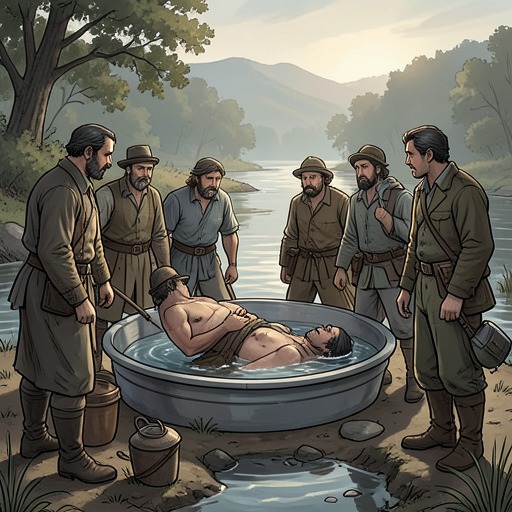
When Eric Wardle contacts Strike, he says that the police have fished a body out of the Thames and found Strike’s card on it. The discovery brings Strike to Wapping and establishes the river as the setting of a new death within the investigation.
The Thames also figures in the earlier reconstruction of Lula Landry’s death. Reviewing the police account, Strike questions whether the locations of Freddie and Tansy Bestigui at the moment Lula fell are really established. The river is not the scene of that fall, but the uncertain account of what happened in the nearby flat contributes to his wider effort to test witness statements against physical circumstances.
The River in Strike’s Reconstruction
After learning of Rochelle’s death, Strike concludes that she had called the killer shortly after their lunch, using her glittering pink phone to arrange a meeting. He imagines them walking at night near Hammersmith Bridge, in the area where Rochelle had said she had a new flat. Strike considers the bridge’s low sides and the fast-flowing water below, along with Rochelle’s inability to swim, as circumstances that could make a fall into the river fatal.
This is Strike’s reconstruction, not a witnessed account: he pictures a possible sequence in which two people appear to be play-fighting, a passing car masks the moment, and a scream is followed by a splash. The river’s setting thus supplies a plausible means of concealing a killing, while the sparse facts available to Strike leave the scene itself unseen.
Physical Traces and Narrative Significance
The Thames connects discovery to inference. The recovered body confirms Rochelle’s death, but Strike’s imagined riverside sequence is an attempt to explain how it might have happened and why it could go unnoticed. Its force depends on concrete conditions—the nighttime setting, the bridge, the water, and Rochelle’s inability to swim—rather than on a direct witness to the killing.
Elsewhere in the investigation, a small amount of water on the stairs of Lula’s flat helps Strike reinterpret the search conducted after her death. He identifies the drops as water left by roses carried from another flat, explaining why Derrick Wilson slipped. Though distinct from the Thames itself, this clue echoes the river plot’s investigative pattern: water is not merely background, but a material trace whose meaning changes when the movements and evidence around it are reconstructed.