Rochelle Onifade
The Cuckoo's CallingRochelle Onifade is a friend Lula Landry met in therapy, a former hostel resident, and a witness to Lula’s final arrangements. In the investigation into Lula’s death, Rochelle first seems to offer confirmation of suicide; later, the discovery that she witnessed Lula’s will and was blackmailing the murderer makes her a pivotal, endangered witness. Her death does not erase what she knew: the phone she left behind helps connect John Bristow to both her murder and the truth he had concealed about Lula’s heir.
Identity and Background
Rochelle enters the investigation through recollections of people who knew Lula. John Bristow describes a history of drug use and mental-health difficulties in Lula’s adolescence, including a period when she was found living rough among addicts. He says that she was eventually diagnosed with bipolar disorder and did well while taking the prescribed medication. Those details help explain why the police accepted suicide early, but they do not establish that Lula’s death was self-inflicted. The detective in charge, Bristow says, was convinced from the outset because Lula took lithium, overlooking other evidence.
A lead from Kieran Kolovas-Jones directs Cormoran Strike to look for a woman whose name begins with R, whom Lula had met in therapy and who had lived at St. Elmo’s Hostel for the Homeless in Hammersmith. At the hostel, a resident recognizes the name Rochelle and says she has left. The staff can add little: Rochelle had last stayed there more than two months earlier, and one man remembers that she attended an outpatient clinic at St Thomas’ Hospital, though he does not know whether she still went. The search initially produces fragments rather than a stable account of her circumstances.
Witness to Lula’s Death
When Strike eventually finds her, Rochelle states firmly that Lula jumped. Her account appears to support the official conclusion, but it does not settle the case. Rochelle has experienced depression and says that she has taken medication for it; she describes depression as an illness that can take hold of a person. Her testimony thus arrives under the shadow of a diagnosis, much as the judgment about Lula has been shaped by Lula’s own psychiatric history.
That shadow is sharpened by Tansy Bestigui’s changing account of the night Lula died. Tansy claims to have heard Lula say that someone was too late and a man accuse her of lying. Eric Wardle dismisses the account as auditory hallucination, attributing it to Tansy’s cocaine use. The police also find that the windows Tansy claimed to have opened had not been opened: they were locked and bolted, with no fingerprints on the latches. The episode shows how mental illness, substance use, and credibility become entangled in the investigation, but Rochelle’s own confirmation that Lula jumped cannot by itself resolve what happened before the fall.
The Will and the Blackmail
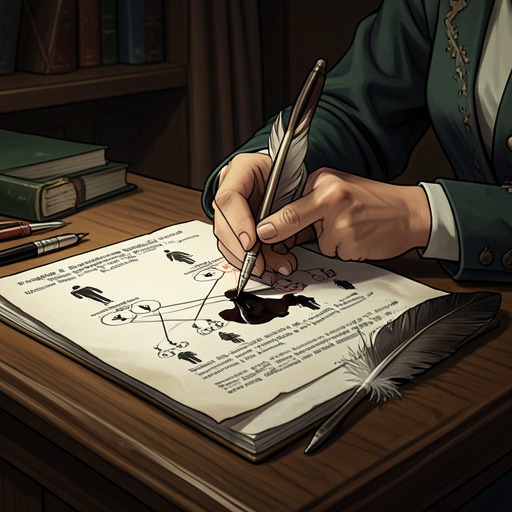
Rochelle’s importance becomes clearer through Lula’s handwritten will. Lula wrote it on her mother’s blue notepaper and had Rochelle witness it. The will was concealed beneath the detachable lining of Lula’s white handbag, a hiding place that helps explain why it was missed. Strike later tells the police that Rochelle had been present at Vashti when Lula called Jonah Agyeman and arranged to meet him that night. Rochelle therefore knew both that Lula had made a will and that it named Jonah as her heir.
Strike’s reconstruction distinguishes what Rochelle knew from what she did not. She told John Bristow what she had learned and began blackmailing him, asking for money for a flat and expensive clothes in exchange for keeping quiet about the fact that he was not Lula’s heir. Rochelle believed Jonah had pushed Lula from the window; she did not realize that John was the killer. Her motive for demanding money was therefore bound up with a mistaken understanding of the crime, as well as her resentment at being left out of the will and, in Strike’s account, being abandoned at Vashti on the last day of Lula’s life. She was seeking payment to keep quiet, not knowingly protecting Lula’s murderer.
Death and Evidence
Rochelle is later found dead. Her body is identified at the scene, and Strike recognizes her from the woman who had sat opposite him while eating fries and withholding information. That earlier interview takes on a darker meaning: the concealment was connected to her knowledge of the will and to her dealings with the killer. Her death transforms her from a difficult witness into evidence of the effort to suppress what she knew.
John’s attempt to hide Rochelle’s phone provides a final link. Strike tells Robin Ellacott that the police found Rochelle’s mobile in John’s mother’s safe, and that John had reset the safe’s code so that only he could open it. The code, 030483, marks Easter Sunday, 1983—the day John killed Charlie Bristow. The phone’s concealment joins the murder of Rochelle to John’s older crime and exposes the lengths to which he went to control the surviving evidence.
Narrative Role and Significance
Rochelle’s part in the mystery turns on the gap between partial knowledge and full understanding. She possesses decisive information—the witnessed will, Lula’s planned meeting with Jonah, and the identity of the person she believes pushed Lula—but misidentifies the killer. John exploits that gap, while Rochelle’s demand for money makes her appear self-interested and easier to dismiss. The investigation gradually recovers the distinction between her mistaken accusation and the truth about what she knew.
Her story also exposes the danger of treating diagnostic labels as explanations. Lula’s medication helps the police settle too quickly on suicide; Tansy’s cocaine use is used to discredit her account; Rochelle’s depression gives context to her testimony but does not prove that it is false. Against these premature judgments, the will, the phone, and the safe code supply material evidence. Rochelle cannot survive to clarify the whole chain herself, but the objects and actions she leaves behind make her knowledge legible—and help reveal both the hidden heir and the killer.