Charlie Bristow's death
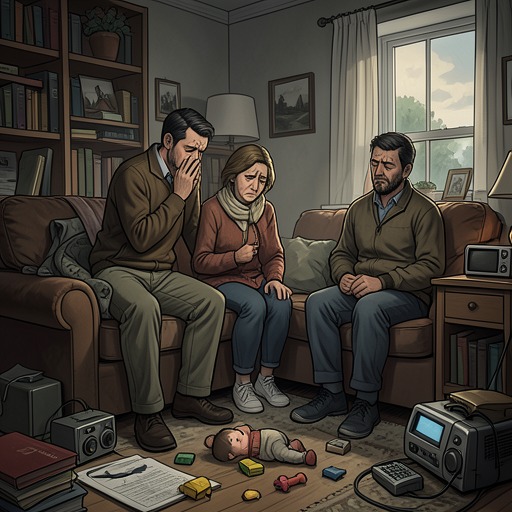
The Cuckoo's CallingCharlie Bristow’s death, when he was nine, is remembered as a bicycle accident at a quarry during a family holiday in Wales. The loss is at once a childhood catastrophe that haunts Cormoran Strike and a family wound that divides the adults who survived it; in the account later given by Tony Landry, it also precedes the Bristows’ adoption of Lula Landry, an attempt to live with grief that he condemns as disastrous.
The Accident and Its First Telling
Charlie was a magnetic, reckless boy who had chosen the newly arrived Strike as his best friend and lieutenant. Their friendship lasted two heady months, full of mischief, in the orderly and luxurious Bristow home: Strike remembered its long sunlit lawn, tree house and iced lemon squash. That ordinary childhood abundance makes the news that followed all the more abrupt. On the first day back at school after Easter, their teacher told the class that Charlie would never return: he had ridden his bicycle over a quarry edge while on holiday in Wales.
The teacher’s account framed the death as the consequence of disobedience. Charlie had been expressly forbidden to ride near the quarry, she said, and might have been showing off. She stopped when two girls in the front row began to sob. The explanation offered a simple chain—warning, defiance, fatal fall—but could not make the loss comprehensible to the children hearing it. Years later, Strike remembers the dead boy as a laughing blond face, and the quarry as the place that breaks that image apart.
A Lasting Wound for Strike
Strike’s memory of Charlie is unusually vivid: he recalls not only their brief alliance but the house and family life that had fascinated him as a child moving through a complicated, peripatetic upbringing. After the accident, quarries acquired a persistent menace in his imagination. Whenever he saw one, or even imagined one, Charlie’s laughing face seemed to fragment against the image of the great dark pit, sheer drop and unforgiving stone.
The fear remains associated with the setting of the death rather than fading into a general recollection of childhood bereavement. Strike supposes that other members of Charlie’s class may have retained a similar dread. The quarry thus persists in the narrative as more than a location: it is the concrete shape taken by the children’s belated encounter with death, and by Strike’s inability to separate the friend he remembers from the place where he was lost.
Family Blame and the Quarry
Tony Landry gives the accident a harsher family interpretation. He describes Yvette and Alec Bristow as having adopted both boys, but judges Yvette incapable of managing them, characterizing John as clingy and Charlie as delinquent. He does not claim that parenting alone caused Charlie’s behavior, acknowledging that genetic influences might also have played a part; nevertheless, he insists that the household’s lack of discipline contributed to the circumstances of the death.
When Strike suggests that Charlie rode over the quarry edge, Tony agrees, then recounts where he was on Easter Sunday: visiting for the weekend, he had walked down to the village and returned to find the family searching. He went straight to the quarry because he knew it was the place Charlie had been forbidden to visit. Tony found the body. Asked whether the experience had been distressing, he answers that it had, his lips barely moving. His account turns what had been a schoolroom explanation into a personal act of discovery, without removing the painful uncertainty around responsibility.
The Family After Charlie
The death deepened the breach between Tony and the Bristows. John later tells Strike that Tony blamed his mother for allowing Charlie to become uncontrollable, and that Alec threw Tony out of the house. John was not meant to know what had been said, but overheard enough to understand the accusation. Tony and Yvette were not truly reconciled until after Alec died. In John’s recollection, the quarrel was not an isolated exchange: it marked a lasting rupture in a family already devastated by the loss.
After Charlie’s death, Alec and Yvette adopted Lula. Tony calls that decision the most foolish thing Alec ever agreed to, arguing that Yvette had already proved an unsuccessful mother and was then grieving. He says she had always wanted a daughter, while Alec hoped that giving her one would make her happy. His bitter judgment exposes the incompatible meanings attached to the adoption: it could be understood as a response to bereavement and a wish to rebuild family life, but Tony sees it as an ill-considered answer to grief. Charlie’s death therefore remains consequential beyond the accident itself, shaping the family’s accusations and the circumstances into which Lula was welcomed.