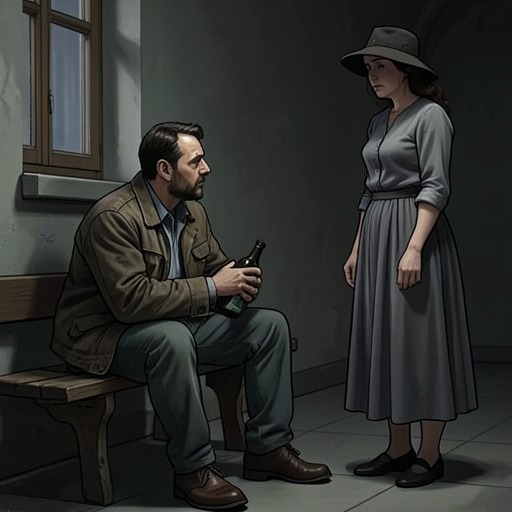
Heroin addiction
The Cuckoo's CallingHeroin addiction shapes both Evan Duffield’s celebrity image and the investigation into Lula Landry’s death. Although Duffield’s public persona is bound up with a role as a heroin-addicted musician, Cormoran Strike treats the drug not as glamorous mythology but as a practical factor in assessing what Duffield could have done on the night Lula died.
Public Image and the Drug-Addict Role
Duffield first became widely known through a critically acclaimed independent film in which he played a heroin-addicted musician who stole to support his habit. His band then released a well-reviewed album, but broke up acrimoniously around the time he met Lula. The overlap between his screen role and public reputation helped make addiction part of the story told about him, even as the press and fans turned his apparent frailty into spectacle.
After Lula’s death, Duffield’s fame intensified. He was alternately idolized and vilified, while some admirers and detractors treated his apparent proximity to despair and oblivion as part of his appeal. Strike watches a short online video in which Duffield appears to be under the influence and speaks fatalistically about death. The image of a doomed celebrity thus circulates alongside the more consequential question of his actual condition and actions.
Addiction as Investigative Evidence
Duffield’s statement confirms that he had tried to stop Lula from leaving Uzi by taking hold of her upper arms; she broke free, and he followed her shortly afterward. His driver supported Duffield’s account of going to Kentigern Gardens and then being taken to d’ Arblay Street. Other statements placed him near a dealer: a woman said she saw him going upstairs to the dealer, Whycliff, and Whycliff himself gave a statement. Strike notes that these accounts had limitations: Wardle believed Whycliff might lie for Duffield, and the woman might have been paid. Other witnesses could identify only a man wearing a wolf mask.
The possibility that Duffield had taken heroin with Whycliff matters to Strike’s reconstruction. He regards heroin’s effects as making it unlikely that Duffield would have been fit to enter 18 Kentigern Gardens or to become violently enraged. In Strike’s experience, heroin tended to make users passive and docile, unlike the agitated behavior associated with alcohol or cocaine. This is not a general declaration of Duffield’s innocence: Strike also recognizes his violent temper and the admitted attempt to keep Lula at the club. Instead, he distinguishes evidence of aggression at Uzi from the physical and mental capacity required for the later killing.
Stigma and the Meaning of Addiction
The case repeatedly shows how labels can substitute for investigation. The detective in charge treated Lula’s lithium medication as a reason to conclude from the outset that her death was suicide, overlooking evidence that later drew public attention. Duffield, by contrast, is framed through the culturally potent image of the doomed heroin-addicted musician. In both cases, a diagnosis or drug history can make a ready-made story seem more persuasive than a close examination of circumstances.
Strike rejects the romantic framing of heroin addiction. His own experience includes addicts in the squat where his mother lived, and he recalls that she died there without anyone noticing for six hours. That history makes his response to the media’s glamorization personal as well as evidential: addiction is not an aesthetic mark of a doomed star but a condition with debilitating effects and severe human consequences. The contrast exposes the distance between a public image built for fascination and the unglamorous realities that matter to the investigation.