Kieran Kolovas-Jones
The Cuckoo's CallingKieran Kolovas-Jones is Lula Landry’s regular driver, a strikingly handsome young actor whose recollections supply a crucial lead in the inquiry into Lula’s death. The day before she died, he drove her to visit her mother and then to Vashti; he noticed that she emerged from the family visit in a state unlike anything he had seen before, wrote on blue paper, and later left the boutique alone, without it. Police had dismissed the paper as a likely shopping list, but its disappearance and Lula’s silence give Kieran’s account a significance that the initial investigation failed to recognize.
Identity and Work
Introduced as Lula’s driver, Kieran is in his mid-twenties, short and slight, with an appearance the narration describes as exceptionally handsome. His slicked-back hair, dark hazel eyes, olive-bronze complexion, and conservative shirt and tie make his conspicuous looks part of how he is presented. He has a consciously modest smile, seemingly designed to disarm other men and forestall resentment. At a café, he greets security guard Derrick Wilson with a dap before sitting beside him, a small gesture that establishes familiarity between the two men.
Kieran works for a driving company under contract to Lula, but says that she always requested him. He tells Cormoran Strike that he had driven her consistently and that he wanted his concerns heard, without claiming that her death could not have been suicide. His manner suggests that he has rehearsed his account; nevertheless, he insists on distinguishing what he knows from what he cannot prove. He wants the unusual events he witnessed taken seriously, not treated as a definitive accusation.
Kieran is also an actor. Tony Landry recalls a previous car journey in which Kieran pressed Lula to use her influence with Freddie Bestigui to secure him an audition. Tony regarded him as overly familiar and intrusive, a judgment that contrasts with Lula’s apparent trust in him as her regular driver. Lula had also given Kieran a Guy Somé jacket worth about nine hundred pounds as a birthday present. Kieran brings up the gift while explaining that Lula envied his mixed family background: his father was half West Indian and half Welsh, and his mother half Scouse and half Greek. He remembers Lula saying that, unlike her, Kieran knew where he came from, even if his origins were widely mixed. The anecdote links their friendship to Lula’s own uncertainty about identity and belonging.
The Visit to Lula’s Mother
Kieran’s most consequential account concerns the day before Lula’s death. He drove her to visit her mother in Chelsea and says Lula had never liked going to see her. He describes Lady Yvette as strange, possessive, and over-attentive to Lula, recalling a family outing in which her constant endearments and attachment seemed excessive to him. That judgment is personal rather than neutral, but it supplies context for why the visit might have been difficult.
The visit also intersects with Kieran’s own decisions. He could have swapped with another driver and taken Lula himself when she later had an engagement with the rapper Deeby Macc, but admits that he did not: he was a fan and wanted to meet him. Lula was annoyed with him for choosing that opportunity. Kieran’s candour makes their relationship more complicated than an uncomplicated portrait of devotion; he was close to Lula, but his work and personal interests could still disappoint her.
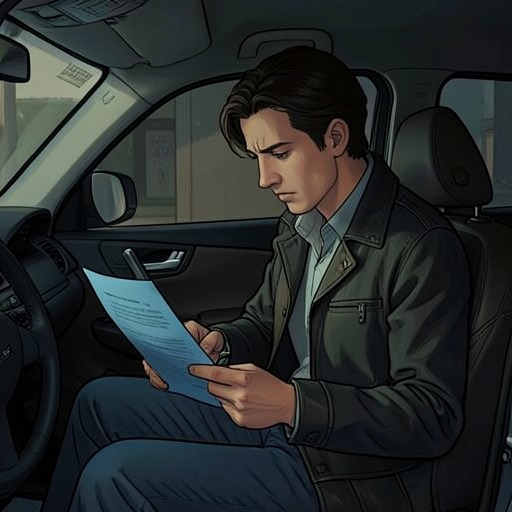
After waiting outside her mother’s home, Kieran saw Lula emerge changed. He says she was unusually quiet, seemed almost in shock, and did not speak to him as she wrote something on a piece of blue paper. He then drove her to Vashti, where she was meant to have lunch with a friend she had met during treatment for mental-health problems. The friend was Rochelle Onifade, whom Kieran could not initially remember by name and described as homeless and living at St. Elmo’s Hostel for the Homeless.
Lula stayed at Vashti for only about fifteen minutes. She came out alone and asked to be driven home; Rochelle was not with her, although Kieran says he and Lula normally gave Rochelle a lift home after they had been out together. The blue paper was gone, and Lula remained silent throughout the drive back. Kieran’s account therefore joins several separate anomalies: the abrupt change in Lula’s mood, the private writing, the short meeting, Rochelle’s unexplained absence, and the missing paper. He told the police about the paper, but they considered it unimportant and suggested it might have been a shopping list.
Evidence and Conflicting Accounts
Kieran’s observations complicate the statements given by people who saw Lula around the same time. Lady Yvette said Lula had been perfectly happy during the visit and had shown concern only for her mother’s health and recovery; she also suggested that Lula’s fatal fall might have been an accident on an icy night. Tony Landry, who was also present at the house, described Lula as normal. Kieran, by contrast, describes a pronounced and troubling change as soon as she left. Strike brings this discrepancy directly to John Bristow’s attention, asking whether Lula could have been upset for reasons beyond concern about her mother’s weakness after surgery.
Rochelle confirms that Kieran drove Lula to meet her at Vashti and responds warmly when Strike mentions him. She says she knew Kieran well because he was always driving Lula. But when asked about the paper Lula had supposedly been writing in the car, Rochelle denies seeing or receiving anything. Her answer leaves the paper’s destination unresolved: Kieran saw Lula write it, and later saw it gone, but does not know what it contained or what happened to it.
The phone records provide a wider context for Lula’s final day, though they do not establish what Kieran knew. Lula made sixty-six calls from her mobile on the day she died, including repeated attempts to reach Evan Duffield and Tony Landry after she was back in her flat. Neither the account of Kieran’s drive the preceding day nor the surviving statements explain what Lula wrote on the blue paper or why her meeting with Rochelle ended so quickly. His testimony is valuable precisely because it identifies circumstances for which the record offers no settled explanation.
Later Encounters and Narrative Role
Kieran reappears as the driver for Ciara Porter. When Strike accompanies Ciara to her car, Kieran is holding open the passenger door; Strike notices a momentary change in Kieran’s expression when he sees Ciara with him. The brief reaction is observed but not explained. Later, after paparazzi flashes greet Strike and Ciara outside, Kieran drives them away. He asks whether Ciara is going home, turns on the radio at her request, and the car departs without being pursued.
Across these appearances, Kieran is both a working driver moving people through London and a witness who carries fragments of Lula’s last day. His professional access lets him notice what passengers do between destinations: a change of mood, a scrap of writing, an unexpectedly short stop, a missing companion. Yet access does not make him omniscient. He cannot identify the friend when first asked, cannot say what the blue paper contained, and offers no proof of what Lula was feeling. The contrast between his precise sequence of observations and the uncertainty surrounding their meaning makes his account an important, limited piece of evidence rather than a solution in itself. By recalling details the police brushed aside, Kieran helps Strike recover the overlooked human circumstances surrounding Lula’s death.