Lady Bristow’s Valium dependence
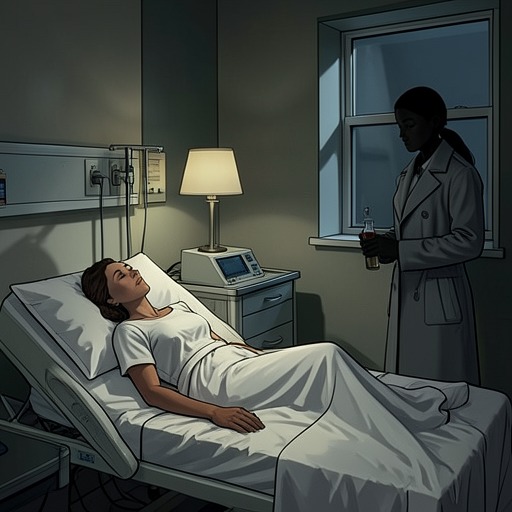
The Cuckoo's CallingLady Bristow’s Valium dependence is presented as a condition that compromises her awareness and, in turn, the credibility of the alibi her son John Bristow builds around her. During the investigation into Lula Landry’s death, John relies on his mother’s impaired recollection to claim that he was with her; Strike argues that John manipulated her sense of time so she would support that account. Her condition thus becomes more than private illness: it is an instrument in the murder investigation and a measure of how far John is willing to exploit the person he claims to care for.
Illness and Family Context
Lady Bristow is gravely ill with cancer and undergoing chemotherapy when Lula begins seeking her birth family. She says John and Tony Landry were angry that Lula pursued this search while she was so ill. Looking back, Lady Bristow acknowledges that she had indulged Lula after the death of Charlie Bristow, and describes her own failing health as part of the family circumstances surrounding the conflict.
The novel places Lady Bristow’s illness alongside Lula’s history of mental-health difficulties, but does not make either condition a sufficient explanation for the events under investigation. John describes Lula’s bipolar disorder, past drug use, and treatment as reasons the police and coroner concluded she was depressed; Strike, however, recognizes that a person may seem hopeful shortly before suicide. The contrast cautions against turning a diagnosis into a complete account of someone’s state of mind. Lady Bristow’s dependence likewise matters through its concrete effects on her awareness and testimony, rather than serving as a generalized explanation for the family’s actions.
The Alibi and Its Collapse
John says that he spent the day in Chelsea with his mother, and Lady Bristow’s account initially helps sustain his alibi. Strike challenges it by describing her as a Valium-dependent invalid who slept through much of the day. He proposes that John returned only after killing Lula, reset his mother’s clock during the small hours, and woke her as though it were dinnertime. On that account, her mistaken sense of the time allowed John to make a later visit appear to have happened earlier.
The alibi is further weakened by the family’s overlapping lies. Tony claims he visited his sick sister, though, as Strike alleges, he was actually elsewhere with Cyprian May’s wife; John and Tony both pretend that John was at their mother’s home, while neither confronts the other about the discrepancy. Tony’s niece is dead and cannot contradict the story, and Lady Bristow’s impaired awareness makes her an especially vulnerable source of apparent confirmation. Strike identifies her as the one alibi John has left, not as independent proof that he was present.
Consequences and Significance
Lady Bristow’s condition gives John’s account a surface of familial concern: he presents himself as a son who spent time with his sick mother, while Strike recasts the same detail as a deception made possible by her impaired awareness. Her illness does not establish what she knew or remembered; the evidence instead shows how John could use her confusion to manufacture a credible-seeming timeline. The distinction between her condition and his deliberate manipulation is central to the exposure of the alibi.
The episode also links care and vulnerability to the novel’s broader problem of interpreting testimony. A mother’s illness can invite trust in a son who appears devoted, while simultaneously making her account less dependable. Here, the evidence does not turn that limitation into blame: Lady Bristow is the person whose condition is exploited, and John is the one accused of shaping the circumstances to his advantage.